
Before anything else, an honest word. The Enfield case is one of the most argued-over hauntings in the world, and the people who were there disagreed with one another for the rest of their lives. Investigators who lived in the house for months swore that something real happened; respected skeptics concluded it was the pranking of two bored, imaginative girls. This article lays the story out as it was reported, marks clearly which parts are documented fact and which rest on the word of witnesses, and leaves the verdict to you. What is not in dispute is that, for eighteen months in the late 1970s, an ordinary family in an ordinary house went through something that terrified them — and that a great many outsiders who came to debunk it left unable to explain what they had seen.

Photo: Wikimedia Commons
Enfield is the heaviest folder I keep. Most cases in this archive rest on a handful of secondhand accounts; this one has roughly a hundred and eighty hours of tape behind it, and I have come to think that volume is the problem rather than the evidence. Somewhere in those reels is the moment that would settle it, and the reels are long enough that everyone who goes in already knowing what they will find comes out holding it. I have worked through the summaries and transcripts more than once and each pass leaves me convinced of something slightly different.
The House on Green Street
It began in August 1977, at 284 Green Street in Brimsdown, part of the London Borough of Enfield. The house was a plain end-of-terrace council property, home to Peggy Hodgson — a single mother recently separated from her husband — and her four children: Margaret, thirteen; Janet, eleven; Johnny, ten; and Billy, seven. There was nothing remarkable about the family or the place. That is part of why the case struck such a nerve. Whatever happened, it happened not in a crumbling gothic mansion but in a cramped, unremarkable council house of the kind that lined thousands of British streets.
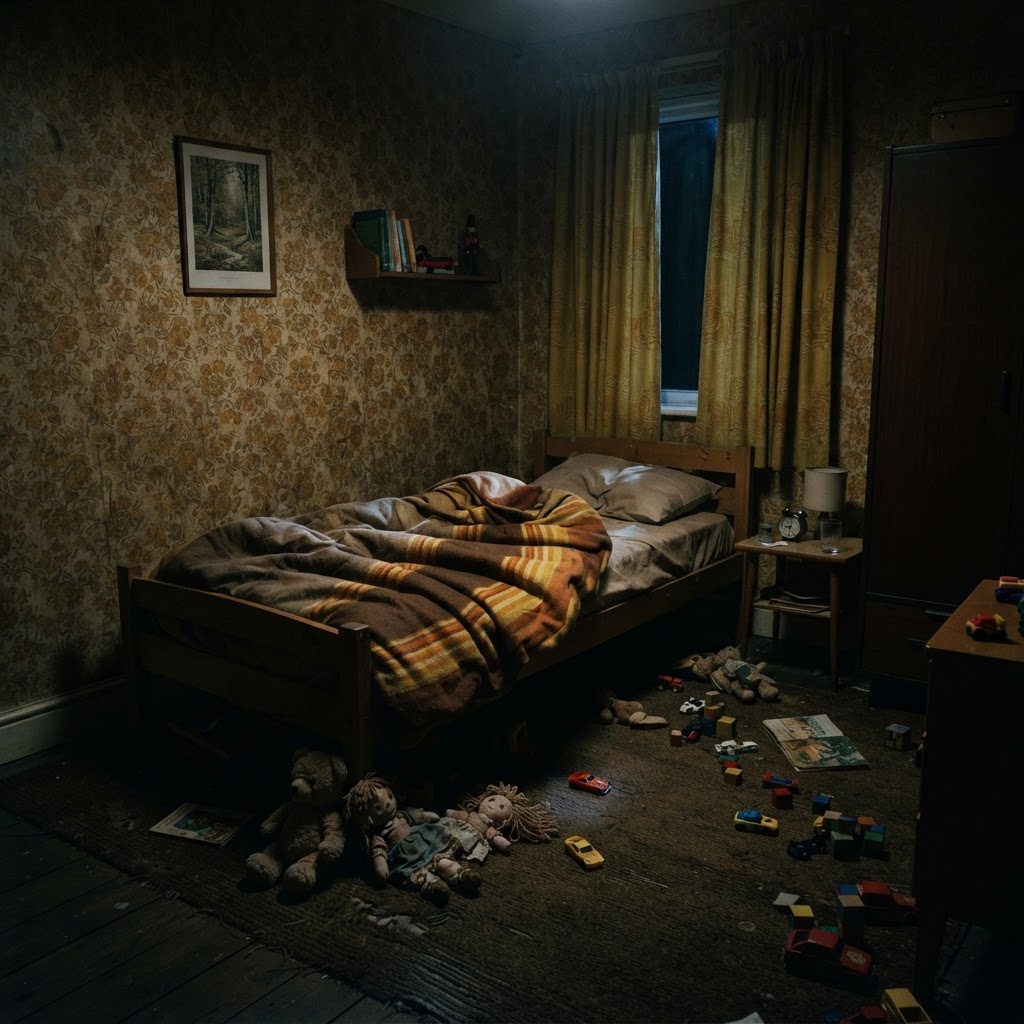
One night, Peggy was called into the children's bedroom. Janet and Johnny complained that their beds were "going up and down." Peggy assumed it was children's nonsense until, the following evening, she heard it herself — a shuffling noise, then four loud, deliberate knocks on the wall. As she watched, a heavy chest of drawers slid out from the wall and moved across the floor toward the door. When she pushed it back, it slid out again, and this time she could not force it back into place. Frightened, she gathered the children and went next door to the neighbours, Vic and Peggy Nottingham. Vic, a burly builder, came back with her to search the house. He heard the knocking too, and could find no source for it. That was the night the Hodgsons stopped believing they could handle this alone.
The Police, and a Signed Statement
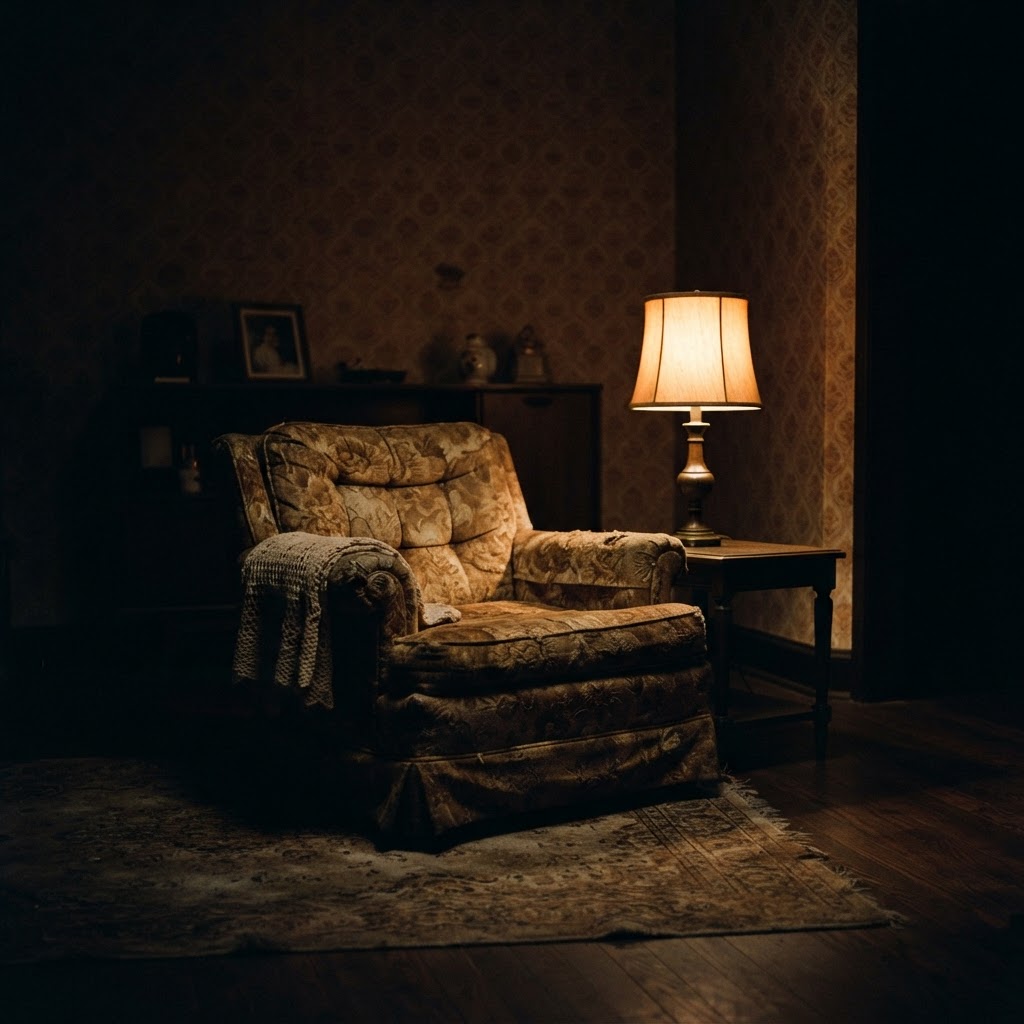
Unable to explain what was happening, the family called the police. Two officers came to the house — and one of them left having witnessed something she would attest to for the rest of her life. Woman Police Constable Carolyn Heeps later gave a signed statement describing how, as she stood in the living room, she watched an armchair move. In her account the chair wobbled and then slid several feet across the floor with no one near it. She checked it afterwards for wires, threads, or any mechanical trick and found nothing. Decades later she was still firm: she was absolutely convinced no one in the room had touched the chair or gone anywhere near it when it moved.
This is one of the load-bearing facts of the whole case, and it is worth being precise about what it is and is not. It is a documented, signed statement from a serving police officer — not folklore, not an investigator's retelling. What it is not is proof of the supernatural; the police, quite reasonably, decided a moving chair was not a crime and closed the matter. But Heeps' statement did something important. It moved the story out of the family's private testimony and into the record, and it brought the case to the attention of the national press — and, through them, to the investigators whose names would become inseparable from Enfield.
Grosse and Playfair Move In
The Daily Mirror sent a reporter, Douglas Bence, and a photographer, Graham Morris. What they encountered convinced them the family was not simply putting on a show. Objects flew across rooms in their presence; Morris was struck on the forehead by a piece of Lego travelling at speed. His cameras, however, kept failing at the crucial moments — batteries draining, film fogging — a frustration that would dog every attempt to photograph the phenomena.
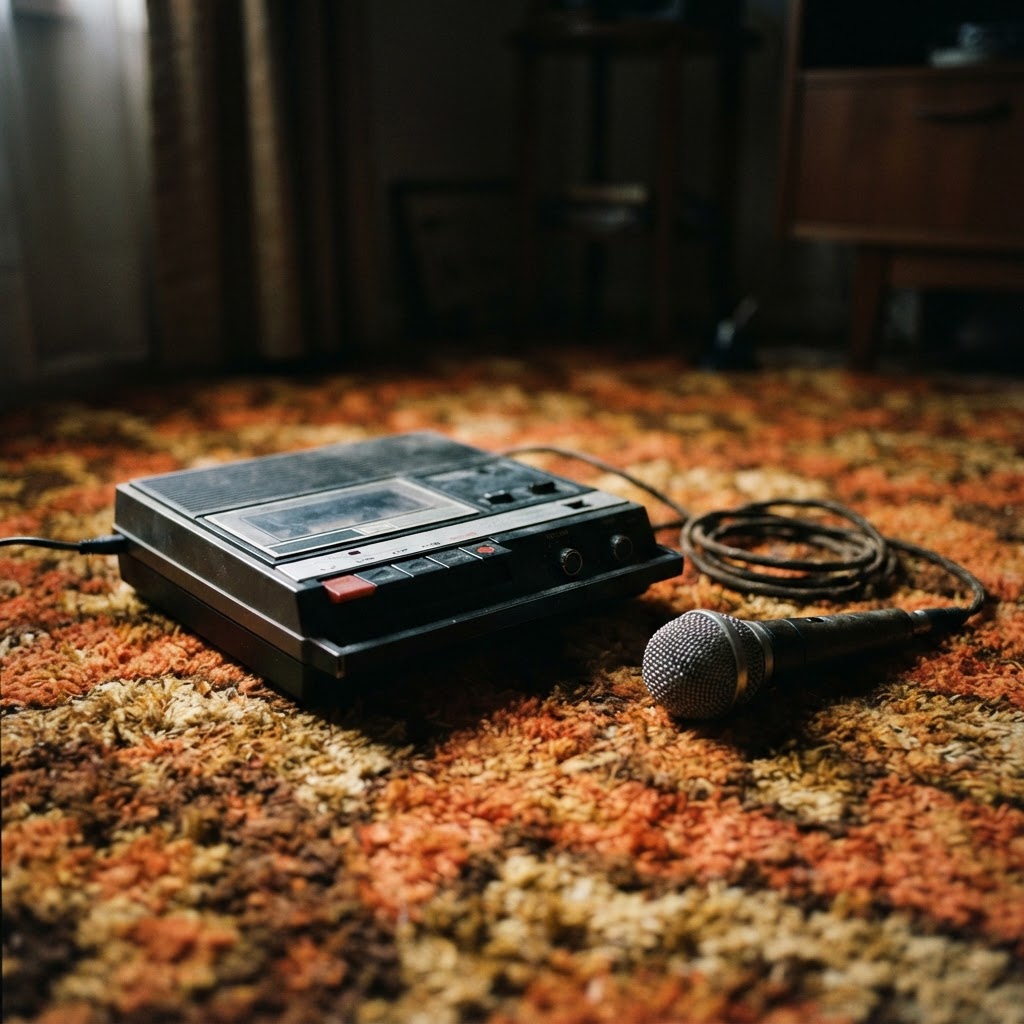
The Mirror alerted the Society for Psychical Research, the venerable British body founded in 1882 to investigate exactly this kind of claim. Maurice Grosse, a recently retired inventor who had joined the SPR after the death of his own daughter, took the case on and effectively moved his life into the Hodgsons' front room. He was soon joined by Guy Lyon Playfair, a writer and investigator who would later chronicle the whole affair in his 1980 book This House Is Haunted. Over the next eighteen months the two men, along with more than thirty other witnesses — neighbours, journalists, a passing lollipop lady, relatives — recorded what they described as an extraordinary catalogue of events. Knocking that answered questions. Furniture overturning. Marbles and Lego bricks hurled across rooms that, when picked up, were found to be hot. Pools of water appearing on the floor. Matches bursting into flame on their own. Grosse accumulated some 180 hours of tape recordings and thousands of pages of notes, which is why Enfield is so often called the best-documented poltergeist case on record — a claim that says less about proof than about sheer volume of testimony.
The Voice
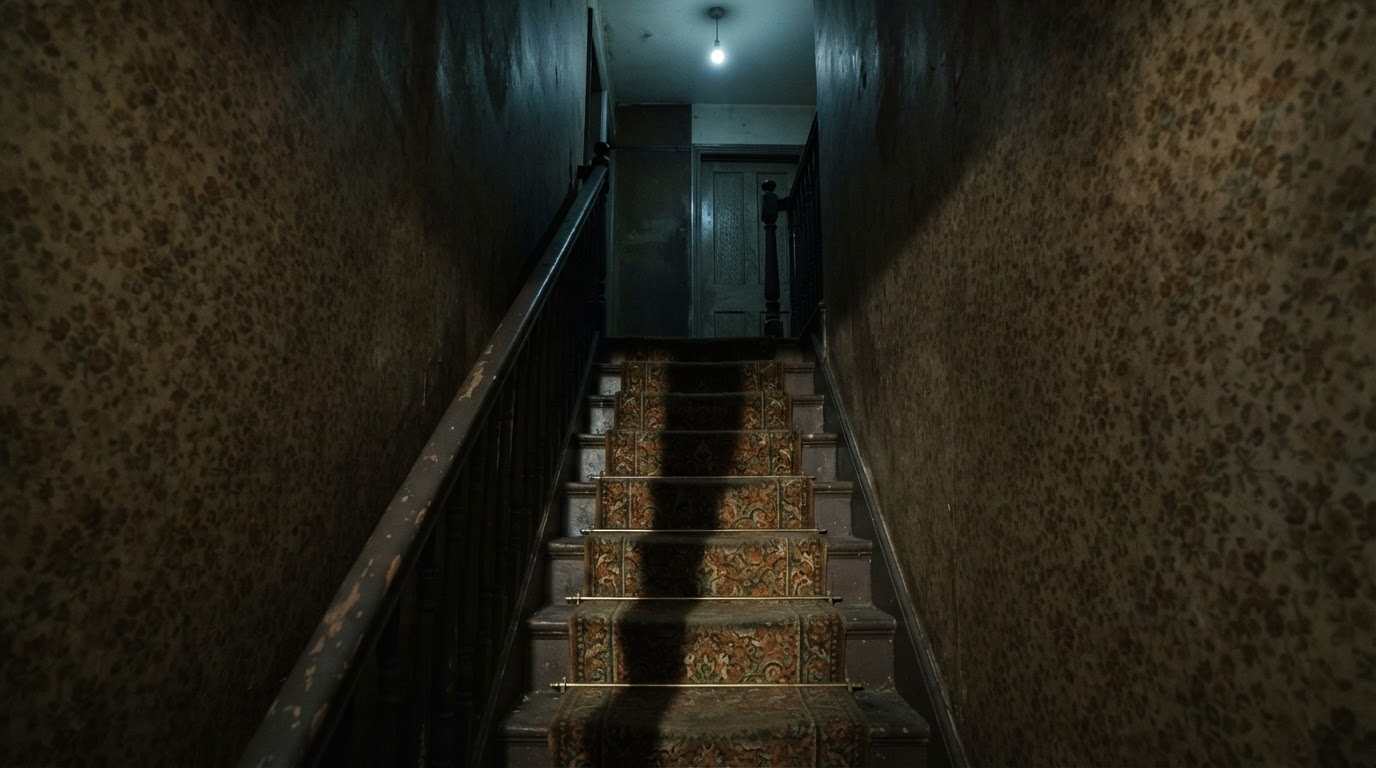
Of everything reported at Green Street, one phenomenon unsettled witnesses more than any other. Beginning in the winter of 1977, a voice started to speak through Janet — a deep, gravelly, unmistakably male voice, coarse and often obscene, utterly unlike an eleven-year-old girl's. It would go on for hours. It swore, laughed, and told stories about itself. When Grosse and Playfair pressed it on who it was, the voice gave, over time, several answers — but the one that has echoed down the decades came in a rasp: it claimed to have died in the house. "Just before I died, I went blind, and then I had a haemorrhage and I fell asleep and I died in the chair in the corner downstairs."
Here the case takes its strangest turn. The voice identified itself, on one occasion, as Bill — and the details it gave matched a real man. A former resident named William Charles Wilkins had indeed lived and died at 284 Green Street. He had gone blind, suffered a haemorrhage, and died in a chair in a downstairs room, in June 1963 — years before the Hodgsons moved in and, the investigators argued, long before a young girl could plausibly have known such a specific stranger's death. For decades this remained a compelling but unconfirmable detail. Then, remarkably, it was corroborated from an unexpected quarter: when the story was revisited for a 2024 BBC series on the case, Bill Wilkins' own son, Terry, came forward to say the voice was describing his father — that William Charles Wilkins was a real man who had died exactly as the recording described, in that house, in that chair. It does not prove a haunting. Skeptics note the family could have heard of a previous tenant's death by ordinary means. But it does mean the most chilling claim on the tapes — that a child was speaking as a dead man who really had died in that room — is not invention. The man was real, and he died the way the voice said he did.
The Levitation, and the Doubts
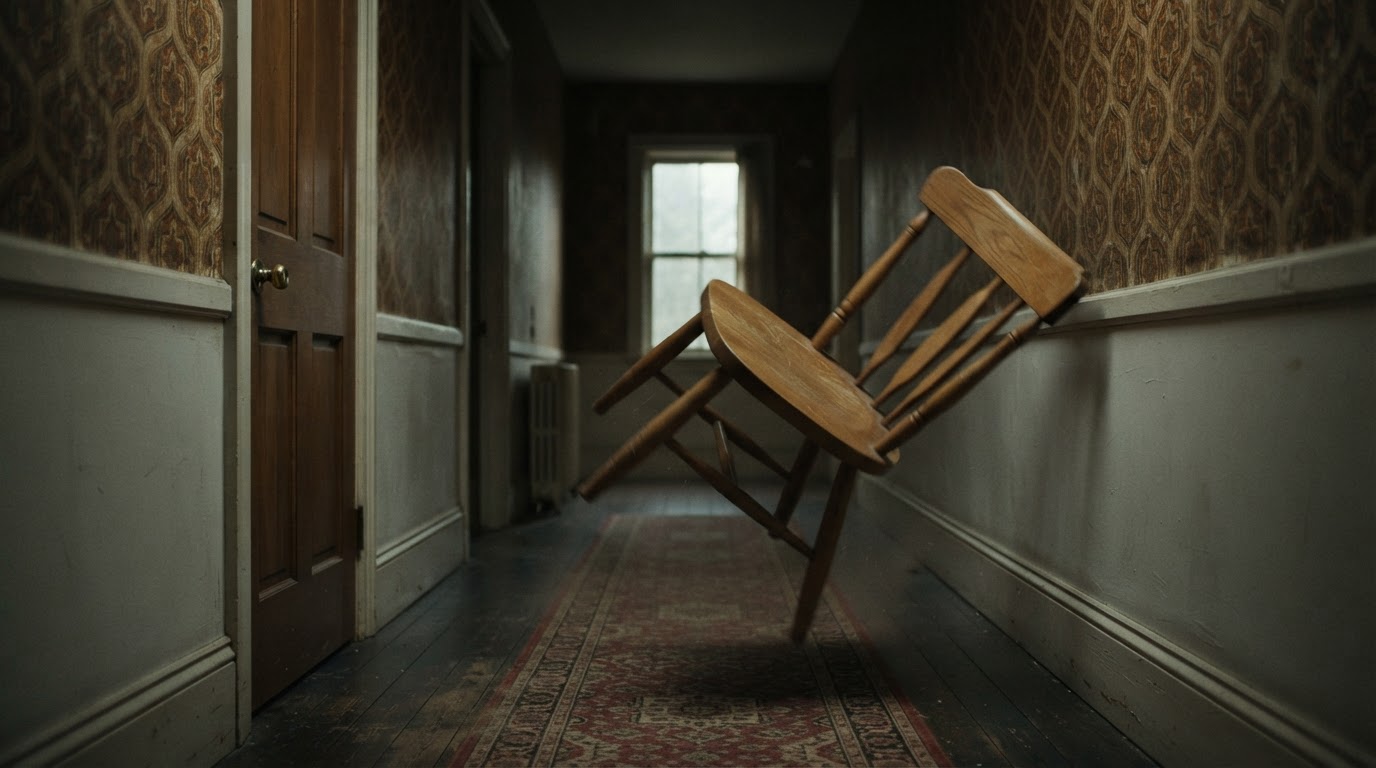
The most famous images from Enfield show Janet apparently in mid-air above her bed, caught by Graham Morris's remote-triggered cameras. Believers describe them as levitations; witnesses claimed to have seen Janet thrown about the room, and neighbours across the street said they saw her rise past the window. The photographs are the closest thing the case has to visual evidence — and also the sharpest fault line between the two camps. Skeptics look at the same frames and see a girl bouncing off a bed as if it were a trampoline, arms and hair flying with the motion. Morris himself, who took the pictures, gave differing accounts over the years, at one point saying it looked as though someone was simply jumping, then later stepping back from that. The photos, in the end, prove that something happened in that room; what they cannot settle is whether it was a girl leaping or a girl being thrown.
And then there is the admission that skeptics regard as decisive. Janet and Margaret, years afterward, acknowledged that they had faked some of the phenomena — bending spoons, making noises, playing tricks on investigators who they felt wanted so badly to believe. Janet's own estimate, often quoted, was that perhaps two percent of what happened was staged by the girls. The believers and the skeptics draw opposite conclusions from the same confession. To skeptics, a child who admits faking any of it has surrendered her credibility for all of it. To Grosse and Playfair — who did not deny the girls sometimes played tricks — that a couple of children occasionally faked events under the enormous pressure of constant observation says nothing about the incidents the investigators witnessed directly and could not explain. Both men held to that position for the rest of their lives.
The Skeptics' Case
The doubters were not fringe cranks; some came from inside the SPR itself. Anita Gregory, a fellow psychical researcher, investigated the case and came away deeply unconvinced. She thought the phenomena "overrated," found the girls' behaviour suspicious, and reported catching them in the act of bending spoons and faking events for the camera. Her critique carried particular weight precisely because she was not a debunker by trade but a colleague who had gone looking and been disappointed. Later, the American investigator Joe Nickell, one of the world's best-known skeptical examiners of the paranormal, reviewed the Enfield material and concluded that the incidents were best explained as the pranks of children — inventive, attention-seeking, and enabled by adults who wanted to believe. In this reading the whole affair is a case study in how a haunting is built: two lonely girls in a stressed household, a pair of earnest investigators primed to record marvels, and a national press eager for a ghost story, each feeding the others until an ordinary house filled up with the extraordinary.
The strongest version of the skeptical argument does not require the family to be liars. It only requires that frightened, imaginative children, watched around the clock by adults who rewarded strange events with attention, would sometimes produce strange events — and that in a house full of expectation, ordinary knocks and creaks and a girl's own theatrical voice would be read as something more. What it struggles to fully account for is the volume and the outside witnesses: the police officer's chair, the reporters struck by flying objects, the more than thirty people who came and left convinced. That gap is where the case has lived, unresolved, for nearly fifty years.
What Endures
The Enfield Poltergeist reached a far wider audience in 2016, when The Conjuring 2 turned it into a Hollywood horror film, casting the American ghost-hunters Ed and Lorraine Warren at the centre of a story they had, in reality, only briefly visited. The film took the usual liberties, and purists on both sides winced at it — but it fixed Enfield in the popular imagination as the British haunting, the Amityville of England.
Two percent. That is the figure I keep returning to when I file this one away, because it is such an odd thing for a person to say. A liar rounds up or denies outright; a witness under pressure says "some" or "a bit." Janet gave a number, and a small precise one, as though she had gone back through it herself and counted. I have no way to test that figure and neither does anyone else, and it has sat in my notes for years now, doing nothing but refusing to resolve into either an admission or a defence.
The real people, though, are more affecting than any film. Peggy Hodgson never left 284 Green Street; she lived there until her death in 2003, in the same house, seemingly at peace with it. Janet, the girl at the centre of it all, grew up, and in interviews as an adult has spoken about it with a striking lack of drama — describing the toll it took, the years of not being believed, the ordinary life she wanted and mostly got. She has never claimed to understand what happened to her. She has only insisted, quietly and consistently, that most of it was real, that she did not want it, and that she would not wish it on anyone. Maybe she was a clever child who fooled a nation. Maybe a family was genuinely tormented by something no one has a name for. Nearly half a century on, the tapes still exist, the photographs still divide the people who look at them, and the small council house on Green Street keeps the one answer that would settle it all firmly to itself.
---
This article combines a photograph of the actual site, 284 Green Street, with AI-generated images and video made to convey the mood of the story.


Comments
No comments yet — leave the first one.