There is a particular kind of horror that does not come from ghosts or monsters, but from a man who believes, utterly and without doubt, that he is a god. In the last years of the ninth century, as the thousand-year kingdom of Silla rotted from within, such a man walked out of a mountain temple and into history. He had one eye. He had been a beggar, and before that a monk, and before that — if the oldest records are to be believed — an abandoned prince, cast out of a royal house that wanted him dead. His name was Gungye, and for a brief and terrible span of years he ruled much of the Korean peninsula not merely as a king, but as the Maitreya Buddha made flesh: the savior of the age, descended to earth to judge the living. He said he could see into the hearts of men. He said he could read every treasonous thought before it was spoken. And in the name of that power, he killed and killed and killed — until, on a single night in the year 918, the killing came home to him. This is the story of a monk who reached for divinity, and of the darkness that reached back.
This one sat in my files for a long time before I understood what to do with it, and the reason was a single word: gwansimbeop. The art of observing the mind. I have collected a great many accounts of tyrants, and most of them at least go through the motions of accusation and evidence. Gungye dispensed with the machinery entirely and made his own perception the sole instrument of the state. The more I read around it, the less it looks like madness and the more it looks like an idea — one that a person could have had on purpose.
The Prince Who Was Thrown Away
The story of Gungye begins, as so many dark stories do, with an omen and a discarded child.
According to the Samguk Sagi, the great chronicle of the Three Kingdoms compiled centuries later, Gungye was born a son of the Silla royal house — by one account the illegitimate son of King Heonan, by another the son of King Gyeongmun. What every version agrees on is far stranger than mere royal blood. The court astrologers, it was said, warned that the child had been born under a fatal star: on a day of ill fortune, with his teeth already grown in his mouth, and that he would one day bring ruin upon the kingdom. The king ordered the infant killed.
A servant was sent to do the deed. She threw the baby down from an upper floor to the ground below — and here the legend turns from cruelty to something like fate. As the child fell, the woman caught him, but her finger struck his eye and blinded it. He would carry that wound, that single ruined eye, for the rest of his life. She fled with him into hiding and raised him in secret. The prince who was meant to die grew up not knowing his own name, a boy with one eye and no place in the world, marked from birth as a bringer of doom.
Whether any of this is literally true, we cannot know. It has the shape of legend — the cursed birth, the maimed eye, the prophecy of ruin — the kind of story that gathers around a man after he becomes terrible, to explain how he came to be that way. But it is the story the records left us, and it set the stage for everything that followed: a man who had been told, before he could even speak, that he was born to destroy.
The Monk Who Came Down From the Mountain
When he was old enough to be told the truth of his birth, the young man did what abandoned children of that broken age so often did: he went to a temple. At the monastery — the records name it Sedalsa — he took the tonsure and the robes, and a Buddhist name, Seonjong. For a time he was simply a monk among monks, in a country falling to pieces around him.
And Silla was truly falling to pieces. By the closing decades of the ninth century the old kingdom that had once unified the peninsula was hollow. The court was consumed by coups and murders; taxes crushed the countryside; famine and banditry emptied whole provinces. Across the land, local strongmen and rebel captains carved out their own domains, and desperate peasants flocked to anyone who promised bread and vengeance. It was, for an ambitious man, a season of terrible opportunity.
Gungye did not stay a monk. He left the temple and joined the rebels — first under one warlord, then under another, rising quickly by sheer ability. He was, by every account, a gifted commander: brave, shrewd, and generous with his soldiers, sharing hardship and plunder alike so that men followed him gladly. Where he passed, towns and fortresses fell into his hands, and his army swelled. Within a few short years the one-eyed monk who had been thrown from a window was master of a broad swath of central Korea, and in the year 901 he did what men in that age did when they had gathered enough power. He declared himself king, and founded a kingdom of his own.
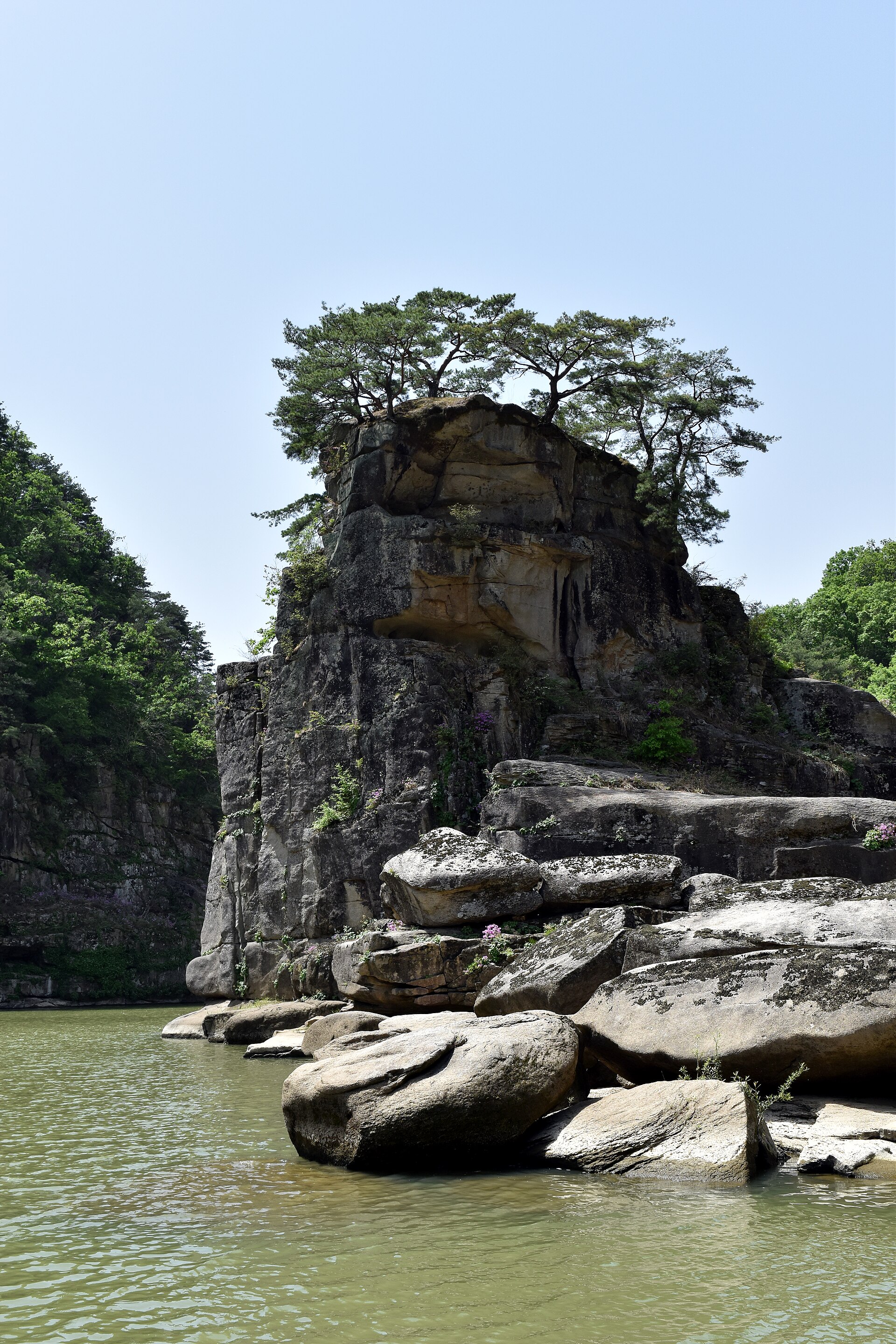
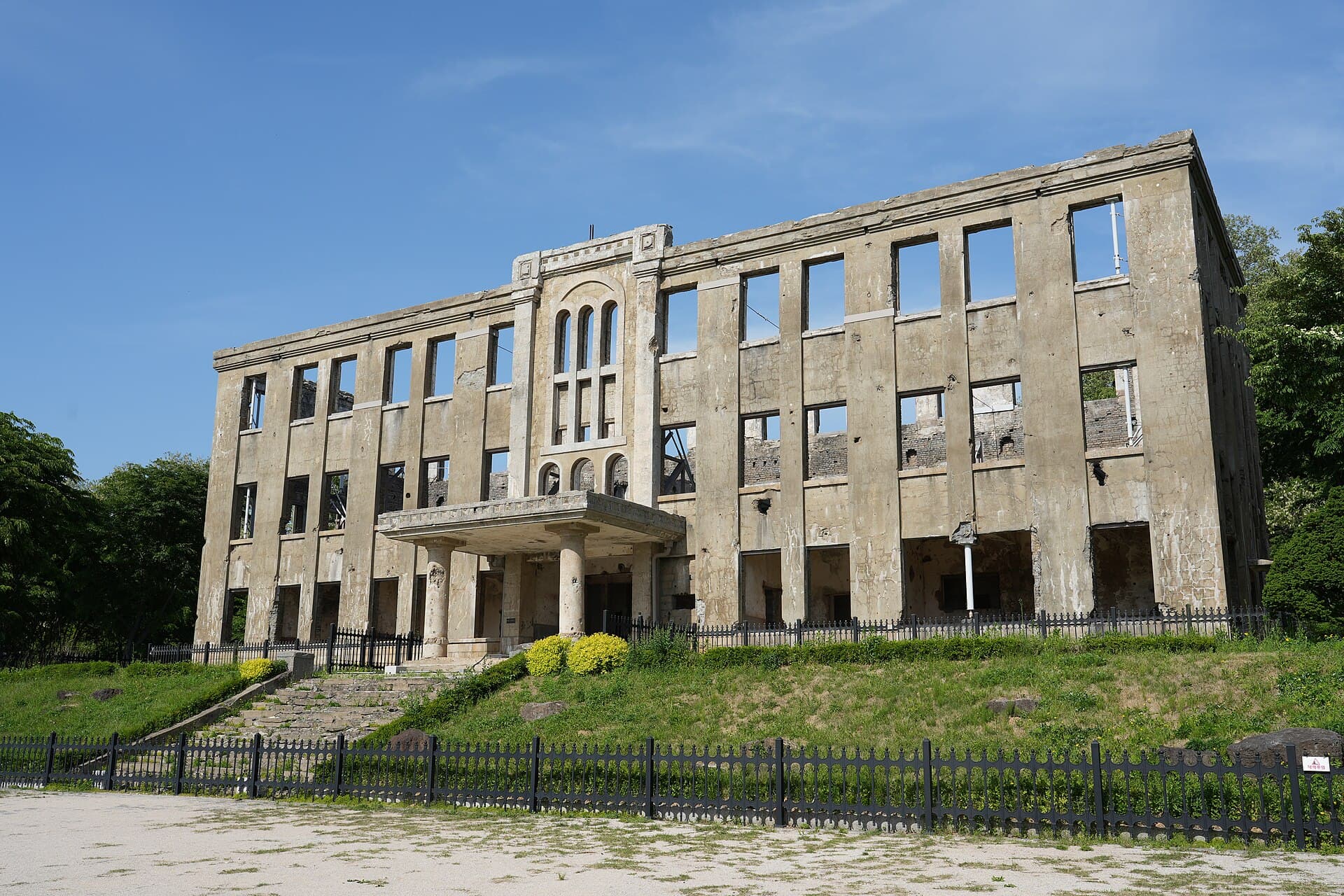
Photo: Wikimedia Commons, CC BY-SA 3.0
The Kingdom of Taebong
The kingdom Gungye built was, at first, a genuine achievement. He named it at the outset Later Goguryeo, reaching back to the memory of the great northern kingdom of centuries past, promising the people that the glory Silla had crushed would rise again. He renamed it Majin, then finally Taebong, and moved his capital to Cheorwon, a plain ringed by mountains where he raised palaces and halls fit for the ruler of a new age.
For a while, this was the largest and most powerful of the states then contending for the peninsula — larger than the resurgent Baekje to the southwest, larger than the shrunken remnant of Silla itself. Gungye held the center of the country. He commanded the strongest army. Among the able men who gathered to his banner was a young commander from a merchant family of the west coast, a man named Wang Geon, who would in time become his most trusted general and, in time, something far more dangerous than that. For now, Wang Geon served, and Taebong grew, and Gungye sat at the summit of everything he had built from nothing.
He might have become the founder of a lasting dynasty, remembered as the man who ended the age of chaos. Instead, somewhere along that climb, something in him changed — or perhaps something that had always been there, waiting, finally found the power to show itself. The king began to believe he was more than a king.
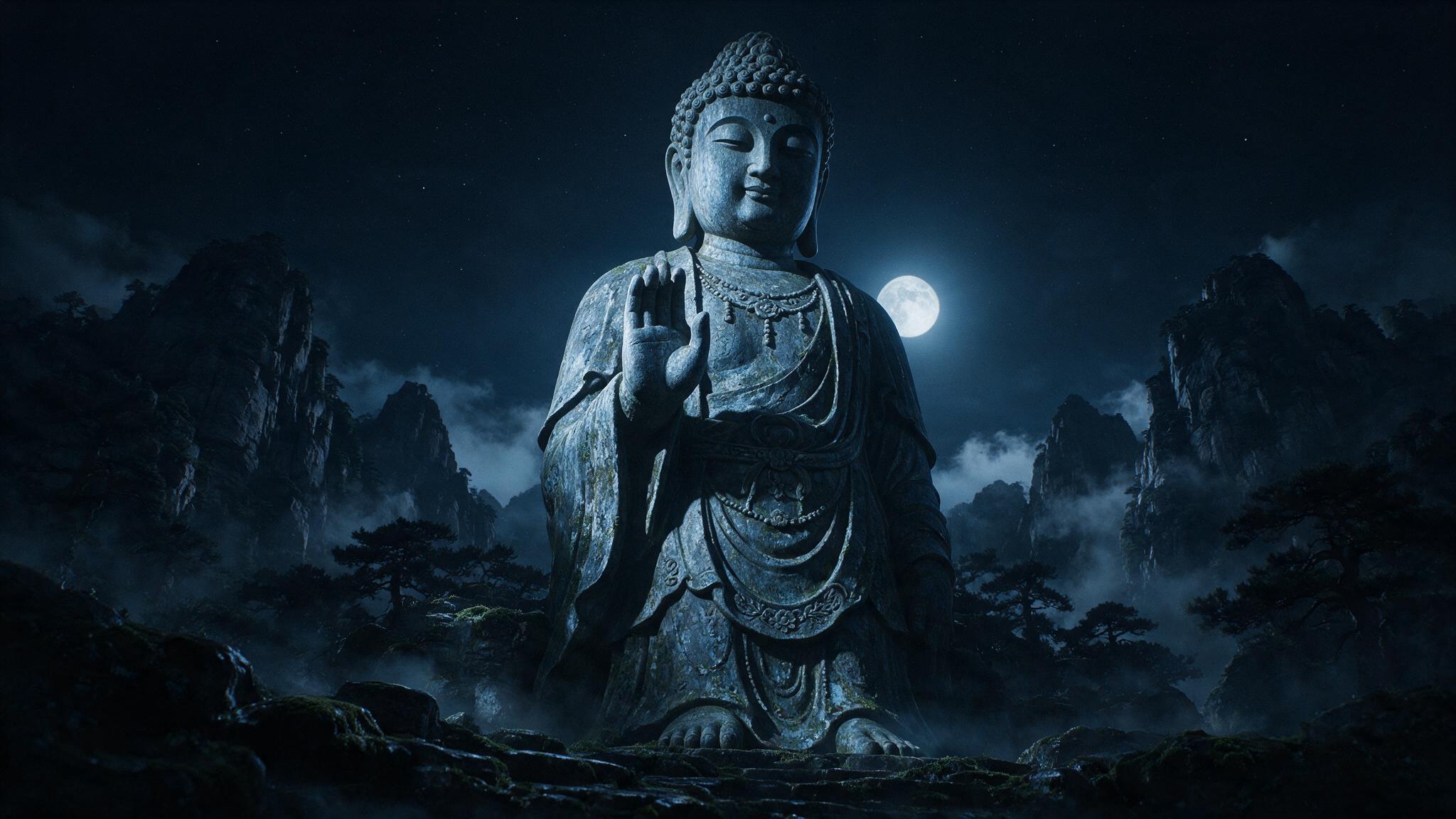
The Living Buddha
To rule the desperate and the faithful, a crown was not enough. Gungye reached for something older and heavier than any crown — the certainty of the divine. He proclaimed himself the Maitreya Buddha.
In Buddhist belief, Maitreya is the Buddha yet to come: the enlightened one prophesied to descend into the world in a future age of suffering, to save all beings and usher in a paradise on earth. For a broken people drowning in war and famine, the promise of a savior who had already arrived, who walked among them wearing a crown, was intoxicating. Gungye did not merely claim the title as a metaphor. He lived it. He crowned himself in a golden headdress and robes of a bodhisattva. He had his two young sons declared bodhisattvas at his side. When he went out, he rode in solemn procession with monks chanting and incense burning and boys and girls bearing banners and canopies before him, a living god carried through the streets of his capital. He is even said to have composed scriptures of his own, twenty volumes of them, his own gospel to replace the teachings of the ancient Buddha — and when a respected monk dared to call these writings heresy, Gungye had him beaten to death.
Here the story crosses a threshold. A king may be cruel and still be a king. But a man who believes he is God answers to no law, no counsel, no fear — for who dares correct a Buddha? And it is at exactly this point that Gungye reached for the instrument that would make his name a byword for terror for a thousand years.
The Mind-Reading
Gungye announced that, as the Maitreya Buddha, he possessed a divine power he called gwansimbeop — the art of "observing the mind." He could, he declared, look upon any man or woman and see directly into their heart. No traitor could hide a treasonous thought from him. No conspiracy could be concealed. He saw all.
It was, of course, a claim that could never be disproven — and that was precisely its power. When the King of the Living Buddha fixed his one eye upon a subject and pronounced that he could see treason festering in that person's soul, there was no defense. Evidence was unnecessary; the god had seen it, and the god did not err. To protest one's innocence was itself proof of a lying heart. The accused could only kneel and die.
And they died in numbers that stagger the imagination. The chronicles record that Gungye condemned officials, generals, and ministers by the score on the strength of his "mind-reading," that on some days a hundred or more were put to death, that among the high officers and nobles of his court, those who escaped his suspicion were the rare exception. He grew, the records say, ever more paranoid, seeing plots in every glance and murmur. The court of Taebong became a place where to be summoned before the throne was very often to be summoned to one's execution — where the most powerful men in the kingdom lived each day not knowing whether the god-king's terrible eye would fall upon them next.
The horror reached even into his own household. When his queen, Lady Kang, dared to remonstrate with him over his cruelties, Gungye accused her, too, of adultery and treason revealed to him by his divine sight. He had her killed by a method too brutal to dwell on, and then — because a Buddha does not leave a poisoned line — he had their two young sons, the boy-bodhisattvas he had paraded through the streets, killed as well. There was no longer anyone in the world Gungye would not destroy on the word of the voice inside his own head.
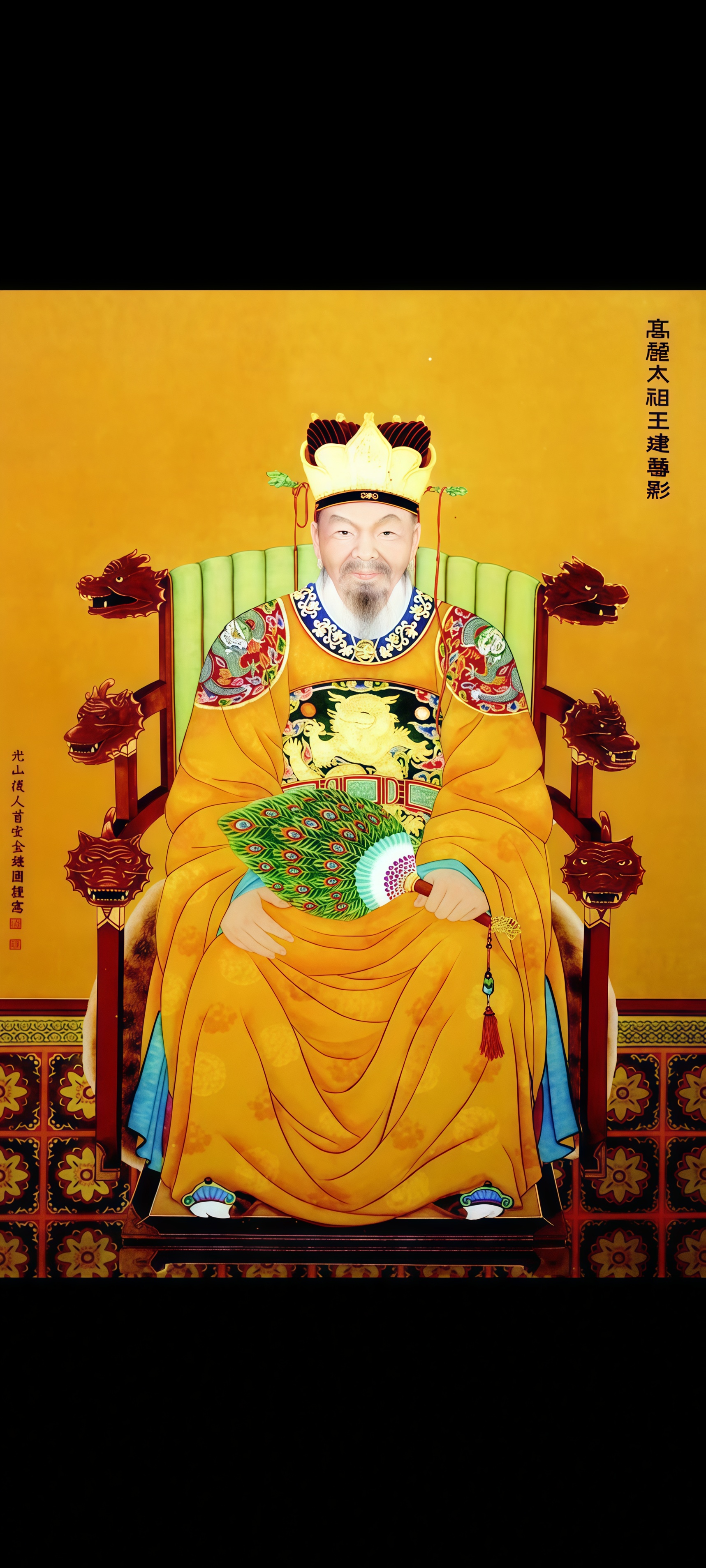
Photo: Wikimedia Commons, CC BY-SA 4.0
The Night It All Ended
A reign of terror devours its own foundations. Every execution created new widows, new orphans, new men who understood that loyalty and innocence were no protection at all — that the only certainty under the Living Buddha was that your turn might come tomorrow. Fear, past a certain point, stops producing obedience and starts producing desperation. By the year 918, the most powerful men left alive in Taebong had all arrived at the same silent understanding: the king had to die, or they would.
The story that has come down to us places Wang Geon at the center of it. One night, four of the kingdom's leading generals — the records name them Hong Yu, Bae Hyeon-gyeong, Shin Sung-gyeom, and Bok Ji-gyeom — came to Wang Geon in secret and pressed him to rise against the king. He hesitated, or is said to have hesitated; it was his wife, in one telling, who put the armor on him with her own hands and drove him to it. Before the night was over they had raised the soldiers and the people of the capital, and the cry went up through Cheorwon that a new king had come. The mob poured toward the palace.
And the Maitreya Buddha, who could see into every heart, did not see this coming. When the tumult reached his gates, Gungye — the god-king before whom a hundred men a day had knelt to die — did not stand and face it. He fled. He is said to have slipped out of the palace in disguise, or in common clothes, and vanished into the dark hills around his capital, alone, a hunted fugitive in the kingdom he had ruled as a living Buddha only hours before. Wang Geon took the throne, and named his new dynasty Goryeo — the kingdom that would rule Korea for the next four and a half centuries, and give the land the name the world still calls it by.
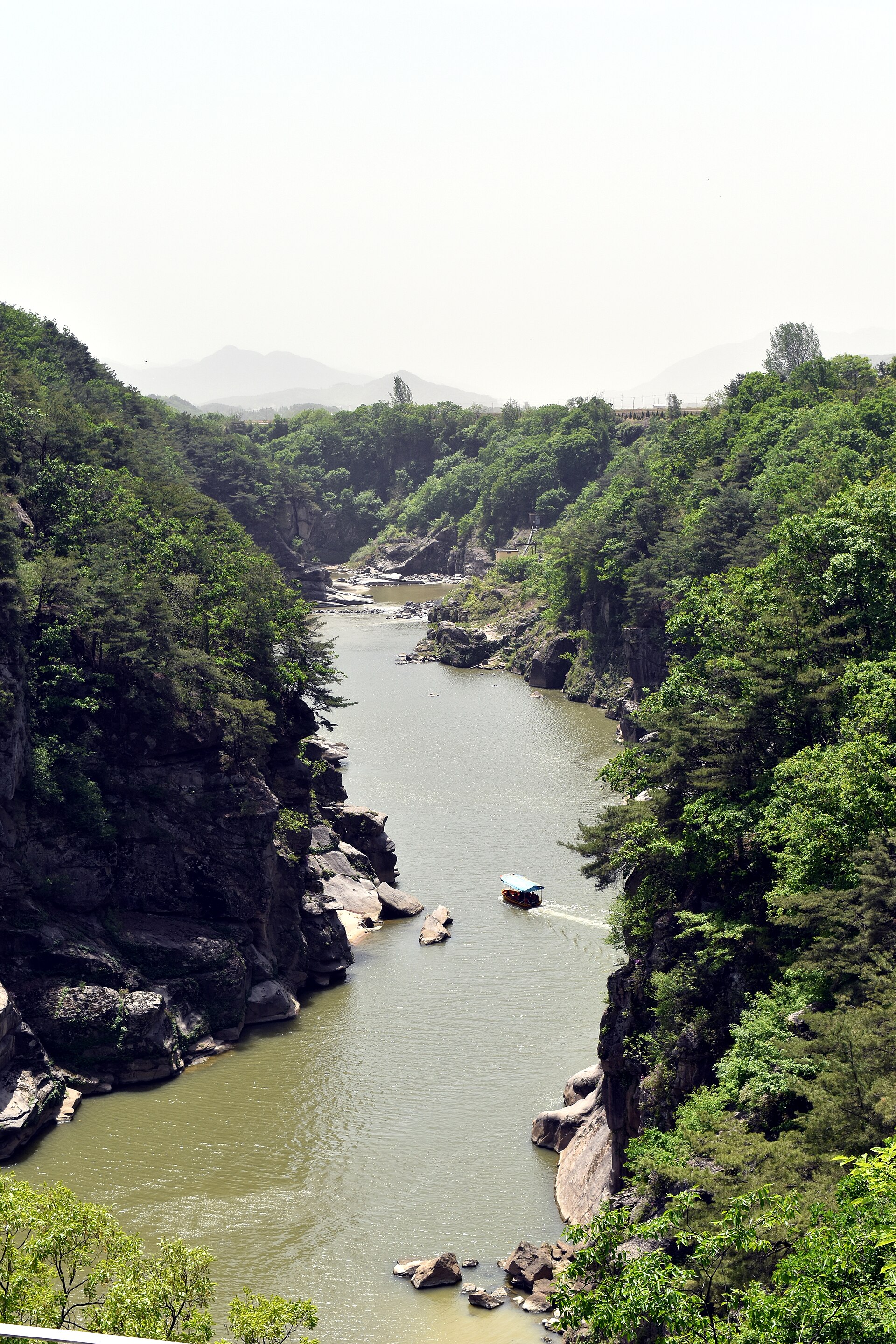
Photo: Wikimedia Commons, CC BY-SA 3.0
A slow push through a dark, deserted ancient palace hall, guttering candles and long shadows on stone — a mood recreation, not real footage.
The Squalid Death — and the Doubt Beneath It
How Gungye died, no one truly knows, and the records themselves cannot agree — which is, in the end, the most fitting epitaph of all for a man who claimed to see all truth.
The most widely repeated account is grimly small. The fallen king, it says, wandered the countryside for two days, half-starved, until hunger drove him to creep into a field and steal ears of grain. There he was recognized — or mistaken for a common thief — by the local peasants, and they fell upon him and beat him to death. So ends, in the dust of a barley field, at the hands of the very people he had ruled as their savior-Buddha, the man who had proclaimed himself the salvation of the world. Other accounts say he was cut down by a soldier, or died in the hills of no recorded cause. There is no tomb, no certain grave, no agreed-upon ending. The Living Buddha simply vanishes from history, into a death as obscure and disputed as his birth was ominous.
And it is here, at the very edge of the story, that a colder and more unsettling question opens beneath everything you have just read.
Because consider: who wrote these records? Not Gungye, and not any friend of his. Every chronicle we have of his reign — the Samguk Sagi, the Goryeosa — was compiled long afterward, under the dynasty founded by the very man who overthrew him. The tale of the tyrant who murdered a hundred a day, who butchered his own wife and sons, who fancied himself a god and fled to die beaten in a ditch — this is the tale told by the victor, by Wang Geon's Goryeo, which needed above all else for its founding to be righteous. A dynasty that seizes a throne must prove the man it dethroned deserved to lose it. The worse Gungye is made to look, the more just Wang Geon's rebellion becomes. And so the historian is left to wonder how much of the monster was real, and how much was painted onto him afterward by the men who needed a monster to justify a coup.
Modern historians have begun, cautiously, to pull at this thread. They point out that the same Gungye was, by any account, a brilliant organizer who built the strongest state on the peninsula from nothing, who won the fierce loyalty of hard men for years, who established the very institutions of government that Wang Geon would inherit and use to rule. Would such a man truly have descended, overnight, into gibbering, self-deifying madness? Some note that a surviving stone inscription of the era — a monk's memorial stele — makes no mention at all of the Maitreya-mania and the persecution of monks that the later chronicles paint as central to his ruin. Perhaps Gungye grew genuinely cruel and paranoid at the end; the collapse of his reign is hard to explain otherwise. But perhaps, too, the god-king of legend is at least partly a construction — a real man's real failures magnified, and his real achievements erased, until nothing was left but the monster the winners needed him to be.
What unsettles me most, having gone through the chronicles and the counter-arguments more times than the subject deserves, is the twenty volumes of scripture. He is said to have written his own gospel, and to have beaten a monk to death for calling it heresy — and not one line of it survives. A dynasty that wanted a monster preserved the story of the murder and let the text disappear. I cannot decide which of those two decisions I find more deliberate.
We will never fully separate the two. The one-eyed monk who called himself the Buddha of the future has been dead for eleven hundred years, and the only voices that survive to tell us who he was belonged to the people who destroyed him. That, perhaps, is the true and lasting horror of Gungye — not the hundred men a day, not the divine eye that saw treason everywhere, not the beating in the barley field. It is that a man can be erased and rewritten so completely by those who come after him that even now, across eleven centuries, we cannot be certain whether we are remembering a monster, or only the shadow a victor chose to cast in his place.
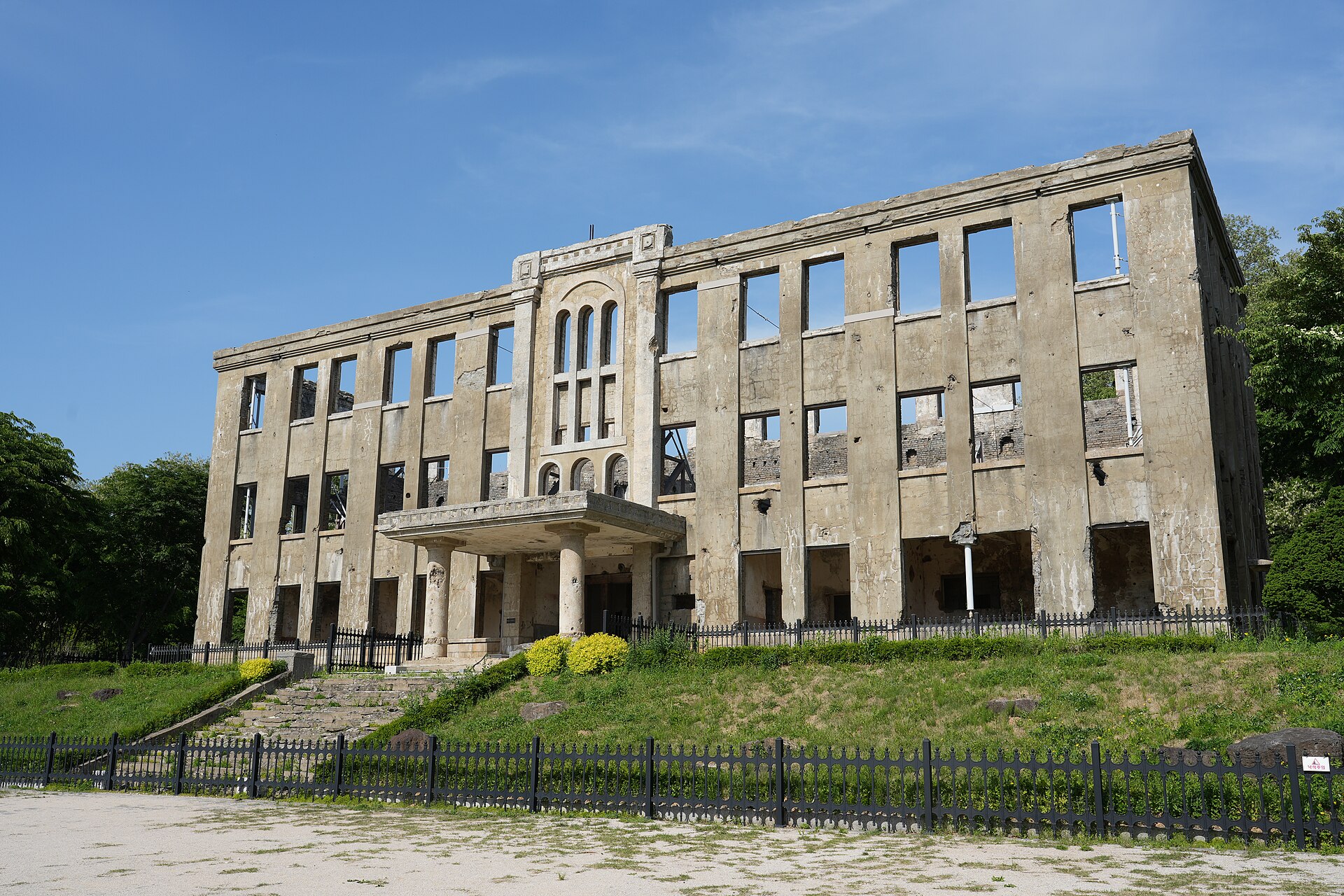
Photo: Wikimedia Commons, CC BY-SA 4.0
---
This article combines real photographs and archival material from the Cheorwon area with AI-generated images and video produced to convey the mood of the story. The site of the Taebong capital itself is inaccessible today, so present-day scenery from the same Cheorwon country stands in its place.

Comments
No comments yet — leave the first one.