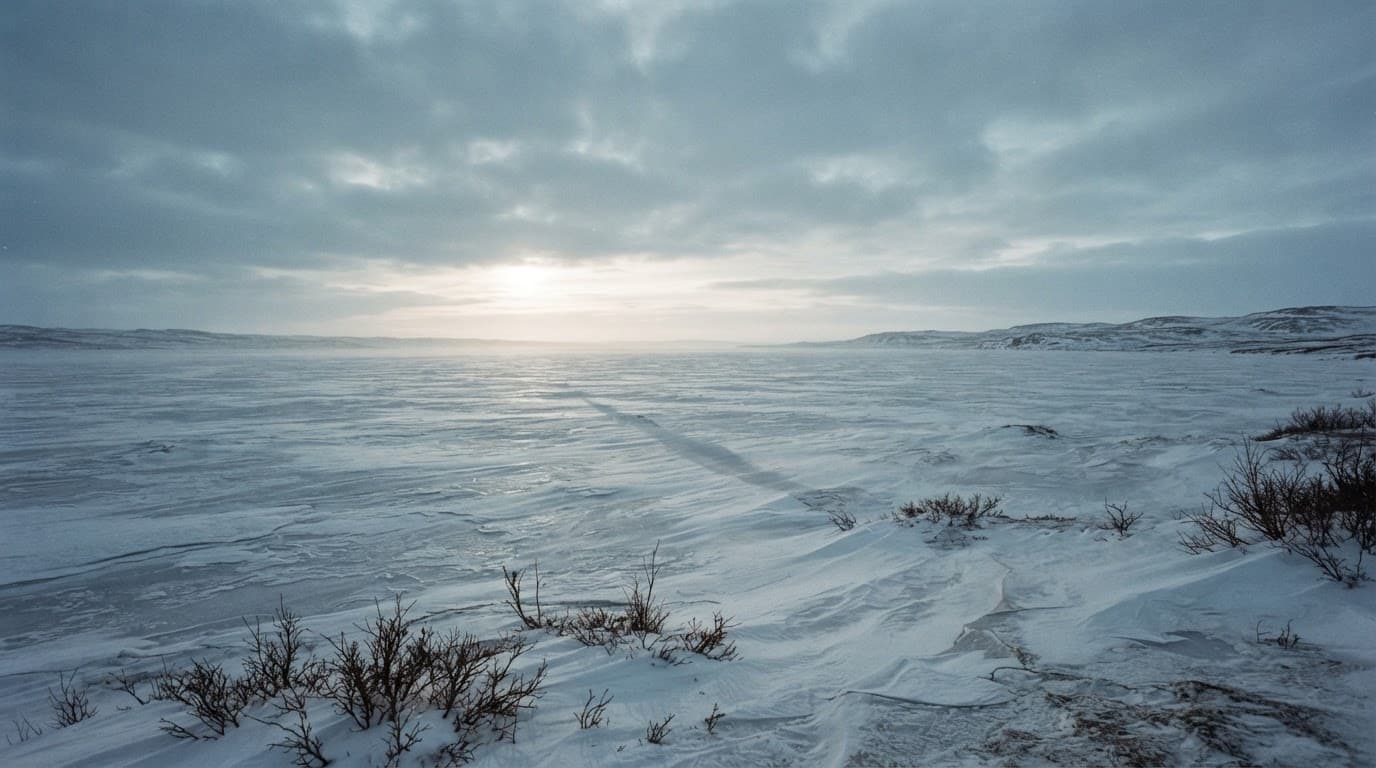
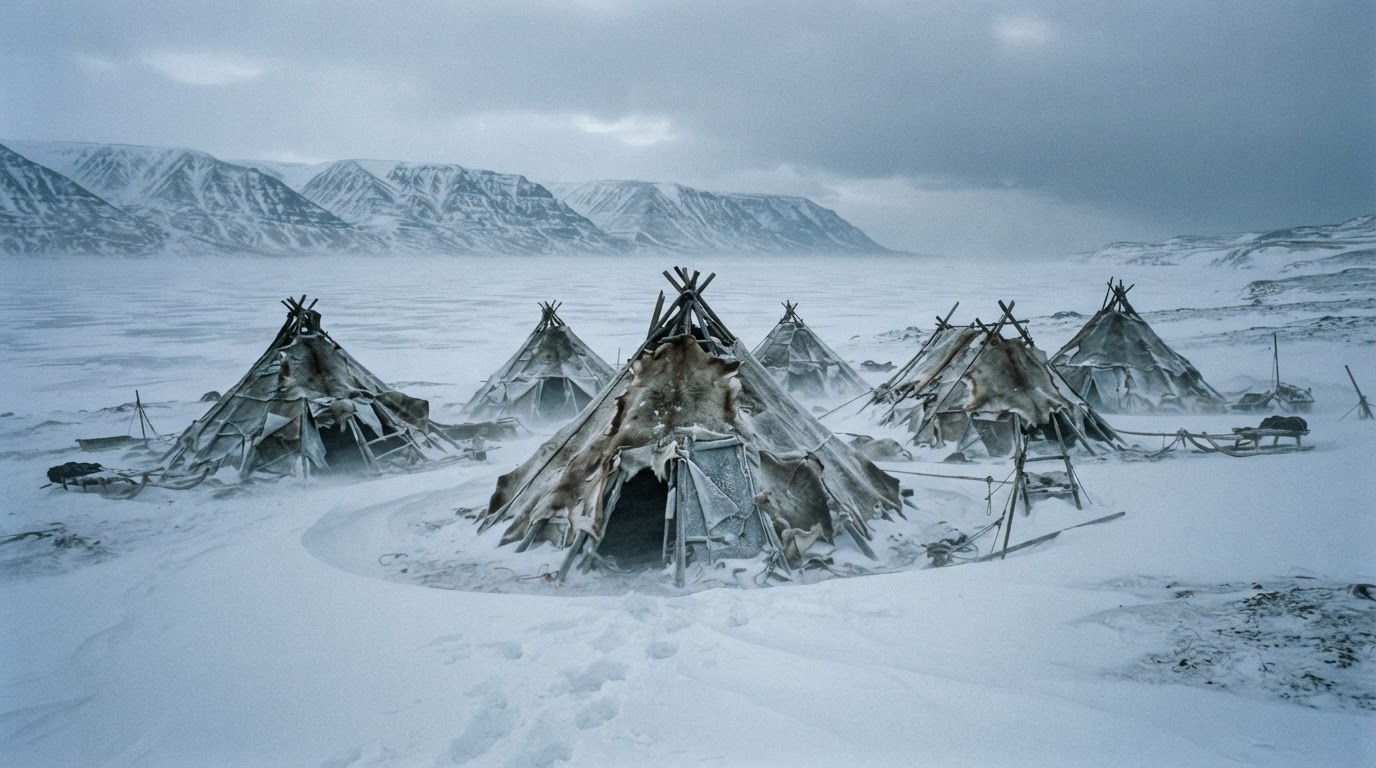
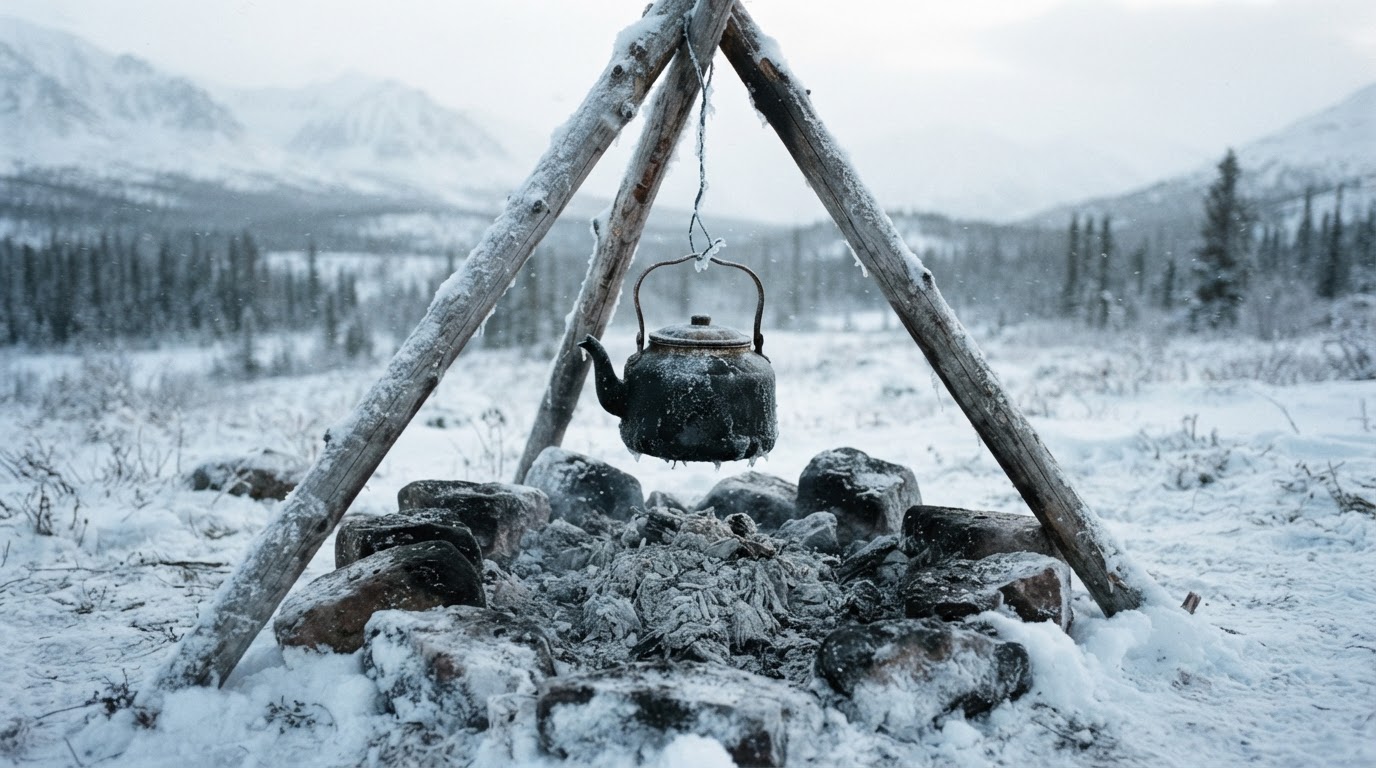
In November 1930, a trapper named Joe Labelle, crossing the frozen barrens of northern Canada alone, walked into an Inuit village on the shore of Lake Anjikuni. It was an inhabited settlement he had visited before. But that day the village lay utterly silent. Inside the caribou-skin tents, food still sat out as if the owners had only just stepped away, and a pot on a cold hearth held a meal frozen half-cooked. Yet nowhere in the village was there a single soul. Some thirty residents were gone, every last one of them — leaving behind their clothes, their rifles, their food. The village dogs lay starved where they had been tied outside, and on the outskirts a single grave had been opened, its stones lifted away and its contents gone. This is the core of the story we now call "the vanishing village," or the Lake Anjikuni mystery. But this chilling tale has two faces: the legend everyone loves to tell, and the record actually written in the police files.
I keep a small set of files for cases the record has already closed, and this one has been in it longer than any other. The reason is the bone needle. Almost every version I have collected carries that detail — a caribou-skin garment left half-sewn, the needle still through it — and the detail is doing something no invention needs to do. A fabricator reaching for horror reaches for the rifles and the opened grave. Nobody makes up a needle. It is the wrong size for a legend, and I have never been able to decide whether that means someone saw it, or simply that someone was very good.
The Story Everyone Knows
The legend, as it is passed down, runs roughly like this. Joe Labelle was a seasoned trapper who knew the Inuit village on the shore of Lake Anjikuni. Making for it that night in search of shelter and warmth, he sensed from a distance that something was wrong. A village that should have rung with barking dogs and the sounds of people was as quiet as a grave.
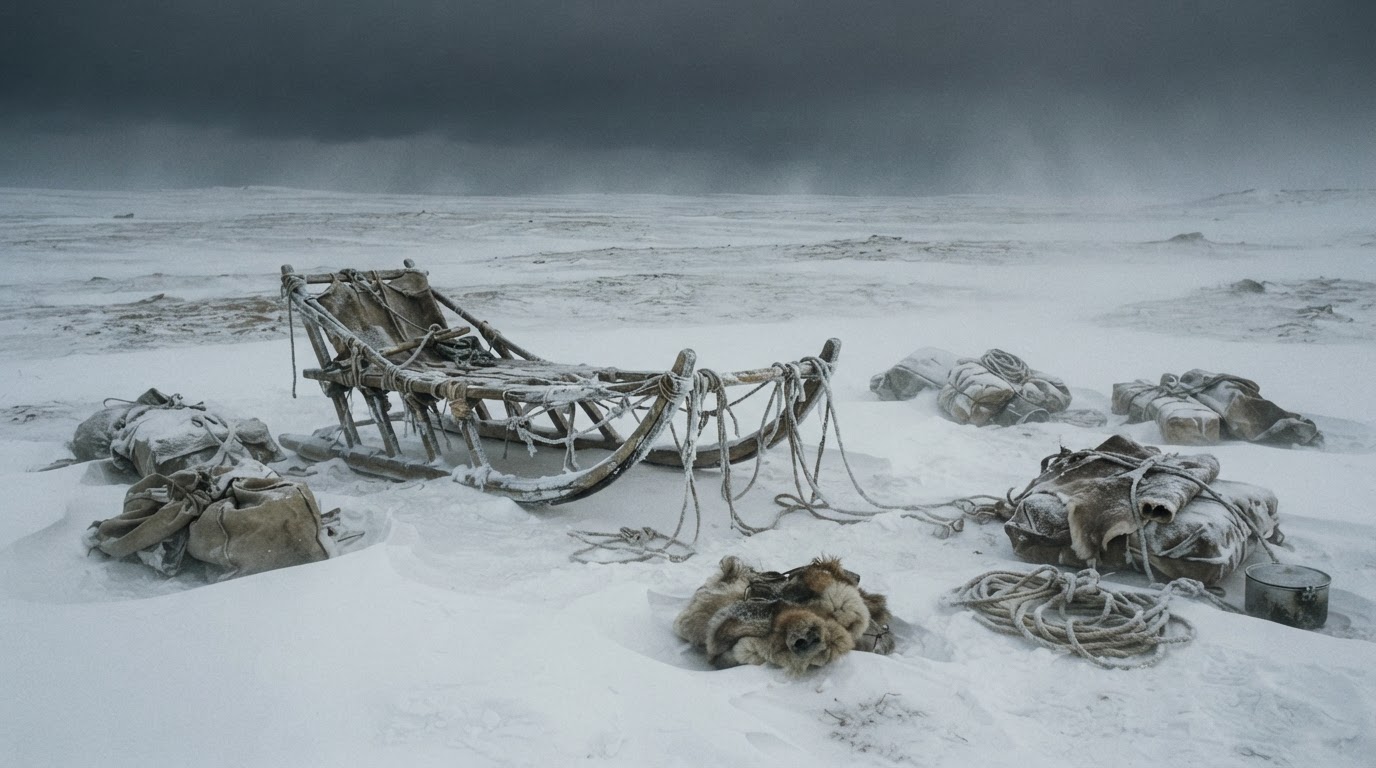
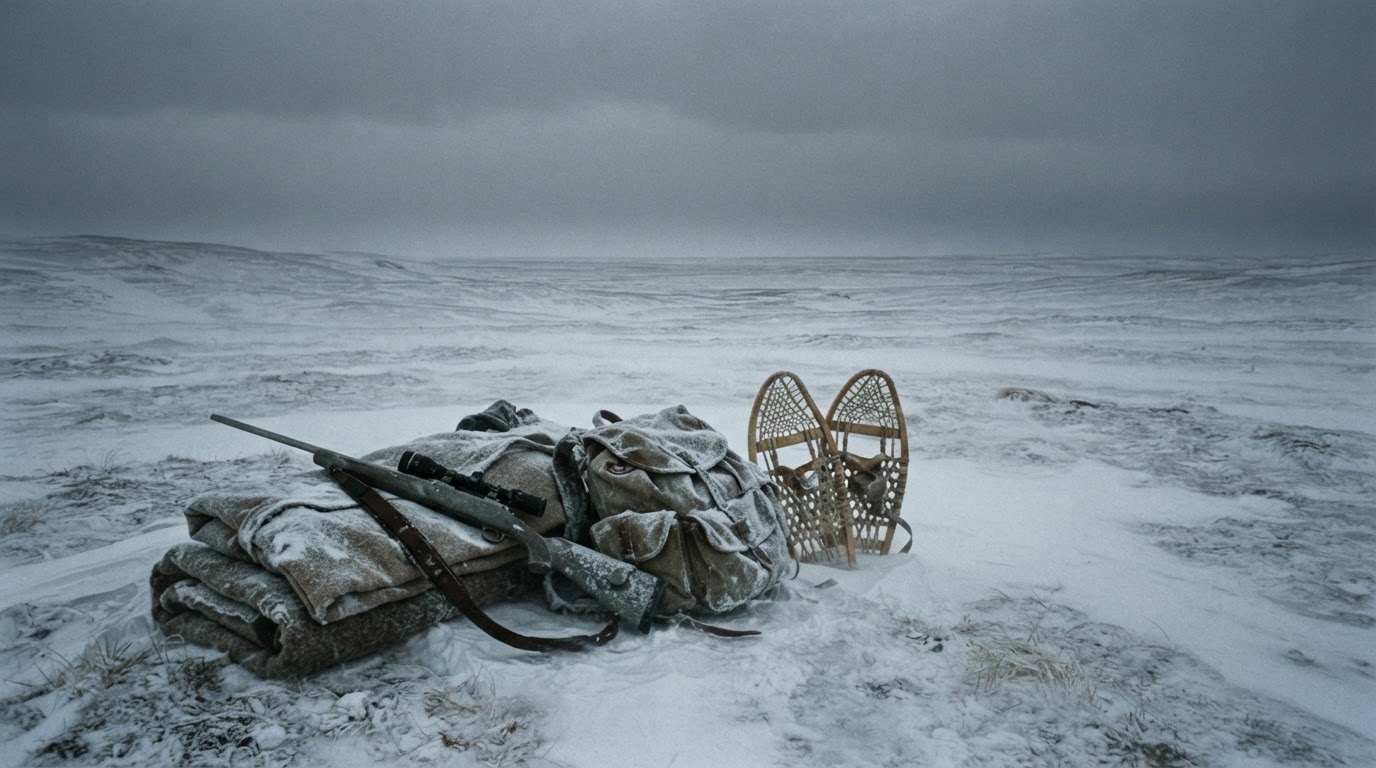
What he found once inside was uncanny at every turn. In each tent, the household belongings sat exactly as if their owners had just stepped out. In one, a half-sewn caribou-skin garment lay with a bone needle still threaded through it. The hearth fire had died to ash, but the food above it remained half-eaten. Rifles — a hunter's very lifeline — had been left inside the tents as if simply abandoned. In that pitiless Arctic, for people to walk away on their own two feet leaving behind their guns and food was almost unthinkable. Labelle, the story goes, hurried to the nearest telegraph post and reported the strange scene to the Royal Canadian Mounted Police.
Dead Fires, Starved Dogs, an Opened Grave
What makes the legend so hard to forget are three details in particular. The first is the food over the dead fires — a scene that suggests the people vanished suddenly, in the very middle of a meal. The second is the dogs. In the telling, the village dogs lay starved where they had been tied outside, half-buried in the snow. To the Inuit, sled dogs are precious property, essential to survival. To leave such dogs tied up and abandoned seemed to mean either that the people had no time to tend to them — or that they had not "left" at all.
And the third, most ominous detail was the grave. A grave on the edge of the village had been opened, and this was said to be no work of animals. The stones that had covered it, the story insists, were not scattered as a beast would scatter them but stacked neatly to one side, as if someone had lifted each one away with care. And inside, it was empty. A grave whose body was gone. In this detail — that not only the living had vanished but the dead already buried in the ground had gone too — the story crosses out of mere disappearance and into the realm of the supernatural.
How the Story Spread
The tale first reached print in November 1930, through a reporter named Emmett E. Kelleher. He worked what Labelle was said to have experienced into a lurid newspaper story — accompanied, no less, by a photograph of a grave that had nothing to do with Anjikuni at all. Fitted with a sensational headline and chilling detail, the piece spread across paper after paper in short order.
But the story only truly became a "legend" much later. In 1959, the author Frank Edwards revived the Anjikuni tale in his popular collection of the supernatural, "Stranger than Science." Under Edwards's hand the story grew smoother and more dramatic still, and details like the exact number who had vanished, the starved dogs, and the empty grave hardened into settled fact. As the book found a wide readership, Anjikuni took its place among UFO and paranormal enthusiasts as the very byword for an entire village evaporating. The form of the Anjikuni legend we know today was, in truth, perfected not by the first eyewitness account but through that book.
What the Police Files Say
So what does the actual record say? As the story spread, the Royal Canadian Mounted Police looked into it, and their conclusion ran opposite to what the public wanted to hear. According to the police, no "village of thirty people that vanished en masse" had ever existed in the first place. The Lake Anjikuni region was not a place where a settlement of that size would be established, and there was no report or record of an Inuit group of that scale disappearing without a trace.
The RCMP had already examined the story's credibility soon after Kelleher's article ran, noting that the grave photograph printed with it was an unrelated image, and that there was no physical evidence to support the scene Labelle was said to have witnessed. In later years the RCMP characterized the case as, in effect, an invented story — an urban legend — and stated officially that no such mass disappearance had ever occurred. In the extreme Arctic, small camps moving with the seasons and following the game were entirely ordinary. In other words, the people had not "vanished"; there had never been a village there to vanish. That is the gist of the record.
Why the Legend Refuses to Die
Even with the record this clear, the Anjikuni legend simply will not go away — for several reasons. First, the story's imagery is overwhelming. The food over the dead fire, the dogs starved where they were tied, the empty grave: three scenes that, once heard, are hard to erase from the mind. Against the power of such images, the dry administrative conclusion that "there was no such village" rarely wins.
Another reason is the power of the setting. The vast snowfields of the Canadian Arctic, where humans hardly set foot, the months-long dark and killing cold — these make a backdrop against which "anything could happen." The more remote and unverifiable the frontier, the more a story tends to be inflated rather than disproven. And it matters, too, that the tale began in a sensational newspaper article and was perfected through a popular book that prized entertainment over verification. With each new generation, people reached not for the police's debunking but for the eerie original story.
There is one thing in this file I have never been able to leave alone, and it is not the village. It is Kelleher choosing to run a photograph of a grave that belonged to somewhere else. He had a story about an empty settlement and he reached, specifically, for the picture of a hole in the ground. Reading the 1930 clipping again this week I found myself thinking that the legend's most famous detail may have entered the world not as testimony but as a picture caption, and that everyone who has since felt cold about that opened grave has been frightened by a photograph of a stranger's burial in a place with another name.
What we can perhaps learn from Anjikuni today is less the truth of a vanished village than the way a story survives. When legend and record collide head-on, the side that holds the human heart longest is usually not the verified fact but the well-made fear. Whether or not a village of thirty ever stood on the shore of Lake Anjikuni, the image of that food left over a dead fire will go on refusing to cool in our imagination for a long time to come.
---
The images and video in this article are AI-generated works produced to convey the mood of the story, and are not photographs of any actual person or event.


Comments
No comments yet — leave the first one.