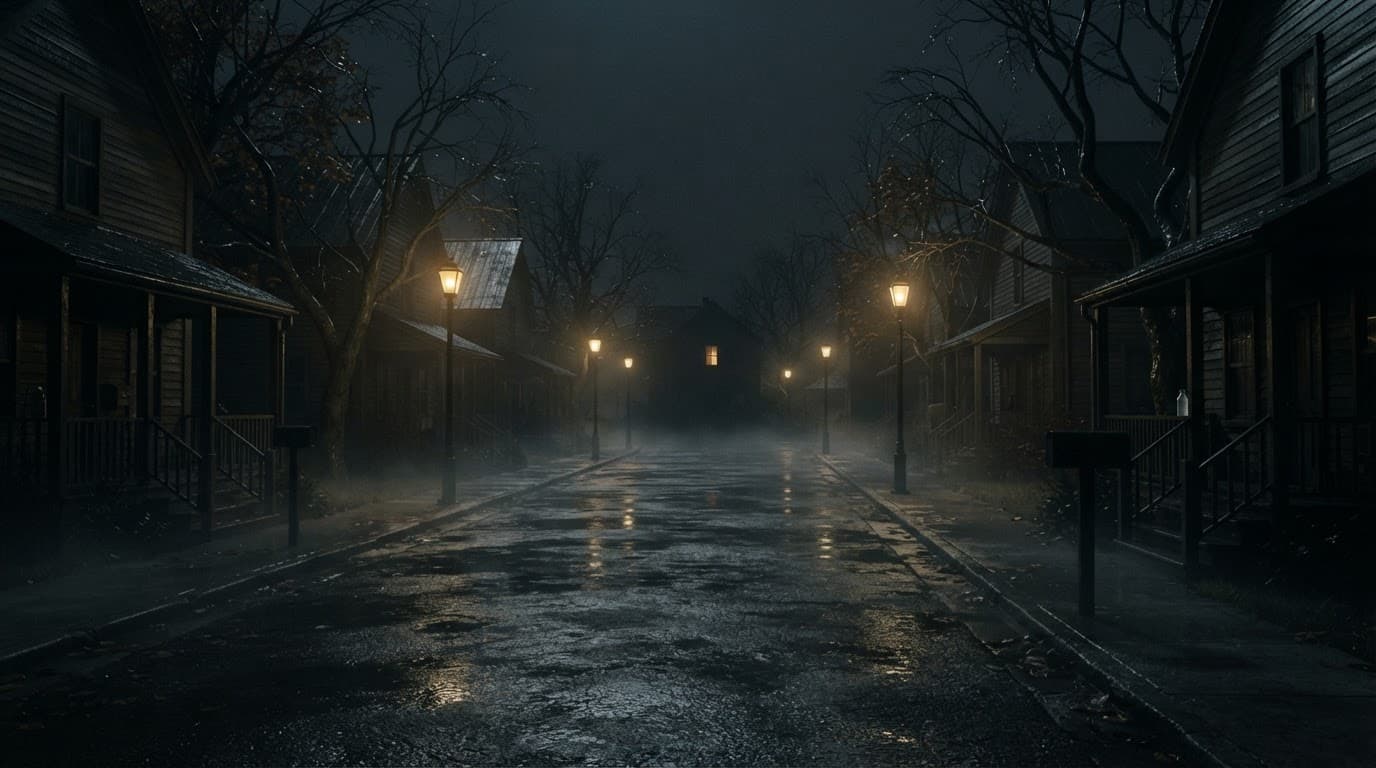
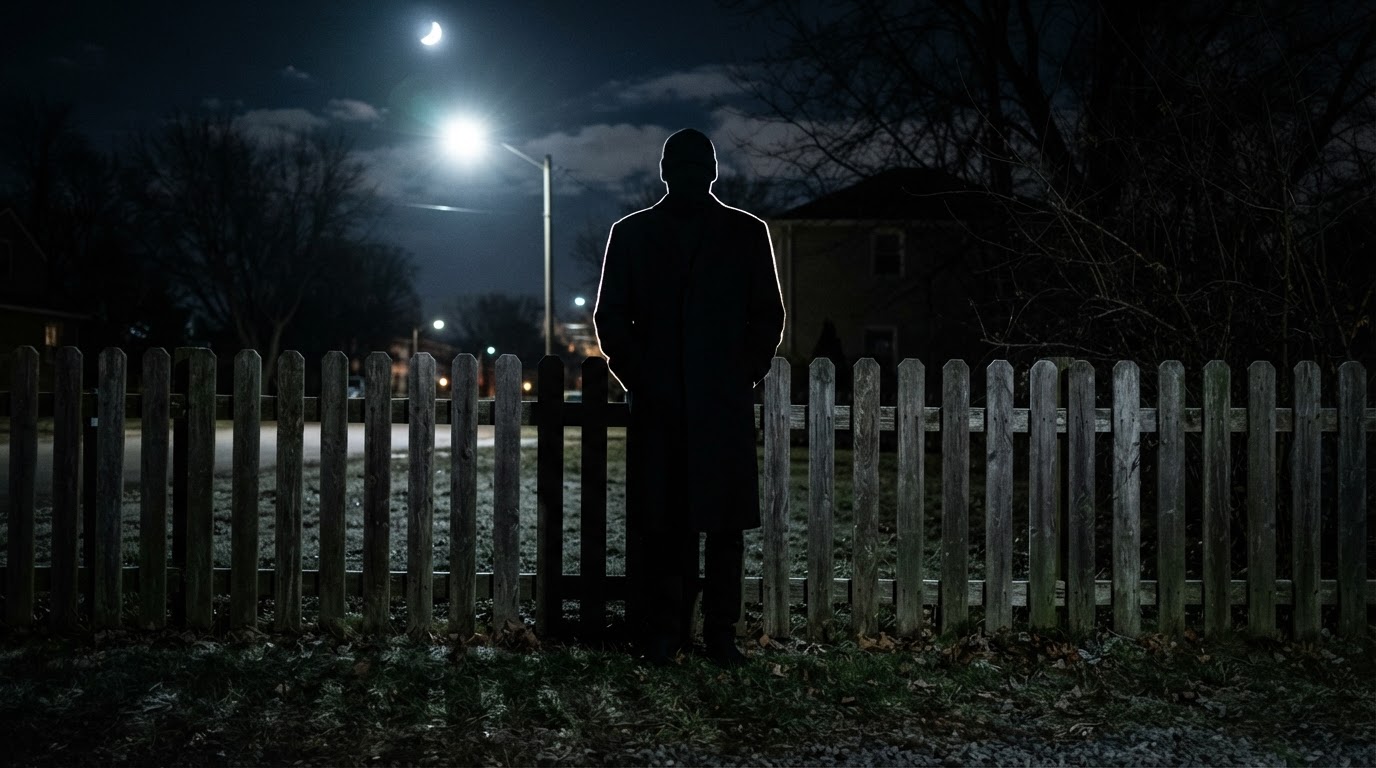
On the night of September 1, 1944, in the quiet railroad town of Mattoon, Illinois, a woman named Aline Kearney lay in bed with her young daughter when she caught a strange, sweetish odor drifting through the open window. At first she took it for flowers in the summer air. But the smell grew heavier, and within minutes a numbness crept up her legs until she could barely move them; her throat went dry and tight, and her lips began to burn. She screamed for help. A short while later her husband Bert, a taxi driver just home from his shift, spotted a tall man in dark clothes and a tight-fitting cap standing at the bedroom window — who bolted into the dark before Bert could reach him. Over the next two weeks, more than two dozen families across Mattoon would tell the same story: a sweet smell at the window, sudden paralysis and sickness, and a shadowy prowler who vanished into the night. The police never caught him. They were never even sure he existed. This is the story of the Mad Gasser of Mattoon.
This entry is filed under panics rather than crimes, and the thing that decided it for me was a single word in a headline. Going through the September 1944 run of the Journal-Gazette, I stopped at "First Victims" and sat with it for a while. The paper had one household and one frightened woman, and it printed an ordinal number. It is the closest thing I have ever found in my files to watching a town be told what was going to happen to it next, in advance, on the front page.
The Night It Began
Aline Kearney's account, given to police that same night, set the pattern for everything that followed. She had smelled the odor around eleven o'clock, thinking little of it until it thickened into something cloying and chemical. Then came the paralysis — a heavy numbness in her legs, a dryness in her mouth and throat, a burning at her lips. Her sister, in another room, smelled it too. When Bert Kearney came home near half past midnight and found the man crouched by the window, the description he gave — tall, dressed in black, wearing a snug cap — became the face the whole town would soon imagine at its own windows.
The next morning the local paper, the Mattoon Daily Journal-Gazette, carried the story under a headline that would prove fateful: "Mrs. Kearney and Daughter First Victims of Mad Anesthetist." The word "first" did a great deal of work. It told readers, in effect, that more victims were coming — and in the days that followed, more victims came.

A Town Under Siege
Once the story was in print, the reports multiplied fast. Night after night, people telephoned the police to say the gas man had come. The symptoms were remarkably consistent: a sweet or sickly odor near a window or door, followed by nausea and vomiting, a burning in the mouth and throat, weakness, coughing, and — most strikingly — a temporary paralysis of the legs that wore off after a few hours. Some described their faces swelling. Almost all recovered fully within a day, and no one was ever seriously hurt or killed.
The pattern of the attacks was strange in itself. The gasser seemed to strike only for a few minutes at a time, target a single household, and leave no trace of how the gas was delivered. He never robbed anyone, never entered a home, never harmed a soul beyond the passing sickness. He simply appeared at a window, and then he was gone. The newspapers, meanwhile, fed the fear with fresh headlines each day, and as the panic grew, so did the number of calls.

The Evidence — and Its Absence
If the gasser was real, he left almost nothing behind. The most tantalizing piece of physical evidence came on September 5, at the home of Beulah Cordes. She found a white cloth, slightly larger than a man's handkerchief, lying on her front porch beside the screen door. Curious, she picked it up and sniffed it. The reaction was immediate and violent — she later said it felt like an electric shock. Her mouth and lips swelled, her throat burned, she vomited and grew weak, and her legs went partly numb, just as the other victims had described. On the sidewalk nearby lay a well-worn skeleton key and a nearly empty tube of lipstick.
Here, at last, seemed to be proof. But when authorities analyzed the cloth, they found no chemical on it that could account for so severe a reaction. The skeleton key and lipstick were never tied to anyone. Elsewhere, people reported finding footprints beneath their windows — but nothing that could be traced to a single culprit. The harder investigators looked for the gasser, the more he seemed to dissolve into rumor.
The Hunt
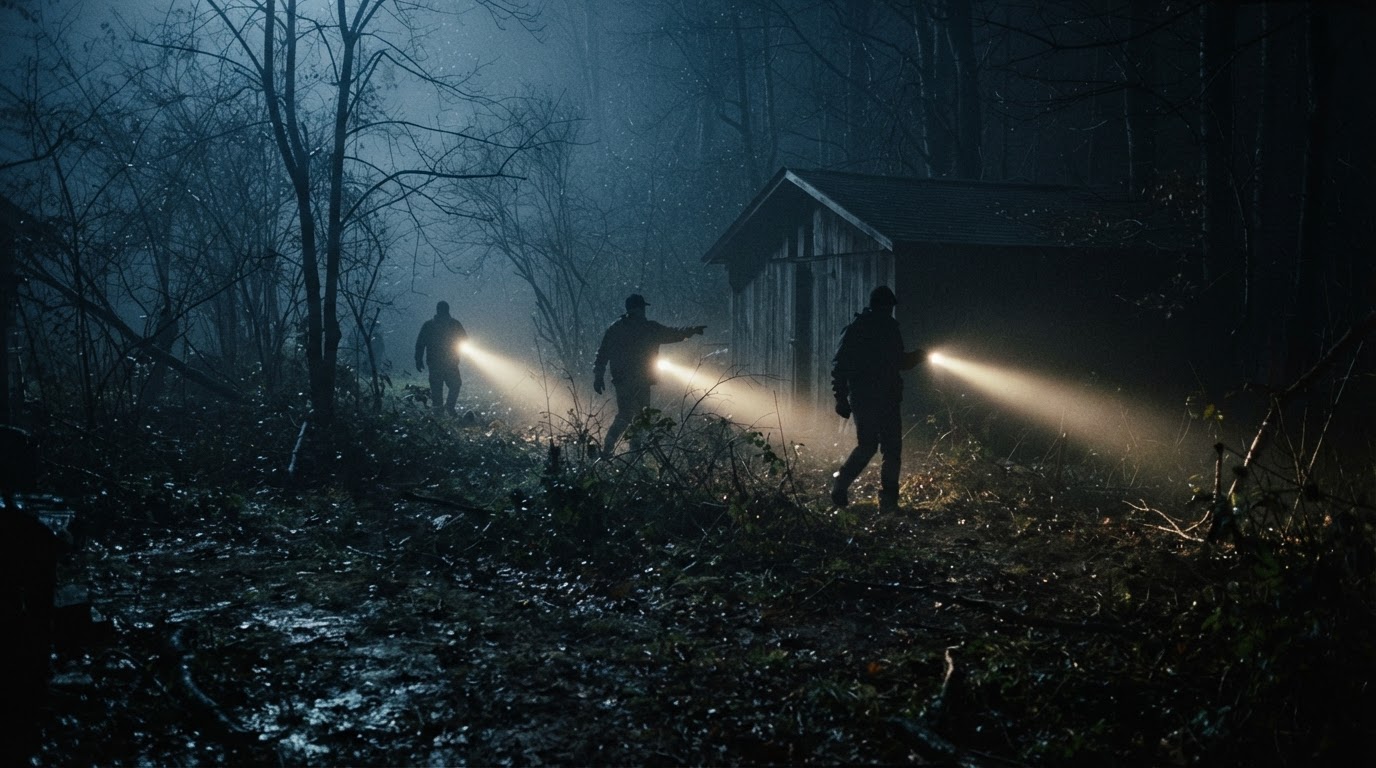
For a few frantic nights, Mattoon armed itself. Police patrolled the streets; carloads of citizens, some carrying shotguns, cruised the neighborhoods looking for the prowler. Reinforcements were called in from neighboring towns. Flashlights swept back yards and alleys through the small hours. Yet for all the manpower, the gasser was never seen clearly, never cornered, never caught. On the night of September 13, a woman named Bertha Burch reported seeing a figure at her window dressed in men's clothing — but this time she believed it was a woman. It was one of the last major sightings.
By September 12, the police had begun to change their minds about the whole affair. Commissioner Thomas V. Wright declared that "fear of the gas man is entirely out of proportion to the menace," and the department publicly suggested that the reports had ordinary explanations — perhaps chemical fumes drifting from nearby industry, magnified by frightened imaginations. Police Chief C. E. Cole speculated that pollutants such as carbon tetrachloride, which carries a sweet odor, might account for some of the symptoms. Almost as soon as the authorities said this out loud, the flood of new reports slowed to a trickle.
Phantom, or Panic?
The following year, a psychologist named Donald M. Johnson published a now-famous study, "The 'Phantom Anesthetist' of Mattoon," in the Journal of Abnormal and Social Psychology. Johnson argued that there had been no gasser at all. What Mattoon had suffered, he concluded, was a textbook case of mass hysteria — a wave of collective anxiety, seeded by that first sensational headline and spread from neighbor to neighbor by suggestion. The symptoms, he noted, were exactly the kind that fear and adrenaline can produce on their own: a racing pulse, dizziness, nausea, tingling and numbness in the limbs, a sense that something is very wrong. Once people were primed to expect an attack, an unfamiliar smell in the night was enough to trigger the rest. As the reports peaked, they clustered among those who had read or heard the newspaper stories, and they faded the moment the police declared the threat imaginary.
Not everyone accepts that verdict. The consistency of the symptoms, the cloth on the Cordes porch, the footprints, the sheer number of ordinary people who swore something had come to their windows — to some, these point to a genuine, if never identified, attacker who simply got away. And there is one detail that mass hysteria alone struggles to explain. A decade earlier, in the winter of 1933 into 1934, an almost identical wave of attacks had swept through Botetourt County, Virginia. It began on December 22, 1933, at the home of the Cal Huffman family near Haymakertown, where a sweet, sickening gas seeped into the house in the night, sickening seven or eight people and leaving the couple's twenty-year-old daughter unconscious on the floor. More families reported the same thing over the following weeks; investigators ruled out chloroform and ether but could name no gas; the only clues were a woman's high-heeled shoe print beneath a window and a $500 reward that no one ever claimed. That gasser, too, was never caught.
What Remains
More than eighty years later, the Mad Gasser of Mattoon remains suspended between two explanations, and neither can quite close the case. If it was mass hysteria, it was one of the most vivid and best-documented instances on record — a whole town made ill by its own fear, cured overnight by a police statement. If there was a real prowler, he was a phantom with a genius for leaving nothing behind: no reliable footprint, no chemical residue, no face anyone could hold onto, no motive anyone could name. The Botetourt attacks a decade earlier only deepen the puzzle, hinting either at a shared human tendency to conjure the same nightmare, or at something stranger that crossed a decade and half a country and was never once caught in the light.
Johnson's paper is persuasive and I have read it twice, and both times I put it down still holding the Botetourt file. There is a high-heeled shoe print under a Virginia window in the winter of 1933 and a reward of five hundred dollars that nobody in that county ever came forward to claim, and eleven years later a woman in Illinois looks up and reports a figure at her glass in men's clothing whom she takes for a woman. Hysteria explains the symptoms. It does not explain why the same wrong detail turns up twice, a decade and six hundred miles apart, in the testimony of people who could not have read each other.
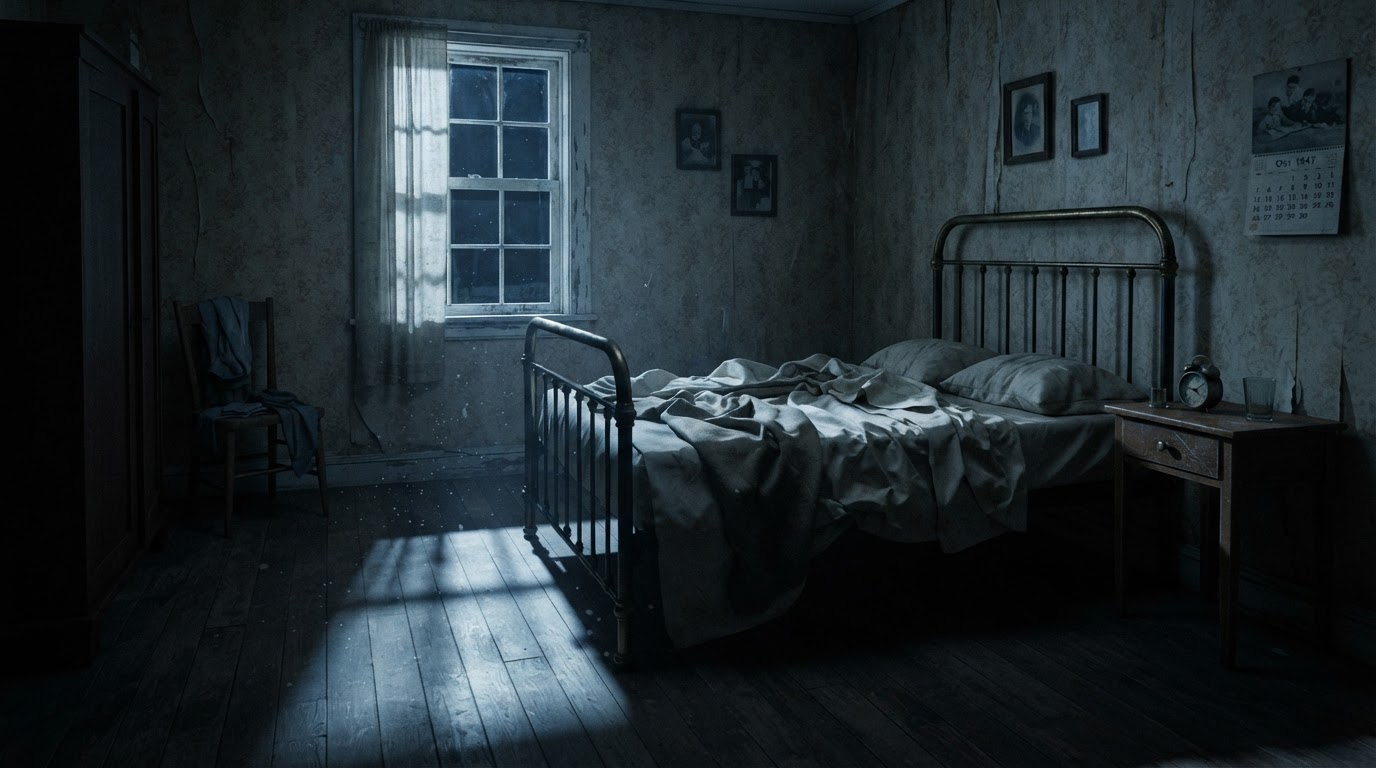
What we can say for certain is only this. For two weeks in September 1944, the people of Mattoon, Illinois, lay awake listening for a sweet smell at the window — and something, real or imagined, was frightening enough to empty their streets and arm their neighbors. The gasser left no body, no confession, and no name. He left only an empty room, a stirring curtain, and a question that has never been answered.
---
The images and video in this article are AI-generated works produced to convey the mood of the story, and are not photographs of any actual person or event.

Comments
No comments yet — leave the first one.