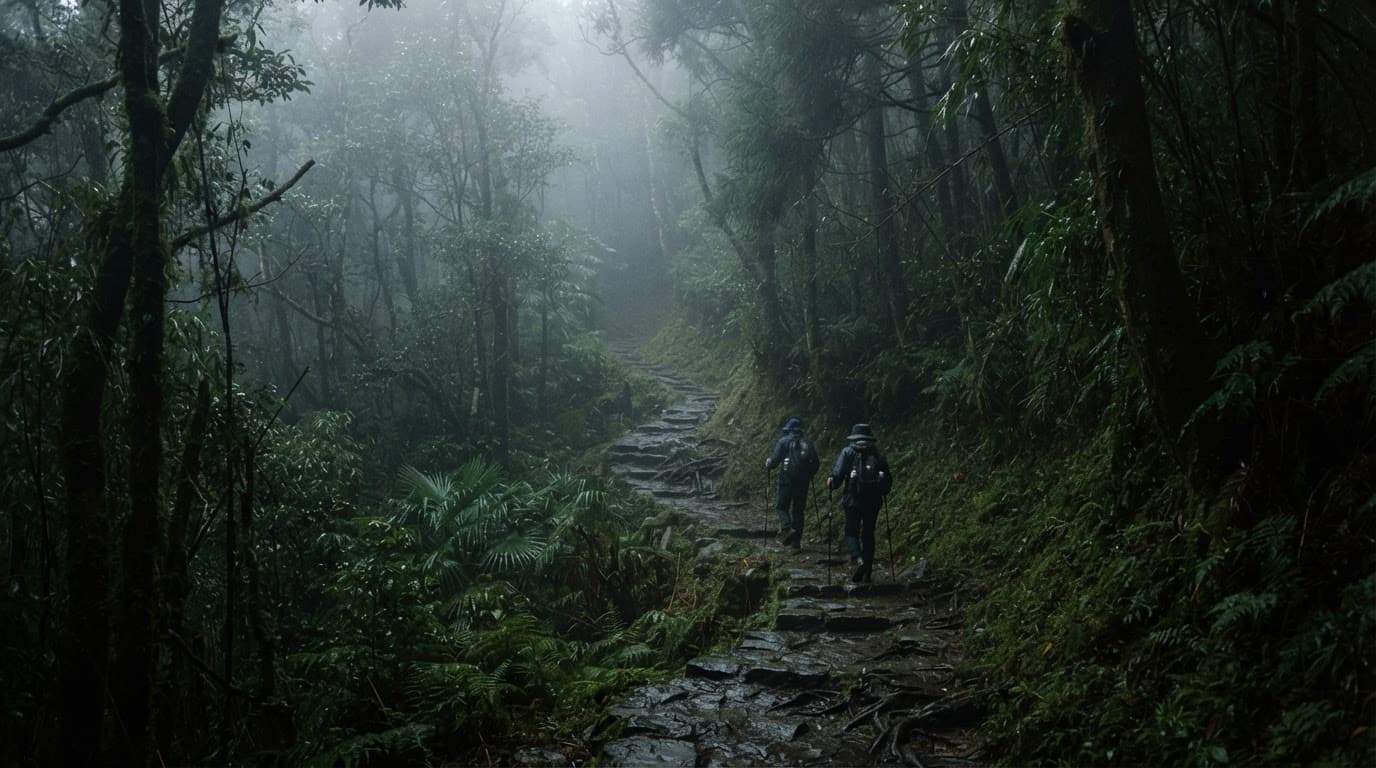
The group had already walked on ahead. The camera, it turned out, had filmed one person too many.
It should have been a home video no one ever watched twice. On a spring day in 1998, a family carried the kind of V8 camcorder that sat in half the households in Taiwan up a mountain in Taichung. Someone led the way; someone else turned back to joke with the camera. The lens swayed with every step, catching nothing but an ordinary outing. Yet when that tape was later fed into a television and played back frame by frame, the people sitting in the living room went cold. At the very back of the line, trailing the hikers, was a small figure. She wore a child's red dress — but the face beneath it was not a child's face. It was old, shrunken, withered, like the face of an aged woman. And, reports say, not one of the family remembered a girl walking with them that day.
A Tape Mailed to a TV Station
The story begins on March 1, 1998.
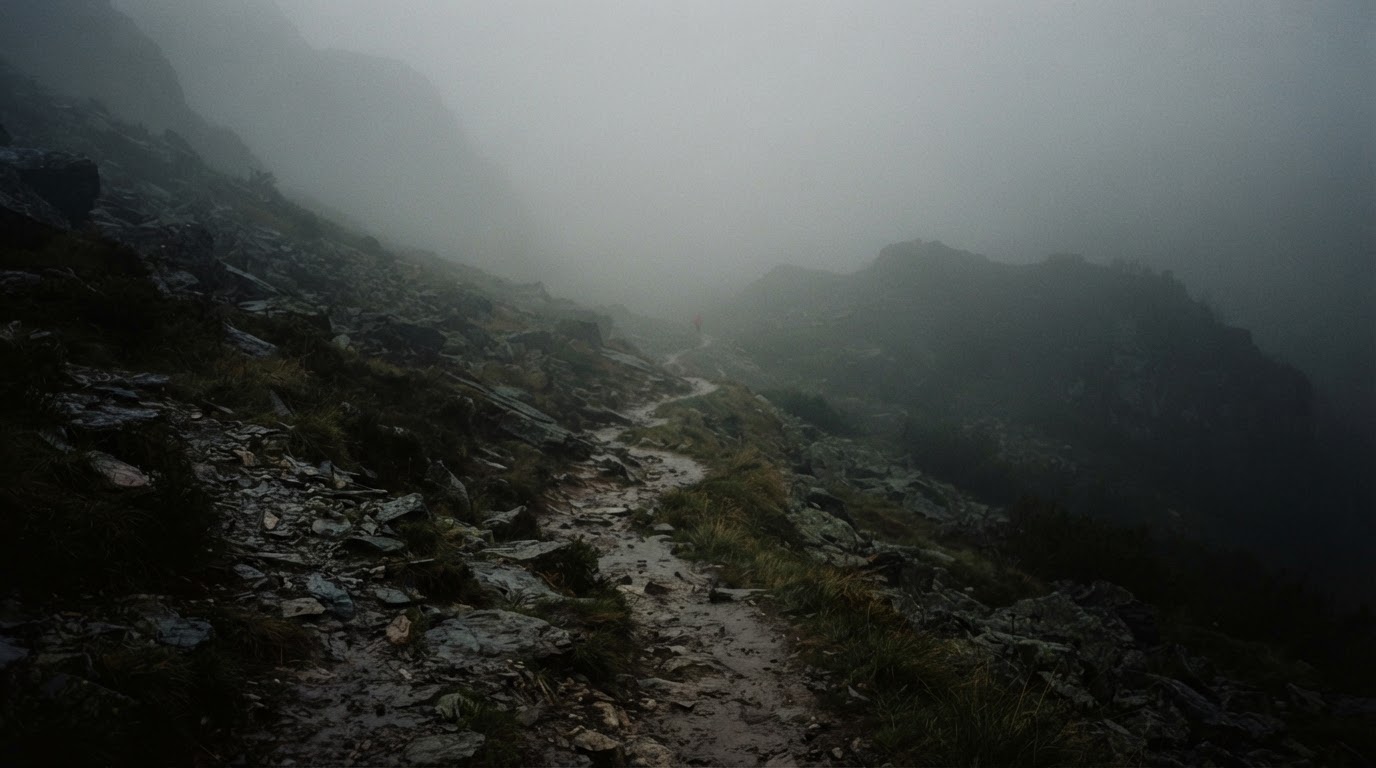
According to accounts of the case, a family went hiking that day near the Wind-Moving Stone in the Dakeng scenic area of Beitun District, Taichung. Like anyone else, they filmed the trip with the camcorder in hand. Nothing seemed wrong at the time. The mountain was just a mountain, the people were just their own people. Laughter, panting breath, the crunch of leaves underfoot — all of it went onto that small V8 tape.
The wrongness only surfaced after they came home.
By one telling, not long after the hike, one of the older relatives seen on the tape took a sharp turn for the worse and died. Grieving and uneasy, the family dug the video back out and watched it again, searching for some clue — and instead they found the red figure that had no business being there. She hung quietly at the tail of the group, matching their steps, walking deeper into the mountain. No one called out to her. No one turned to look. It was as if every living person on that tape was blind to her.
The family sent the tape to a television ghost program, hoping someone could explain it.


I have chased a lot of footage in this archive, and this is the only case where the evidence has been getting worse every year I have kept it. Each copy of that V8 tape is a generation further from March 1998, and the figure at the back of the line degrades with it — softer, redder, more accommodating to whatever the viewer arrived expecting. Sitting with two versions open at once is an unpleasant exercise. They are the same few seconds and they are no longer the same ghost.
The Night All of Taiwan Held Its Breath
What truly burned the Little Girl in Red into a whole generation's memory was television.
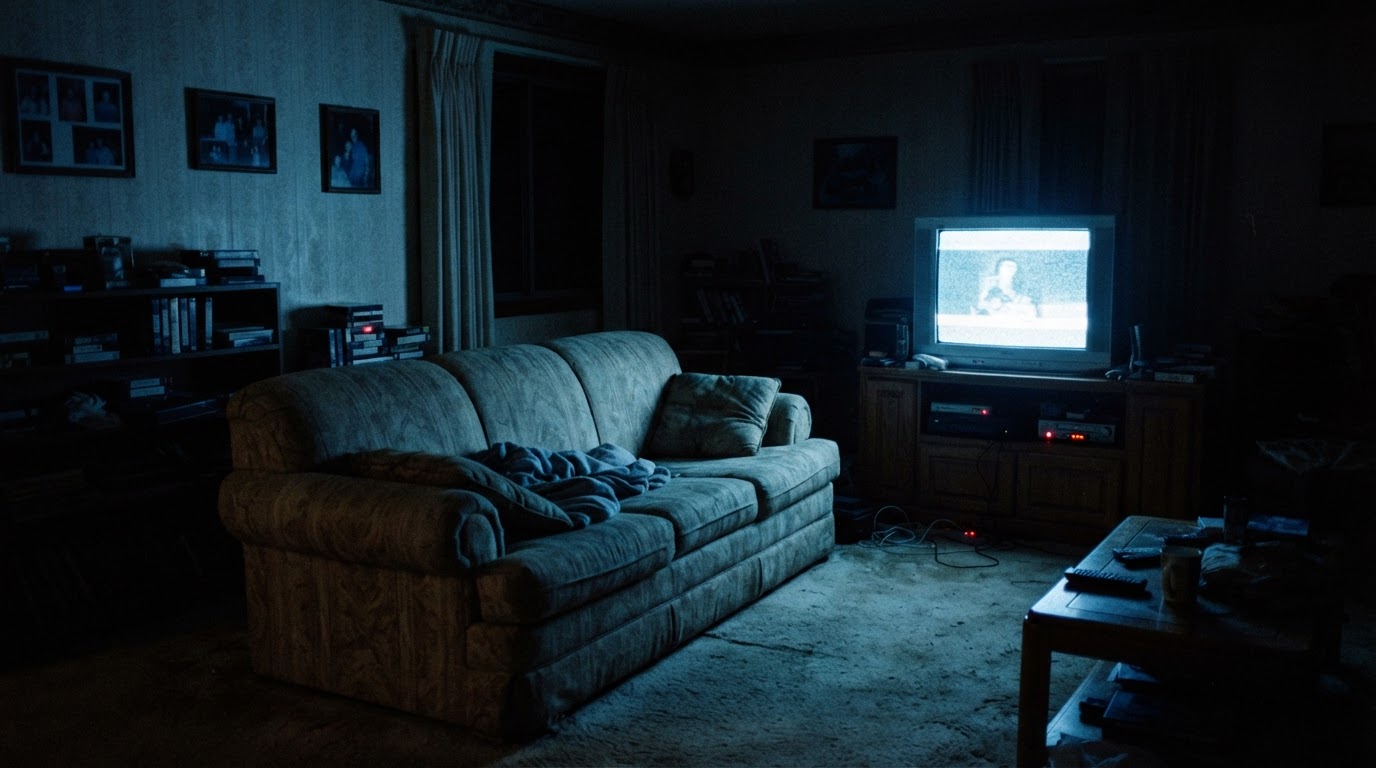
The tape was broadcast on a ghost program on GTV Channel 27. In an era when Taiwan's cable channels were freshly booming and the supernatural genre was at its peak, the host lowered his voice, and the footage was rewound, magnified, frozen frame by frame. When that small red figure was first framed in the center of the screen and blown up for everyone to see, reports say countless families in front of their sets gasped as one.
What viewers saw was a face that looked wrong from every angle. The body was a child's body, the dress a child's red — yet the magnified face was aged and puckered, and some swore they glimpsed something like fangs. Her gaze seemed unfocused and yet fixed, somehow, on the near side of the lens.
The next day, in offices, wet markets, and school hallways across Taiwan, everyone was asking the same thing: did you see that little girl in red last night?
Was She a Mosien?
To understand why Taiwanese viewers found this figure so deeply unsettling, you first have to meet an old name: the mosien.
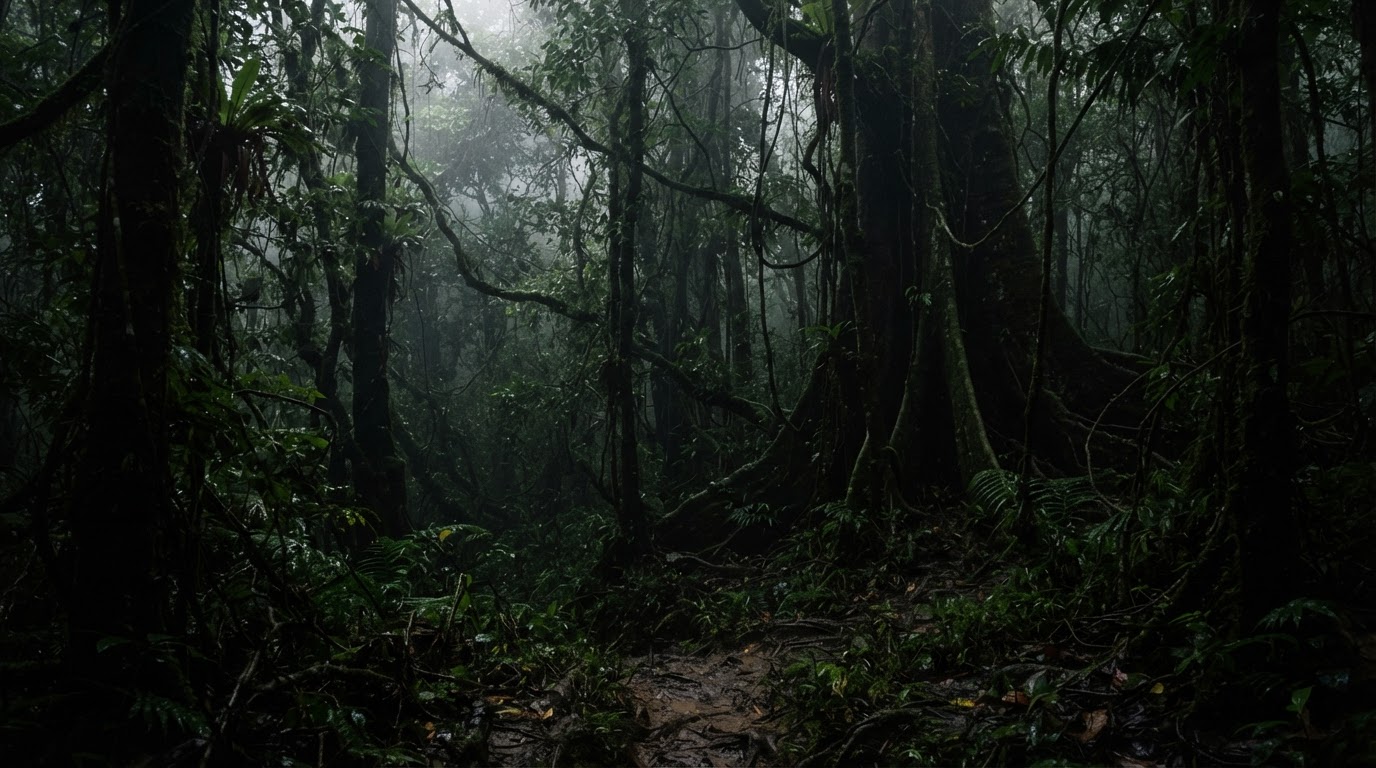
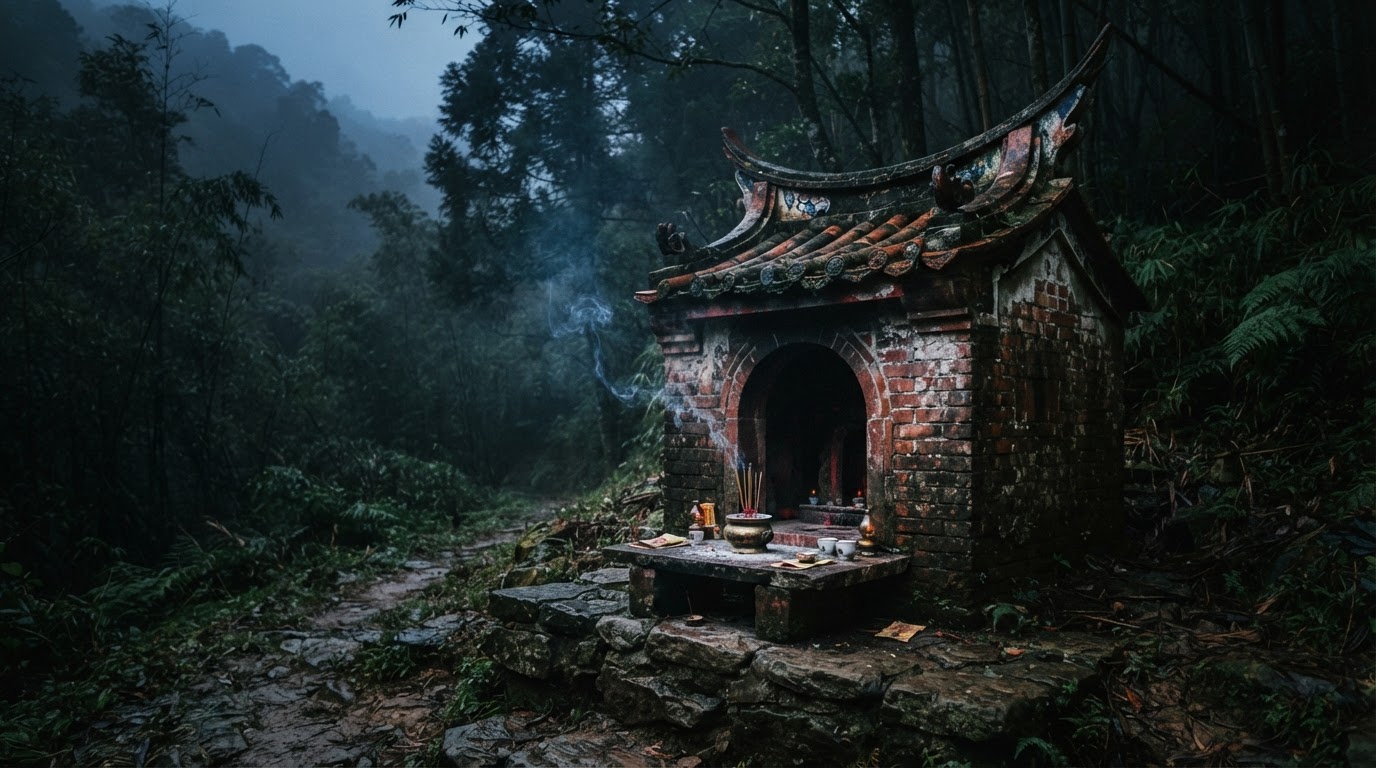
In Taiwanese folk belief, the mosien (魔神仔, môo-sîn-á in Taiwanese) is a mountain-and-water spirit, a thing that haunts forests, ravines, and lonely, unpeopled places. The old folk say the mosien can take many shapes: sometimes a child, sometimes a monkey-like face, sometimes the very likeness of a relative you know. It smiles at you in the hills, beckons, and lures you deeper and deeper until you cannot find your way out. People "led away" by a mosien are often found later in deep forest, in bamboo thickets, or inside drainage culverts, dazed and rambling — insisting that someone kind fed them a mouthful of good food. When their mouths are checked, they are stuffed with mud, grass, even insects.
Because that older belief runs so deep, when a red-clad, aged-faced figure appeared silently trailing a hiking party, the first thought in many Taiwanese minds was not a floating white Western ghost. It was: that is a mosien from the mountain, and it has followed this family home.
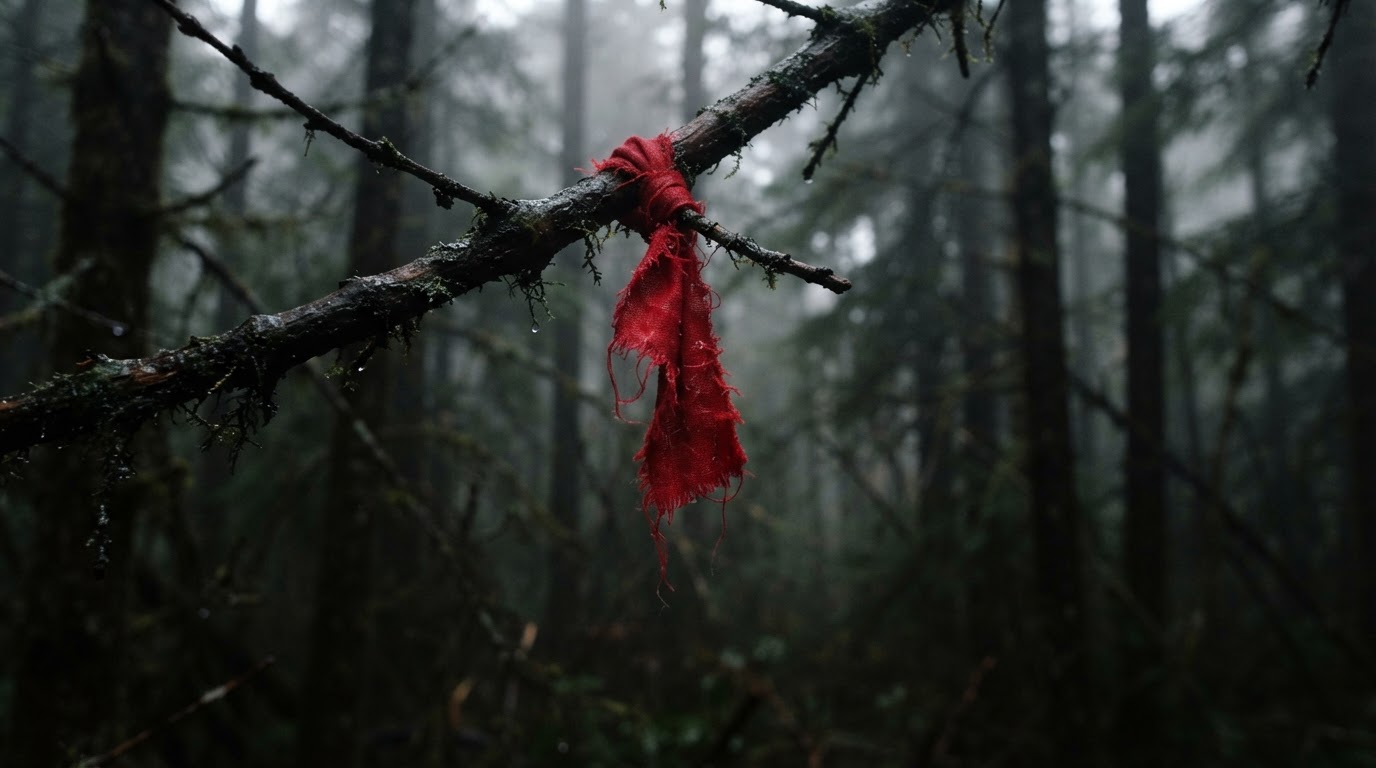
The color red adds another layer of dread. In Chinese funerary and folk thinking, to die in red — or to be laid to rest in red garments — is tied to legends of intense resentment and of the dead returning as a vengeful spirit. A "child" in a red dress with an old woman's face piles several of the most inauspicious images on top of one another at once.
What the Cooler Heads Said
Amid the gasping, some people tried to turn the lights on and look properly.
The name that comes up most often is a psychiatrist, Pan Chien-chih. According to reporting, years later he re-examined the footage and offered a decidedly down-to-earth objection. In his view, both the "aged face" and the fang-like detail were, to a large degree, artifacts of the image itself. A 1990s home camcorder produced coarse footage, and once you add compression, blur, backlight, and distance, a human face at low resolution is extraordinarily easy to warp — and easy for the mind to fill in. The human brain is built to "see a face" in noise; the phenomenon has a name, pareidolia. When a real, ordinary hiker who simply happened to be some distance from the lens is smeared into a few blobs of color, our eyes and our psychology tend to supply her with a face of horror.
Put plainly, the flattest explanation is that she was a real person. A hiker or child in red who happened to be walking nearby that day, caught unknowingly by the family's camera, remembered by no one afterward, blurred by poor picture quality — and thus mistaken for a person who "appeared out of nowhere."
Another voice goes further, alleging a hoax outright. A rumor has circulated online for years claiming the Little Girl in Red was staged by the program's own producers for effect, who never expected such an uproar. The show's producer, however, flatly denied in a later interview that the footage was faked. The truth, with the years piling up, the tape endlessly recopied, and the original witnesses hard to find, is by now nearly impossible to reconstruct with certainty.
This is exactly what makes legends like this so stubborn. The skeptic cannot produce ironclad proof that it is not a ghost, and the believer cannot produce ironclad proof that it is. That blurred middle ground is precisely the soil in which a legend grows.
From TV Screen to Movie Theater
If the Little Girl in Red had only been a piece of eerie footage argued over for a few weeks, she would not hold the place she holds today. What turned her from a ghost story into a Taiwanese cultural symbol was the year 2015.
That year, director Cheng Wei-hao brought the household legend to the big screen as the horror film The Little Girl in Red (English title The Tag-Along), released in Taiwan in November 2015. The film did not stop at re-creating the tape. It wrapped the ancient fear of the mosien "leading people away" inside the loneliness, disconnection, and guilt of modern city dwellers — the girl in red became the embodiment of the thing each character least wants to face inside themselves.
The film was a box-office success in Taiwan, one of the most talked-about local films of its year, and it gave a long-dormant Taiwanese home-grown horror genre a voice again. A sequel, The Tag-Along 2, followed in 2017, and a spin-off, The Devil Fish (人面魚), came in 2018, weaving the mosien, the human-faced fish, and other native Taiwanese apparitions into a single shared universe. One blurry home video had grown into an entire franchise.
Worth noting: this wave did not simply import a Western ghost film. It stood firmly on Taiwan's own beliefs and its own land. Mosien, red garments, mountain forest, incense smoke — these elements could frighten Taiwanese audiences precisely because they already lived in the mouths of grandparents and in every warning given before a climb.
Why It Was "Her" That Stayed
Taiwan does not lack for ghost stories. So why is it this particular girl in red who became the most enduring, the hardest to erase?
First, there is the weight of "real footage." This was not a story told by someone sitting in the dark. It was an image you could see, pause, rewind, and inspect frame by frame. Even when reason tells you it may only be poor picture quality, your eyes still, undeniably, "saw" that figure. That sense of evidence you can stare at again and again is something a purely oral tale can never give.
Second, there is the dislocation of a presence that was plainly there and yet no one remembers. What unnerves people most is rarely the snarling, clawing demon. It is the quiet thing walking behind you, taking your same path, that does not belong among you. She attacks no one. She only follows. And "following" is exactly the most primal act in the mosien legend.
Third, it stands on a shared collective memory. Cable TV, ghost programs, home camcorders, weekend hikes — these were the familiar scenery of an entire Taiwanese generation. The Little Girl in Red is not a legend from somewhere far away. She appears on the very mountain, the very trail, that you or I might have walked.


What We Are Really Afraid Of
Lay it all out, and the Little Girl in Red is really several fears stacked on top of one another.
There is awe of the mountain. Taiwan is an island of high peaks, and the mountains are both shelter and swallower of people. The older generation's wariness — do not answer strange voices, do not follow an unfamiliar child, come down before dark — is itself a survival wisdom passed down the generations, and the mosien is that wisdom's guardian beast.
There is unease about the lens. When imaging technology entered ordinary homes, we suddenly held the power to "see what we cannot see." Film records things we never noticed; slow playback forces out details the naked eye skated past. The Little Girl in Red is, in part, a modern fear born of the fact that the image remembers more than the person.
And there is the wordlessness of death. The relative who fell ill and died afterward binds an ordinary outing, brutally, to a death. The heart is forever hunting for cause in the face of chance — if that red figure had already followed along, then does that death now have a culprit you can point to? Rather than "gone for no reason at all," people sometimes prefer to believe that something was already there in the mountain, waiting.
A Ghost With the Date Wrong: How English-Language Readers Meet Her
Most English-speaking audiences have never seen the tape itself. They meet the Little Girl in Red through the 2015 film, which circulated with English subtitles. According to its Wikipedia entry, The Tag-Along premiered at the Golden Horse Film Festival on November 19, 2015, as the festival's closing film, opened across Taiwan on November 27, and also screened at the Bucheon International Fantastic Film Festival. The same entry credits it with about US$1.8 million worldwide and says it took more than NT$30 million at home, which it describes as breaking a ten-year record for a locally made horror film. In August 2021 the New York Asian Film Festival programmed it in a Taiwan Ghost Month series and described it in two plain sentences: a film inspired by an eerie video that became an internet sensation, in which a ghostly girl in red follows hikers up a mountain.
The telling changes in transit. When the Taipei Times reviewed the film on November 27, 2015, it described the legend's source as a home video broadcast on television in 1988. Most accounts, including the one above, say 1998. I do not know whether that is a typo or a memory drifting, and I have stopped assuming the difference is trivial. A legend that cannot hold its own year steady across retellings is a legend being rebuilt each time it is told.
English readers do have a ghost of their own that behaves a little like this one, and setting them side by side is instructive. On September 19, 1936, Captain Hubert Provand and his assistant Indre Shira photographed the staircase at Raynham Hall. Shira said he saw a vapoury form gradually assuming the shape of a woman descending the stairs and signalled Provand to uncover the lens. The picture ran in Country Life on December 26, 1936, and in Life on January 4, 1937. Skeptics, among them John Fairley and Simon Welfare and later Joe Nickell, pointed to pale lines above each stair tread and a patch of reflected light that appears twice, and concluded that two exposures had been laid over each other. The Brown Lady came with a witness who said he saw her before the camera did.
The Taiwanese tape inverts that. The family on the mountain are the ones who did not see her, and the only witness is the lens. The English ghost is something a person reports and a camera then confirms; the Taiwanese one is something a camera reports and no person confirms. That is why the double-exposure argument has nothing to hold onto here, and why the explanation offered instead, a stranger on the trail smeared by compression, is so much harder to disprove.
Nor does she map neatly onto what English-language sources offer. The English entry on the mo-sin-a, thin as it is, describes a mountain-forest creature that lures people away to remote places such as forests or caves. That is the shape of a being leading travellers astray, a familiar enough idea, but the entry says nothing of the red dress, the borrowed child's body or the old woman's face. Those come from the tape.
The Shadow at the Very Back of the Line
Today, the original tape has long since blurred into mush across countless recopies, uploads, and reposts. The worse the picture gets, the more that red figure looks like it could be anything at all. Maybe she really was only a hiker too far from the lens, shaped into a ghost by the low resolution of her era and our own overactive brains. Maybe there really is a thing in the mountains that, now and then, quietly follows people down — just to walk a stretch of the path.
Reason can take her apart frame by frame, yet it can never quite answer the first question: that day, was there a child walking with them, or not? No one can say for certain. And as long as that question hangs there, the Little Girl in Red will keep walking at the very back of the line, following one generation of Taiwanese after another, step by step, into the fog.
What I have never managed to resolve, sorting the accounts against one another, is the family's own silence. Not one of them, by every telling I hold, called out to her or turned around. The tape shows a party of people walking up a mountain with someone behind them, and behaving exactly as they would if no one were there. I can explain the face. I can explain the red. I cannot explain why nobody looked back, and I notice I have stopped trying to.
Next time you climb, if someone is behind you, taking your same path, do not be too quick to turn around. The old folk will tell you: the moment you answer, the moment you look back, she knows — you have seen her.

---
The images and video in this article are AI-generated works produced to convey the mood of the story, and are not photographs of any actual person or event.



Comments
No comments yet — leave the first one.