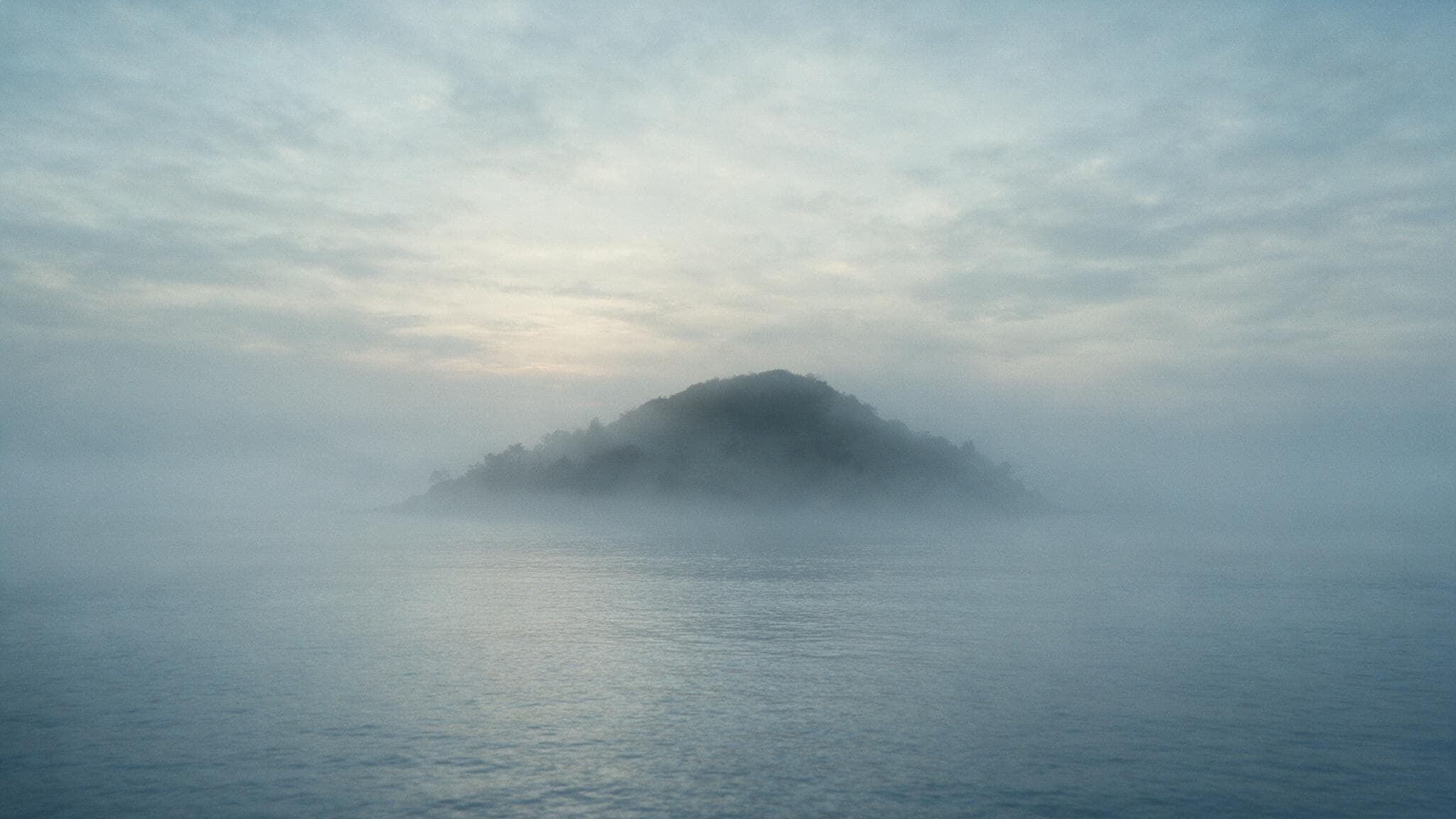
Off the coast of Gampo, in the waters that look out over the East Sea near Gyeongju, there lies to this day a tomb submerged beneath the waves. It is the resting place of a king who vowed that in death he would become a dragon and guard his kingdom — and who had himself buried, quite literally, in a rock beneath the sea. This is the underwater tomb of King Munmu of Silla. And more than thirteen hundred years ago, the story goes, a small mountain drifted in across these waters and came moving toward the shore. On the mountain grew a single stalk of bamboo, which split into two by day and joined back into one by night. A flute cut from that bamboo would become the most treasured possession the kingdom of Silla ever owned. Blow it, they said, and every trouble and calamity in the land would be laid to rest — and so they named it Manpasikjeok, the flute that stills ten thousand waves. The tale we mean to tell today is the tale of how this flute came into the world — and, at the same time, the tale of where it finally disappeared to.

The Bamboo That Came from the Sea
The story is recorded in the Samguk Yusa, the Memorabilia of the Three Kingdoms. It happened one day in the fifth month of the year 682, the second year of King Sinmun's reign. The year before, Sinmun had lost his father, King Munmu, and near the eastern shore he had built a temple in his memory, naming it Gameunsa — the Temple of Gratitude for His Grace. In life, Munmu had left instructions that when he died his body was to be cremated and buried in the East Sea, so that in death he might become a dragon of the sea, turning back the Japanese pirates and protecting the kingdom. Beneath the main hall of Gameunsa, it is said, they even carved a channel opening to the sea, so that the dragon-king could pass in and out.
Then, on the first day of the fifth month of 682, an official who watched over the coast came in haste to report. A small mountain, he said, was floating on the water off the eastern shore, drifting toward Gameunsa, riding back and forth with the waves. The king sent men to look, and they found that the mountain was shaped like the head of a turtle, and upon it grew a single stalk of bamboo — bamboo that split into two by day and joined into one again by night. The king himself set out by boat toward the floating mountain. And there, out of the sea, a dragon rose up bearing a belt of black jade, and came forward to meet him.

What the Dragon Said
The king asked the dragon what it meant, that the bamboo should split apart and come together as it did. This was the dragon's answer. Just as a single hand cannot make a sound, and only two hands clapping together can, so this bamboo too could give voice only once it had joined into one. Take this bamboo, the dragon said, and make of it a flute, and blow it — and all the world beneath heaven would be brought to peace. Then the dragon told him one thing more. This was no mere chance. It was a priceless treasure sent to the king by the joined hearts of two spirits: Munmu, who had become the dragon of the sea, and Kim Yu-sin, the great general who had become a god of heaven.
There is deep meaning in these two names standing side by side. Munmu was the king who unified the Three Kingdoms into one, and Kim Yu-sin was the greatest general who led the wars of that unification. In life, these two men had made Silla whole; and now in death, one become a sea dragon and the other a sky god, they were said to have joined together to send a token of rule down to the young King Sinmun, who had only just lost his father and taken the throne — and to send it with the charge that he should govern all under heaven through sound. The king cut the bamboo and returned toward land. But before his boat had even reached the shore, the floating mountain and the dragon vanished all at once, and were never seen again.

The Flute That Stilled Ten Thousand Waves
From that bamboo they made a flute, and stored it in the treasury of Wolseong palace. And when this flute was blown, the Samguk Yusa records, remarkable things came to pass. Invading enemy soldiers withdrew of their own accord. The sick were healed as though washed clean. When drought struck, rain fell; when the rains came too heavy, the skies cleared. Fierce winds died down, and raging waves grew calm. Every trouble and calamity in the land, they said, dissolved before the sound of this flute. And so the people called it Manpasikjeok — the flute that stills ten thousand waves — and kept it as a treasure of the nation.
How are we to read a story like this? Here we should pause a moment. It is hard to believe, quite literally, that a single flute turned back armies, summoned rain, and cured the sick. But this passage of the Samguk Yusa shows us plainly what the people of Silla longed for. Every gift they poured into Manpasikjeok was, in the end, a form of peace. That war would cease. That sickness would heal. That rain would come in season and the winds would fall still. Silla, in the years just after unifying the Three Kingdoms, was mighty on the surface but still uneasy within. It had to absorb the surviving people of the fallen Baekje and Goguryeo, and from across the sea, no one knew when the pirates might strike. In such an age, the image of a flute that stilled every wave with a single breath was the most beautiful vessel imaginable for what a newly unified nation wanted most desperately of all.

<video controls muted loop playsinline poster="/media/manpasikjeok-1.jpg" style="width:100%;border-radius:8px;"> <source src="/media/manpasikjeok-clip.mp4" type="video/mp4" /> </video>
A short clip slowly panning across the misty dawn of the East Sea and the stone pagodas of the Gameunsa temple site — not actual footage, but a scene staged to recreate the mood.
Where Did the Flute Go?
That is the story of how Manpasikjeok came into the world. But there is one more chapter, less often told: the tale of how this all-powerful treasure, at a certain moment, simply vanishes. The Samguk Yusa tells that during the reign of King Hyoso, who succeeded Sinmun, the flute once disappeared and then returned. When the hwarang knight Burye-rang was seized and carried off by the Malgal people, the Manpasikjeok in the treasury mysteriously vanished at the same time. Not long after, when Burye-rang made it safely home, the flute too was recovered — and because of this marvel, the flute's name was raised one degree higher, to Manmanpapasikjeok, meaning its power to still the waves had doubled.
But this is as far as it goes. After that dramatic episode, Manpasikjeok gradually fades out of Silla's formal record. As kings changed and the years wore on, no clear account survives of where the flute was, or in what condition. Across the long ages as Silla declined and Goryeo rose and Joseon rose after it, the name Manpasikjeok was called forth only now and then, when someone spoke of the old wonders of Silla. The physical flute that had been the nation's treasure had, at some point, simply passed beyond all trace. What is intriguing is that far later, in the Joseon period, an old jade flute is said to have turned up in the Gyeongju region, and a rumor spread — might this be the lost Manpasikjeok? Yet whether it truly was the bamboo flute that had come from the East Sea thirteen centuries before, no one, in the end, could ever confirm.

What Remained Because It Vanished
So how should we end a story like this? Some regard Manpasikjeok as nothing more than a beautiful legend the people of Silla invented. There was never really any flute that stilled the waves, they say; it was only a symbol, into which an anxious, newly unified Silla poured both the legitimacy of its throne and its yearning for peace. This narrative — a dead king become a dragon, a dead general become a god, handing down a token of rule to a young monarch — was a superb story for showing all the people that their new king governed by the will of heaven and of his ancestors. Seen this way, Manpasikjeok may have been, from the very start, less a thing you could hold in your hands than the wish that the kingdom of Silla wanted to tell itself.
And yet, precisely for that reason, the flute's disappearance leaves a strange resonance. If Manpasikjeok was only ever a symbol, then its vanishing from the record means, in a sense, that the age of that wish had come to its end. As the kingdom steadied and the tension of unification eased, people would no longer have needed a flute that stilled ten thousand waves quite so desperately. When a wish grows faint, the story of its sacred object grows faint along with it. Perhaps Manpasikjeok was not lost at all — perhaps, the moment it was no longer urgently needed, it was quietly released from people's hearts.
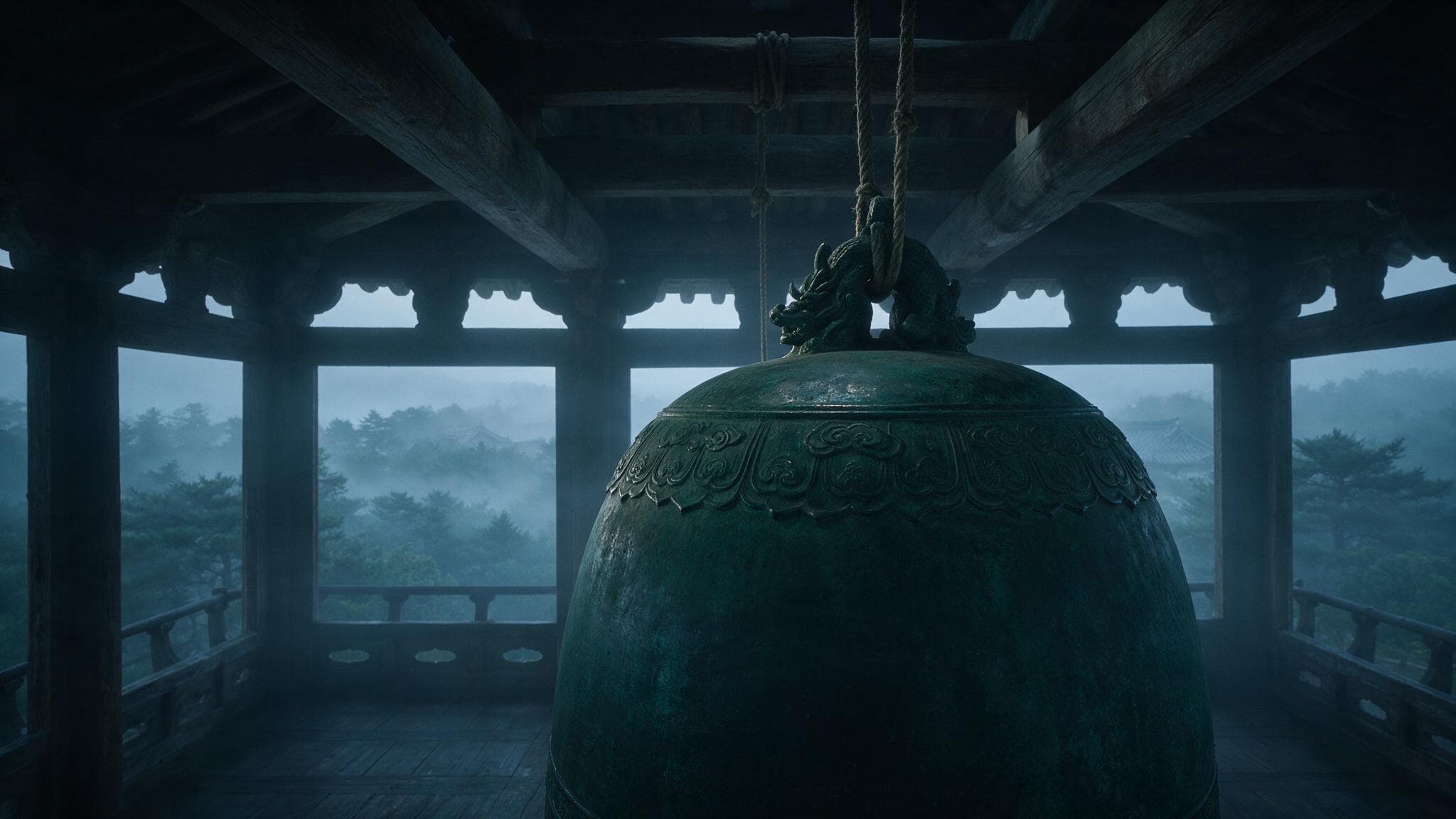
Even today, the underwater tomb of King Munmu lies beneath the waves off the Gyeongju coast, and on the land nearby, only the two stone pagodas of Gameunsa — the temple a son built for his father — still stand facing the sea after thirteen hundred years. The physical Manpasikjeok is nowhere to be found. Yet the tale of the flute — that with a single breath it stopped wars, healed sickness, and calmed the waves — remains vivid and unbroken, carried down to us even now that the object itself is gone. Perhaps that was the true power the flute possessed all along. A treasure you can hold in your hand will vanish someday; but the fervent wish for the peace of a whole nation became a story, and crossed thirteen centuries to reach us. The flute that stilled ten thousand waves has disappeared somewhere — but its sound, even now, like this, is still ringing on within the story.



Comments
No comments yet — leave the first one.