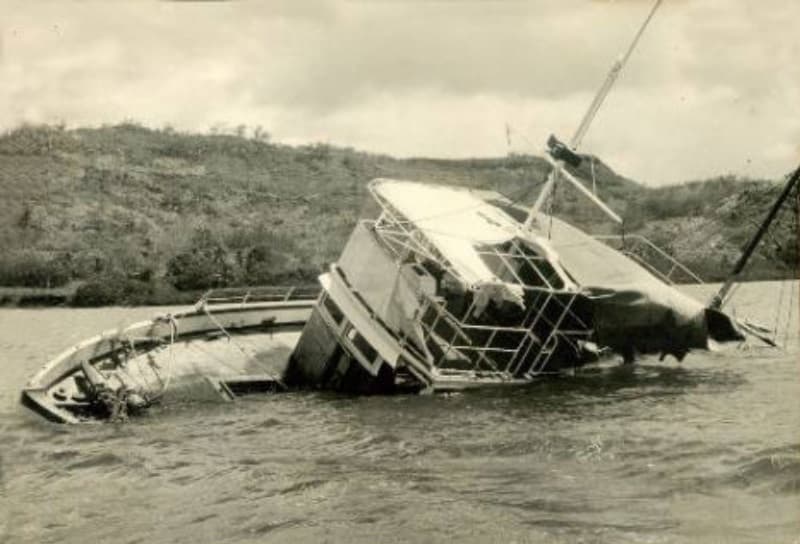
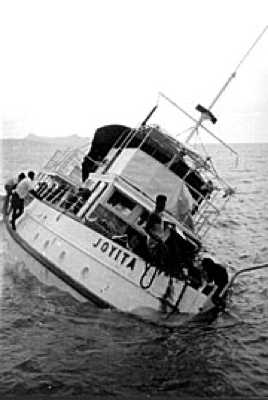
There is a particular kind of dread reserved for the sea, and it is not the dread of a storm. A storm at least explains itself. The worse fear is the one the Pacific handed a merchant crew on the morning of November 10, 1955, when they came upon a small wooden ship rolling low in the swell, her deck awash, her rails going under with every wave — and not a living soul aboard. She had left port five weeks earlier with twenty-five people on her. When they climbed down onto her tilting deck, they found the doctor's bag, the bloody bandages, the silence. What they did not find was anyone at all. This is the story of the Joyita, the ship they called unsinkable, the boat that came home while her people did not.
I came to this file sideways, through a list of maritime inquiries I was reading for something else entirely, and the phrase that stopped me was not a phrase about people at all. It was the note that her hull had been lined with cork. I am K. Woo, and I keep an archive of cases that refuse to close; most of them fail because the evidence is thin. This one fails for the opposite reason. The ship survived to be examined, and every measurement taken of her only widened the hole where twenty-five people used to be.
The Boat They Called Unsinkable
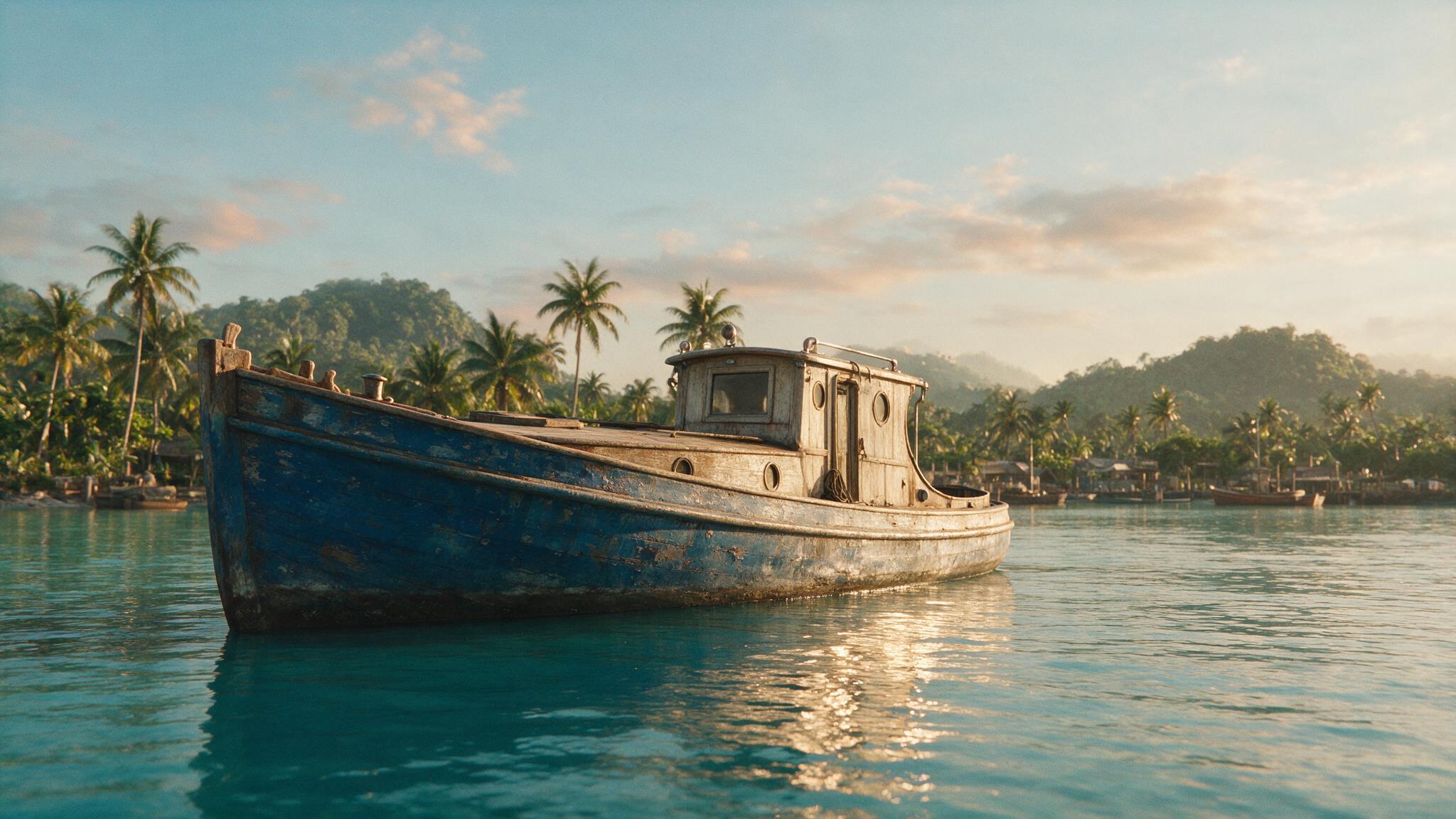
The Joyita was not a big ship, and she was not a young one. She was a wooden motor vessel a little over sixty-nine feet long, built in Los Angeles in 1931 as a private luxury yacht for a film director, her name Spanish for "little jewel." She had lived several lives before 1955 — pleasure yacht, then a patrol boat requisitioned by the U.S. Navy during the war — and it was the Navy that gave her the strange quality that would make her disappearance so hard to explain.
To keep her afloat under wartime duty, her hull had been lined with cork in 1948. That cork, together with the empty fuel drums she often carried, made the Joyita a boat that essentially refused to sink. You could flood her hold, you could stave in her side, you could let the ocean pour into her until any ordinary vessel would have gone straight to the bottom — and the Joyita would simply wallow there on the surface, low and heavy and half-drowned, but afloat. This one fact sits at the dead center of the whole mystery. Whatever went wrong aboard her, the sea was never going to swallow the ship. It only swallowed the people.
Twenty-Five People, One Short Crossing
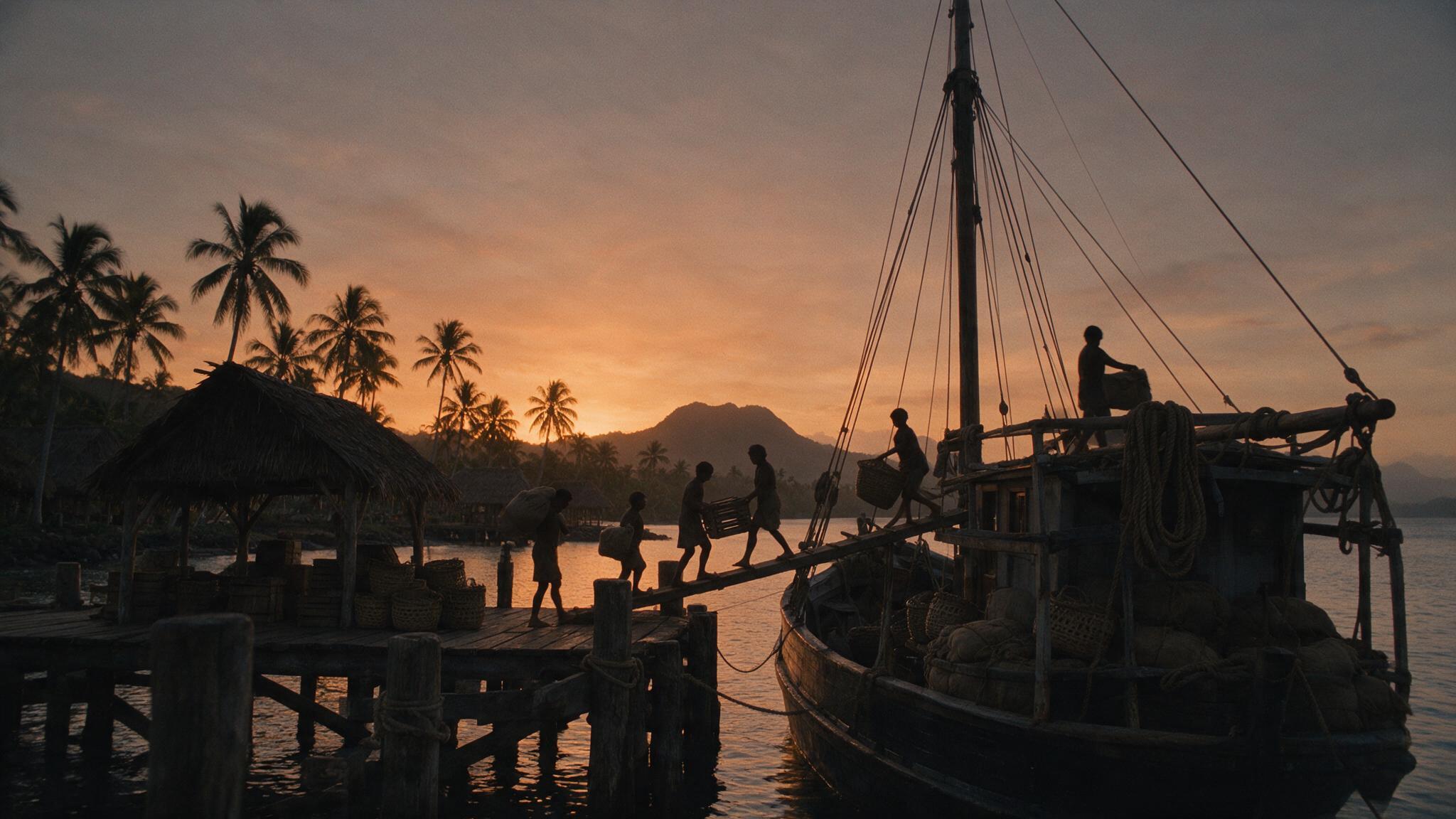
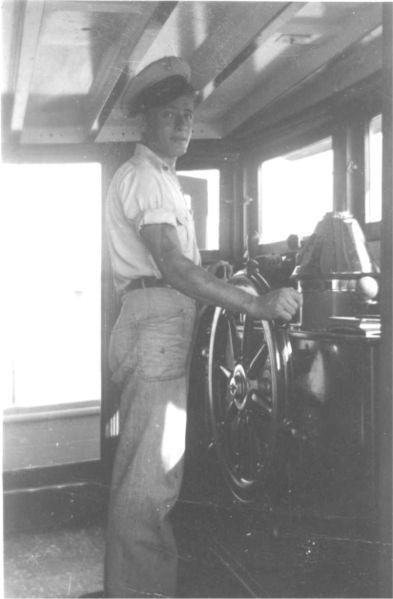
By 1955 the Joyita was working the islands out of Apia, on Western Samoa, chartered to run cargo and passengers between the scattered specks of the South Pacific. Her master was an American named Thomas H. "Dusty" Miller, a man who by all accounts loved the boat and knew her faults. On October 3, 1955, she was to sail for the Tokelau Islands, some two hundred and seventy miles to the north — a run of perhaps forty to forty-eight hours across open water. It was not a dangerous voyage. It was a milk run.
Twenty-five people came aboard for it: sixteen crew and nine passengers. Among the passengers were a government medical officer, a copra buyer, a trader, and two children. These were not adventurers seeking the edge of the map. They were islanders and officials going about the ordinary business of ordinary lives, stepping onto a boat for a two-day hop they had all made, in one form or another, many times before. None of them, so far as anyone knows, ever stepped off it again.
There was one bad omen at the dock, though it looked like nothing at the time. The port engine's clutch had failed the day before, and rather than wait for a full repair, Captain Miller chose to sail on the starboard engine alone. A delay of a single day. A small decision, the kind sailors make all the time. It would be the last decision of his that anyone can trace.
The Silence That Followed
The Joyita was expected at Fakaofo, in the Tokelaus, within two days. She never arrived. But here the story bends in a way that still makes investigators wince, because for a long time nobody realized anything was wrong. Radio communication in that part of the Pacific was thin and unreliable, and a boat running a day or two late raised no alarm. It was only when the Joyita was overdue by a wide margin that the authorities in Samoa began to worry, and by then the trail — if a boat leaves any trail at all on open water — was cold.
An air and sea search went out over roughly a hundred thousand square miles of ocean. Aircraft flew the sea-lanes, ships crossed and re-crossed the empty blue between the islands, and they found nothing. No wreckage. No oil slick. No debris, no bodies, no lifeboats bobbing in the swell. Twenty-five people and a sixty-nine-foot ship had gone into the Pacific and left not a ripple behind. After weeks of finding nothing, the search was called off. The Joyita and everyone on her were, officially, lost.
_A slow drift across an empty grey Pacific toward a low, half-submerged hull — a mood recreation, not real footage._
The Ship Comes Back
Then, on November 10, more than five weeks after she had sailed, the Joyita came back.
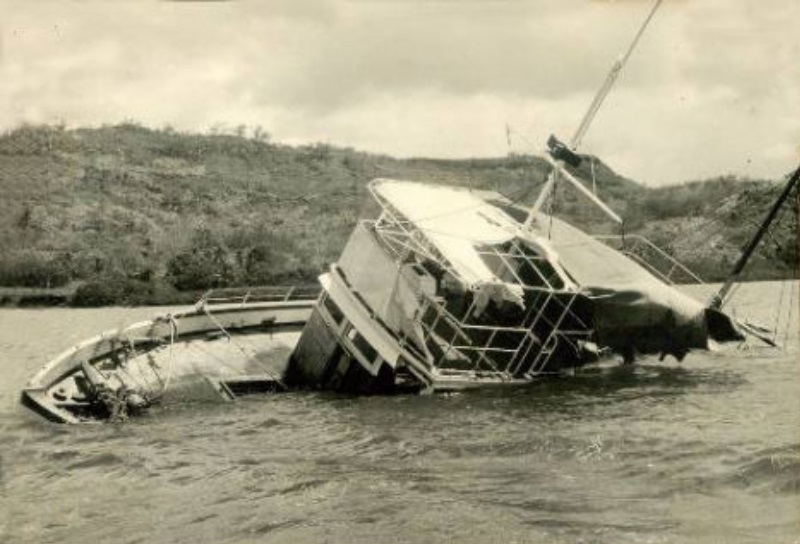
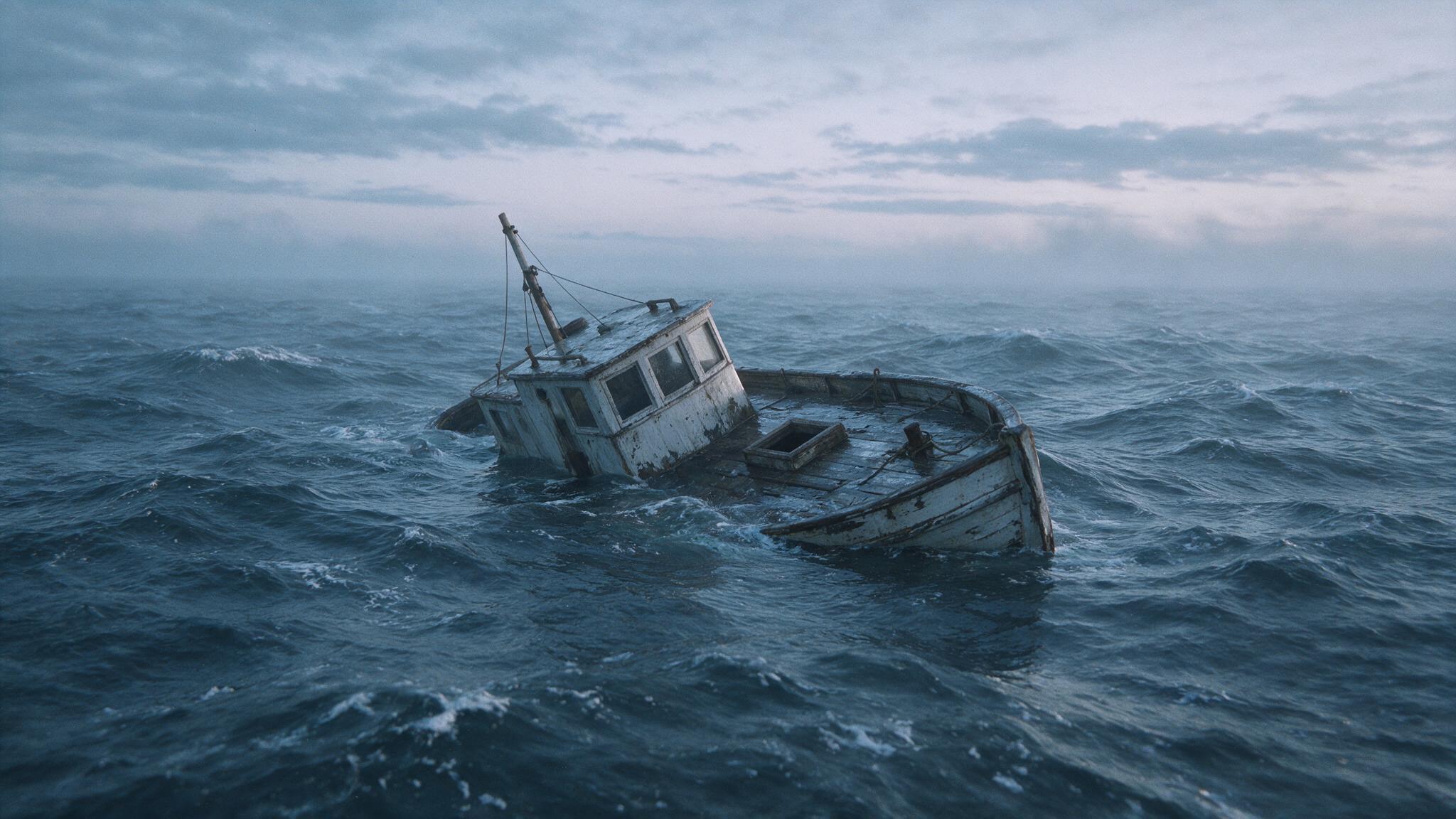
A merchant vessel, the Tuvalu, sighted her by chance about six hundred miles west of her intended course — far, far off the line to Tokelau, drifting derelict in the open sea. She was listing hard to port, her superstructure partly under water, wallowing exactly the way a cork-lined boat wallows when she has been flooded but cannot quite sink. From a distance she looked like a wreck. Up close she was worse, because a wreck is empty in a way you expect. The Joyita was empty in a way that made no sense.
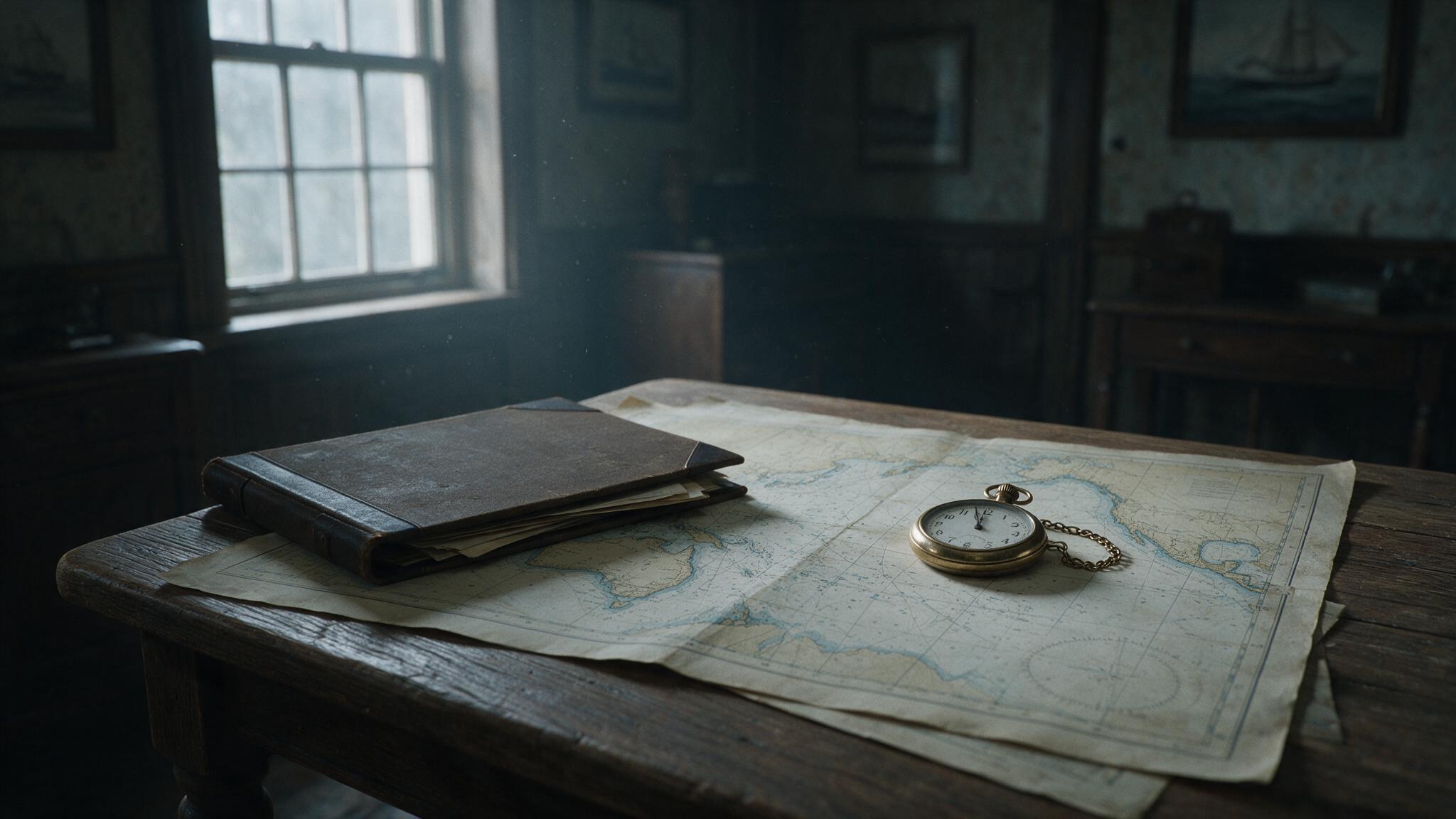
There was no one aboard. Not a body, not a survivor, not a note. All three of the ship's boats and her life rafts were gone. But so were the things a fleeing crew would surely have taken and the things they surely would have left — the logbook was missing, and the sextant, and the mechanical chronometer, along with the ship's clocks. Roughly four tons of cargo had vanished too, including a consignment of medical supplies. And the boat's radio, when they examined it, was tuned to 2182 kilohertz — the international marine distress frequency. Someone, at some point, had tried to call for help.
The Doctor's Bag
Of everything found aboard the derelict Joyita, one detail has lodged itself deepest in the retelling, and it belongs to the ship's doctor. On the swamped, abandoned deck, investigators found a doctor's bag left behind. Inside were a few medical instruments — and a quantity of bloodstained bandages.
It is a small thing and an enormous thing at once. The bandages mean that at some point before the end, someone aboard the Joyita was hurt, and someone else was trying to help them. There had been an injury serious enough to bleed through dressing after dressing. And then the person who was treating it, and the person who was bleeding, and every other soul on that ship, went over the side into the Pacific and were never seen again — but the bag, and the bandages, stayed behind on the tilting deck to be found. What happened in the hours those bandages record, no one can say. They are the last testimony of the Joyita, and they testify to pain without ever naming its cause.
What the Inquiry Could and Could Not Say
A court of inquiry was convened, and to its credit it managed to explain a great deal about the ship — and almost nothing about the people. The physical story it reconstructed goes something like this. The Joyita, for all her reputation, was in poor condition, badly maintained, her equipment tired and unreliable. Somewhere on the crossing a small pipe in the cooling system of the port engine corroded through and broke, and the sea began to come in. Blocked bilge pipes meant the water was not pumped back out. Slowly, steadily, the ship flooded and settled and took on her heavy list — but, being cork-lined and buoyed by her drums, she did not go under. The inquiry laid the disaster at the feet of that broken pipe, of failed radio equipment, and of the lack of a properly equipped lifeboat.
That explains the wallowing wreck. It does not, in any way that satisfies, explain the empty deck. Why did twenty-five people abandon a ship that was flooding but could not sink — a ship that was, in the most literal sense, the best life raft available to them for hundreds of miles in every direction? Why leave the one thing floating for the open sea? The inquiry, having explained the flooding, arrived at the human question and stopped dead. The fate of those aboard, it concluded, was simply inexplicable. That word, in an official maritime report, is a kind of confession.
The Theories, and the Water That Keeps Its Secret
Where the record falls silent, the guessing begins, and the Joyita has drawn as much of it as any ghost ship ever built. The simplest reading is the tragic one. The captain and crew, facing a flooding ship in the dark, believed — wrongly, fatally — that she was going down. Perhaps the injured man in the bloody bandages panicked them; perhaps the list grew so steep in the night that staying seemed like drowning. They lowered the rafts and abandoned the one hull that would have kept them alive, and the sea, which does not care how buoyant your boat is once you are no longer on it, took them one by one. It is the likeliest story. It is also the one that requires us to believe every experienced sailor aboard made the same catastrophic misjudgment at once.
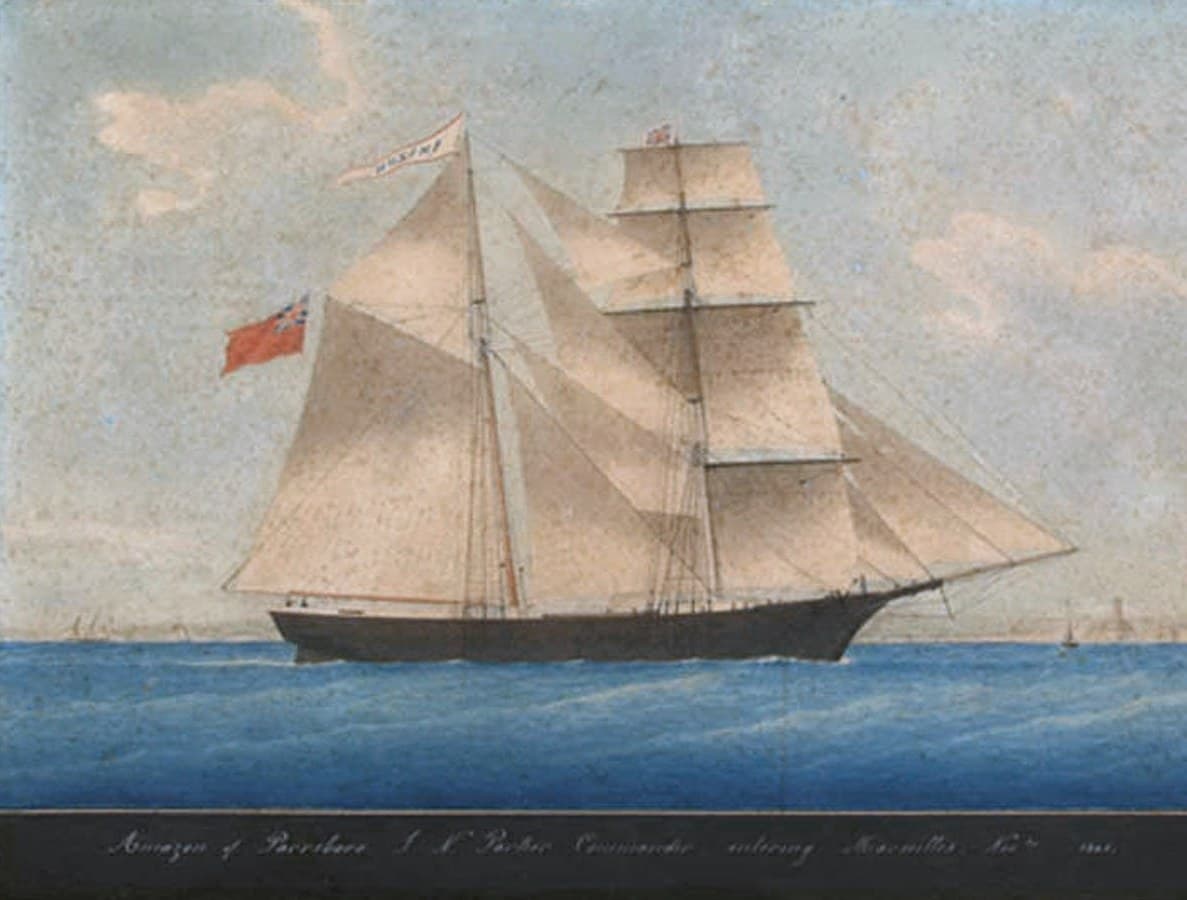
Then come the darker readings. Some point to the missing cargo, the missing logbook, the four vanished tons, and see the hand of piracy or a crew of murderers who boarded her, took what they wanted, and put every witness over the side. Others, noting that these were the years just after the war, have reached for stranded Japanese soldiers or a passing submarine — theories that thrilled the newspapers and convinced no one. And a few simply let the Pacific keep its due and file the Joyita alongside the Mary Celeste, in that small terrible category of ships found sailing themselves.
What is certain is only the shape of the thing. In October 1955, twenty-five people boarded a boat that had been built so it could not sink, for a two-day crossing they had made before. The boat did not sink. Five weeks later it was found drifting, half-drowned and derelict, with a doctor's bag of bloody bandages on its deck, its radio crying out on the distress channel, and every one of those twenty-five people gone. The unsinkable ship came home. Its people never did. And the ocean between Apia and the Tokelaus, which watched the whole thing happen, has said nothing about it for seventy years.
I have gone back through the inventory of what was found aboard her more times than the document deserves, and the item I keep returning to is not the bandages. It is the radio, left tuned to 2182 kilohertz. Someone stood at that set and turned the dial to the frequency the whole ocean is supposed to be listening on, and then went over the side of a boat that would not sink. I have never been able to decide whether that dial setting is evidence of hope or evidence that hope had already been abandoned, and the file gives me nothing to decide it with. It only sits there in my notes, still tuned, still calling.
---
This article uses actual archival and on-site photographs alongside AI-generated images and video produced to convey the mood of the story.


Comments
No comments yet — leave the first one.