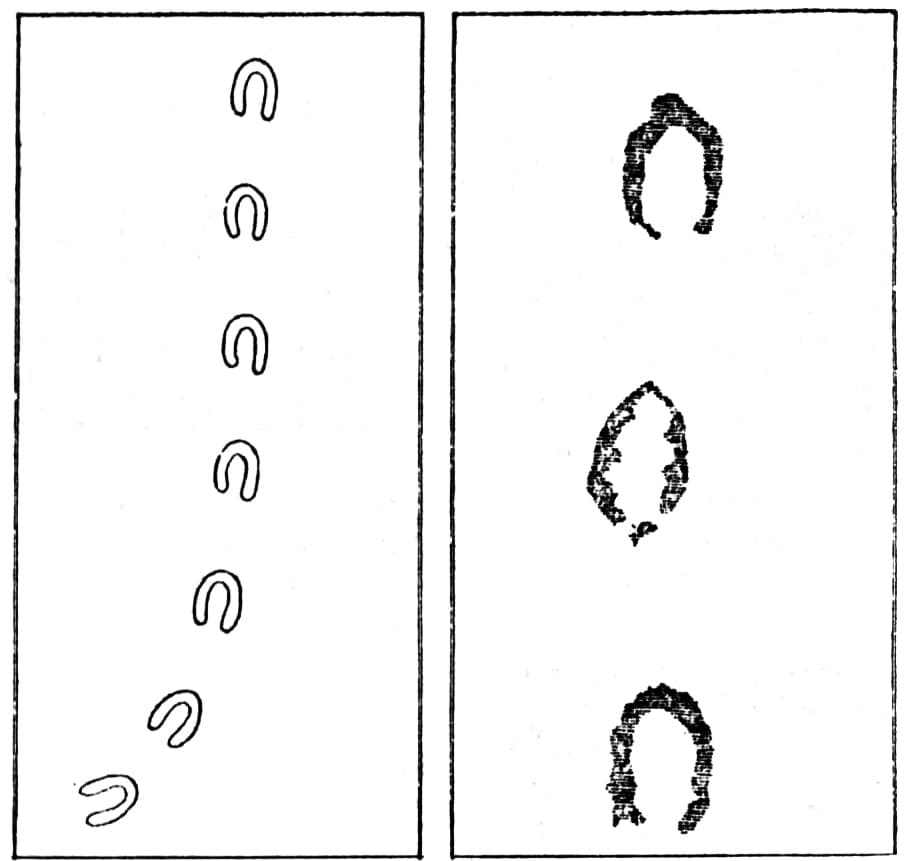
On the morning of 9 February 1855, the people of Devon in the south of England woke to a countryside buried under fresh snow — and to something no one could explain. Running across the white fields was a single line of prints, each one shaped like a small cloven hoof, set down neatly one in front of the other as though a two-legged creature had walked through the night. The trail did not wander or double back. It went straight on, over garden walls and across rooftops, over haystacks and frozen rivers, up to the mouth of a drainpipe and out the other side, on and on for what people claimed were dozens of miles. In town after town along the Exe estuary, frightened villagers whispered the same thing: the Devil had walked among them in the night. This is the story of the Devil's Footprints, one of the strangest and most stubborn mysteries in English folklore.
The Morning After the Snow
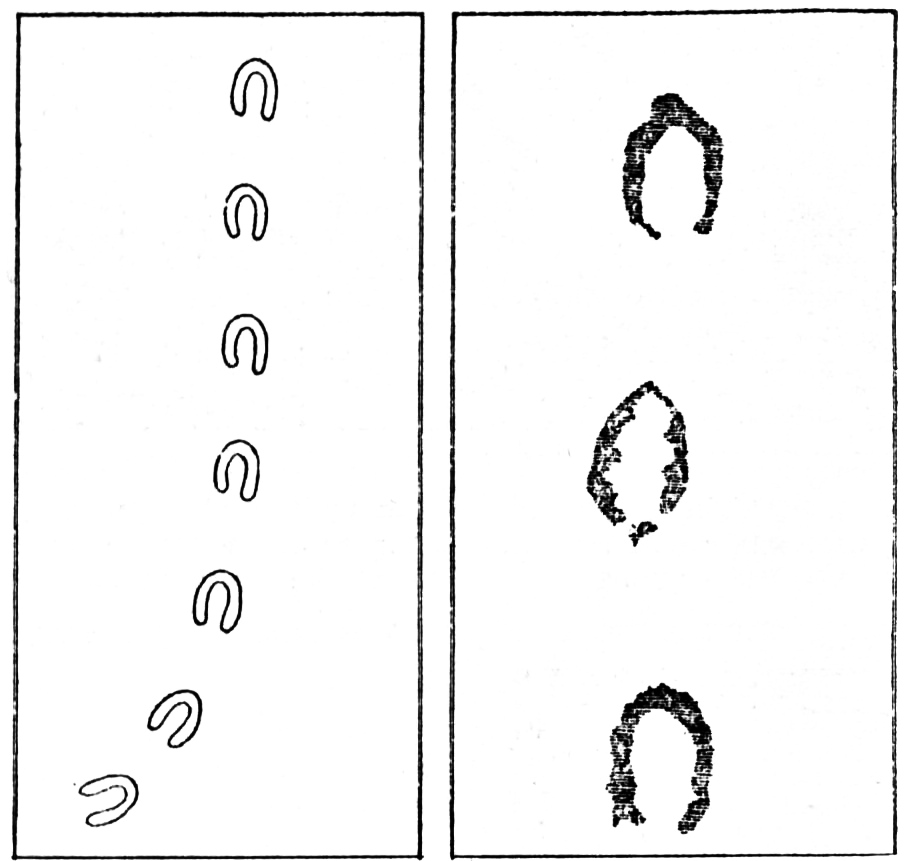
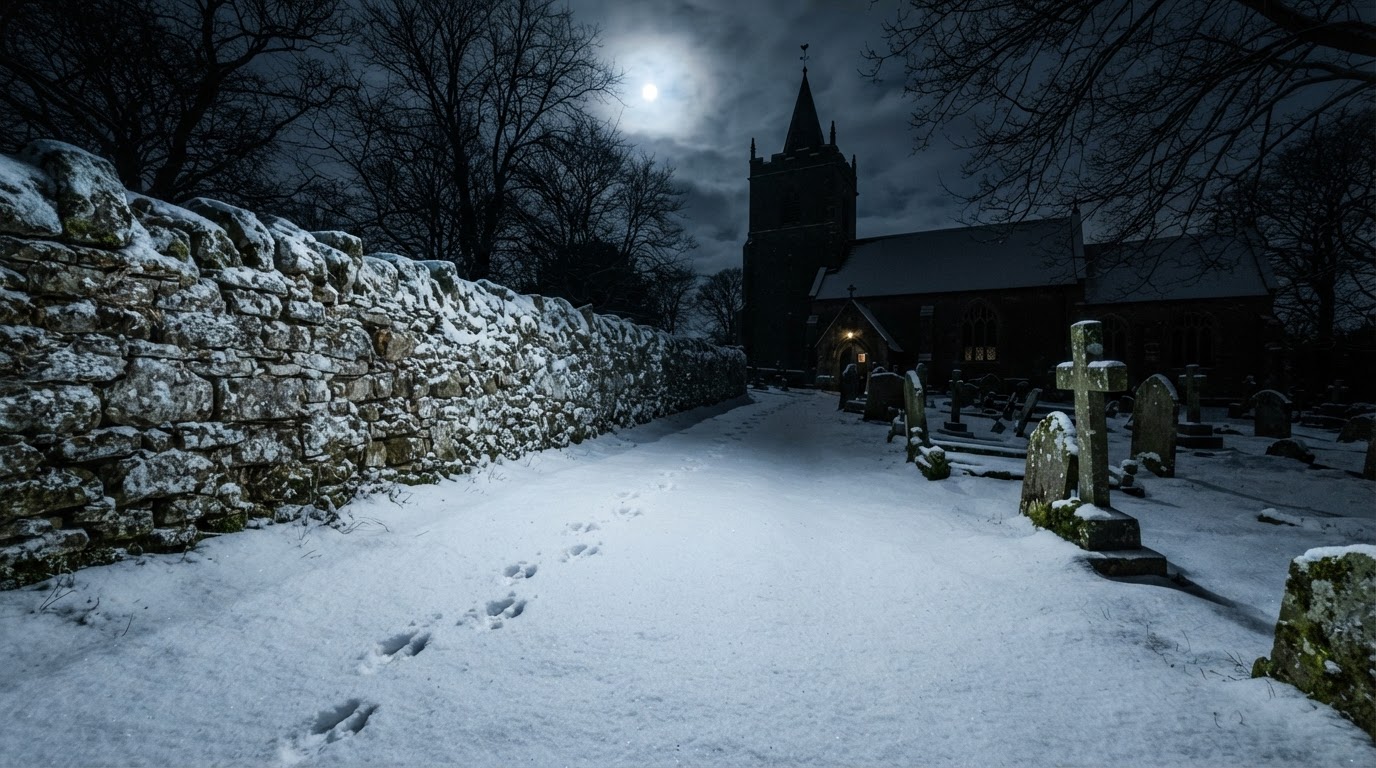
The snow had fallen heavily during the night of 8 February, and by dawn the fields, lanes, and rooftops of south Devon lay under a clean white blanket. It was in that unbroken snow that the marks were found. According to the reports that spread through the region, a continuous trail of small prints ran across the landscape — most of them about four inches long and three inches wide, spaced somewhere between eight and sixteen inches apart, and laid down almost entirely in a single file. Each print resembled the mark of a hoof, and to many eyes the shape looked cloven, split down the middle like the foot of a goat or a donkey.
What unsettled people was not simply the shape of the marks but the way they moved. An ordinary animal wanders, pauses, turns aside, leaves prints in pairs or clusters. These did none of that. They advanced in a single unbroken line, one foot placed directly ahead of the last, mile after mile, as steady and deliberate as a person walking with a purpose. Word travelled quickly from farm to farm and from village to village, and before long half the county seemed to be talking about the same eerie trail in the snow.
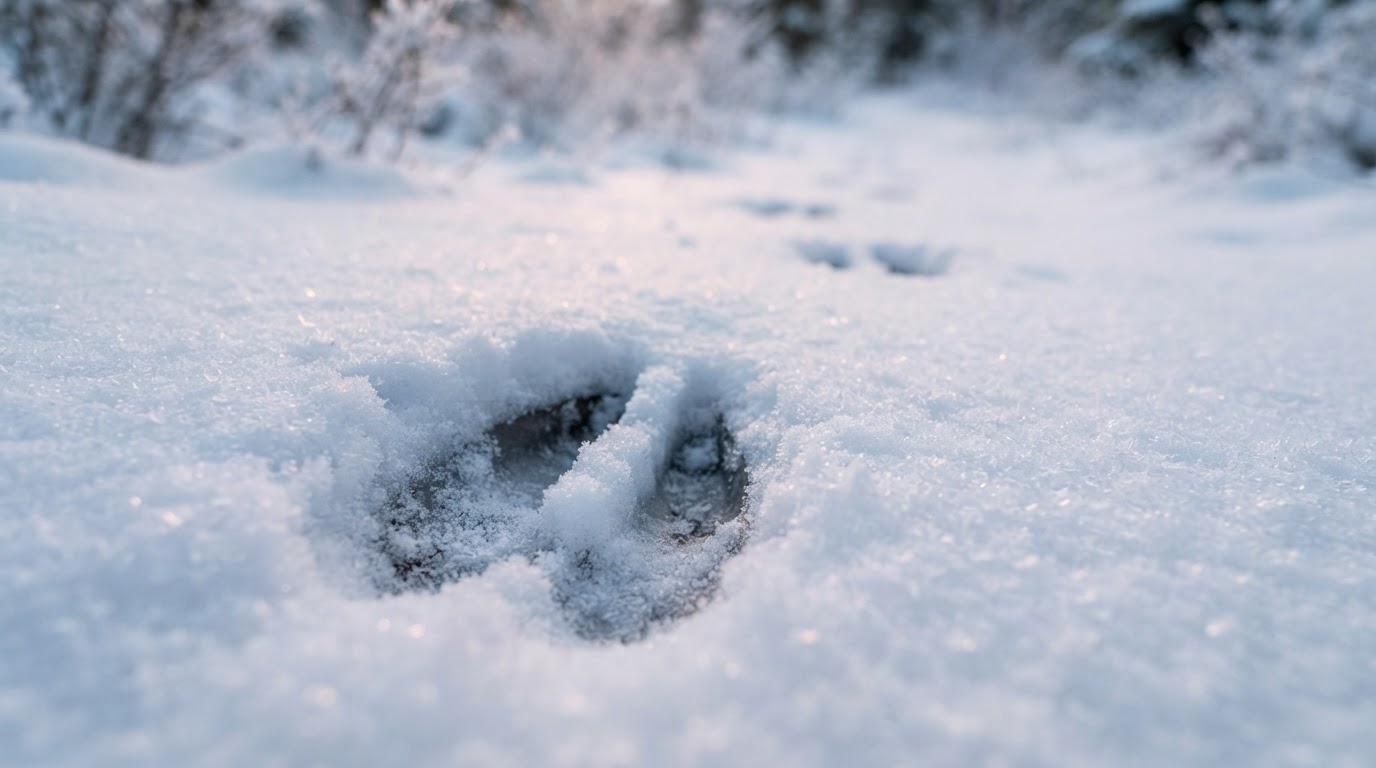
What made me keep the Devon material rather than reduce it to a line in a folklore index was the measurement. Four inches by three, spaced eight to sixteen inches apart. Frightened people do not usually produce numbers; they produce adjectives. Somebody out in that snow on the ninth of February took the trouble to lay something down beside a print and write the figures out, and it is that small act of bookkeeping, more than the Devil, that has kept me coming back to the file.
Across Roofs, Walls, and Haystacks
If the prints had merely crossed the open fields, they might have been dismissed as the tracks of some stray beast. What turned the affair into a genuine sensation was where the trail went. The marks were reported from more than thirty locations, and along the way they seemed to ignore every obstacle in their path. Where a high wall stood in the way, the prints appeared on top of it and continued down the other side. Where a haystack rose from a field, the trail was said to go up one side and down the far side rather than around. And most disturbing of all, the marks were found running across the snow-covered roofs of houses, as if whatever made them had walked over the buildings without the slightest concern for height or gravity.
The trail was also said to lead straight up to the mouths of drainpipes — some no wider than the prints themselves, a mere four inches across — and then to reappear on the other side, as though the walker had passed clean through a pipe a creature its size could never have entered. According to the accounts, it crossed rivers and estuary water without breaking stride, appearing on the far bank and carrying on. Taken together, these details made the ordinary explanations feel hollow. No badger, no fox, no wandering pony behaves like this. And so, in the frozen villages of Devon, people began to reach for an explanation that was anything but ordinary.
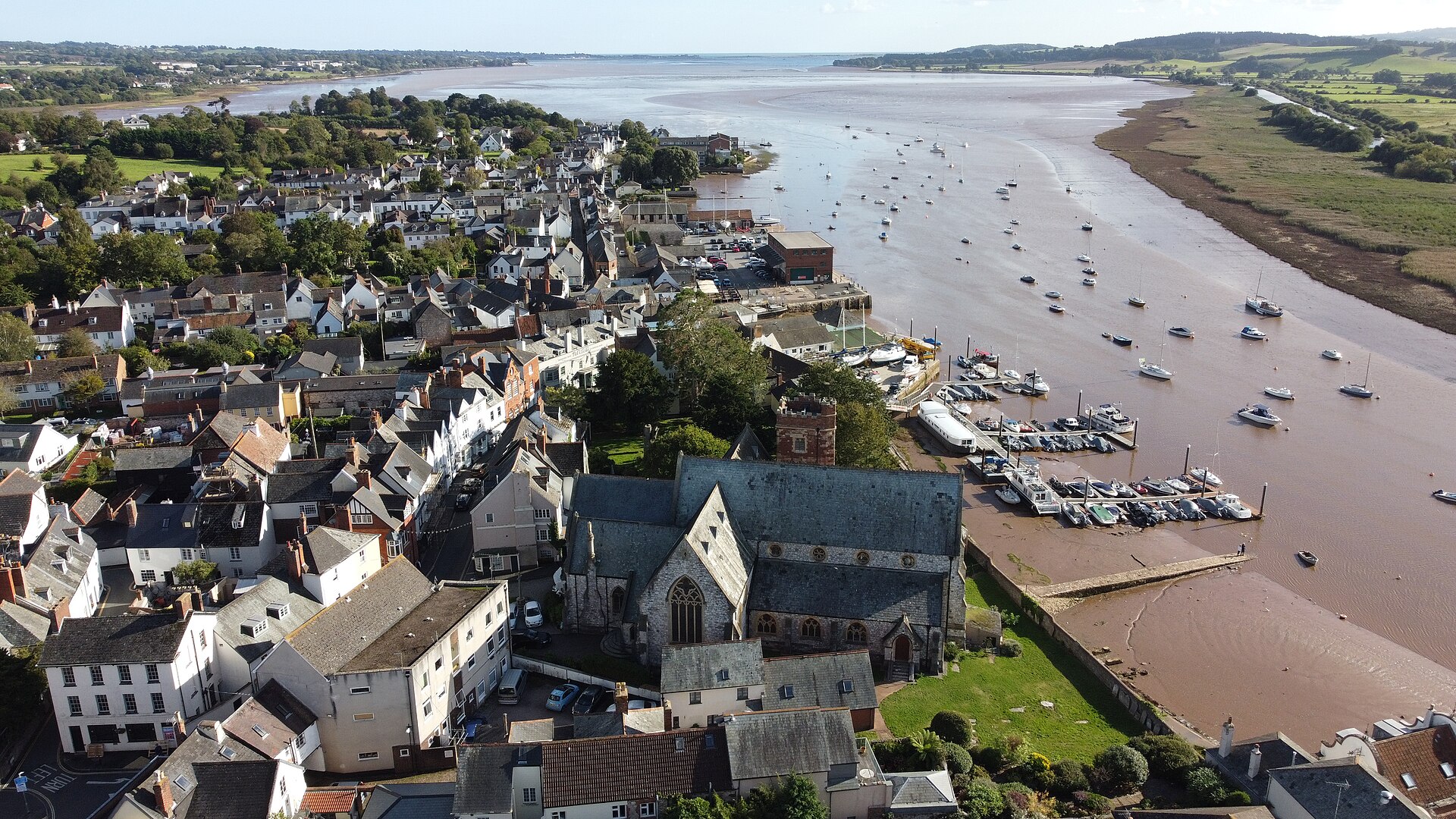
Photo: Wikimedia Commons, CC BY 2.0
The Villages in Fear
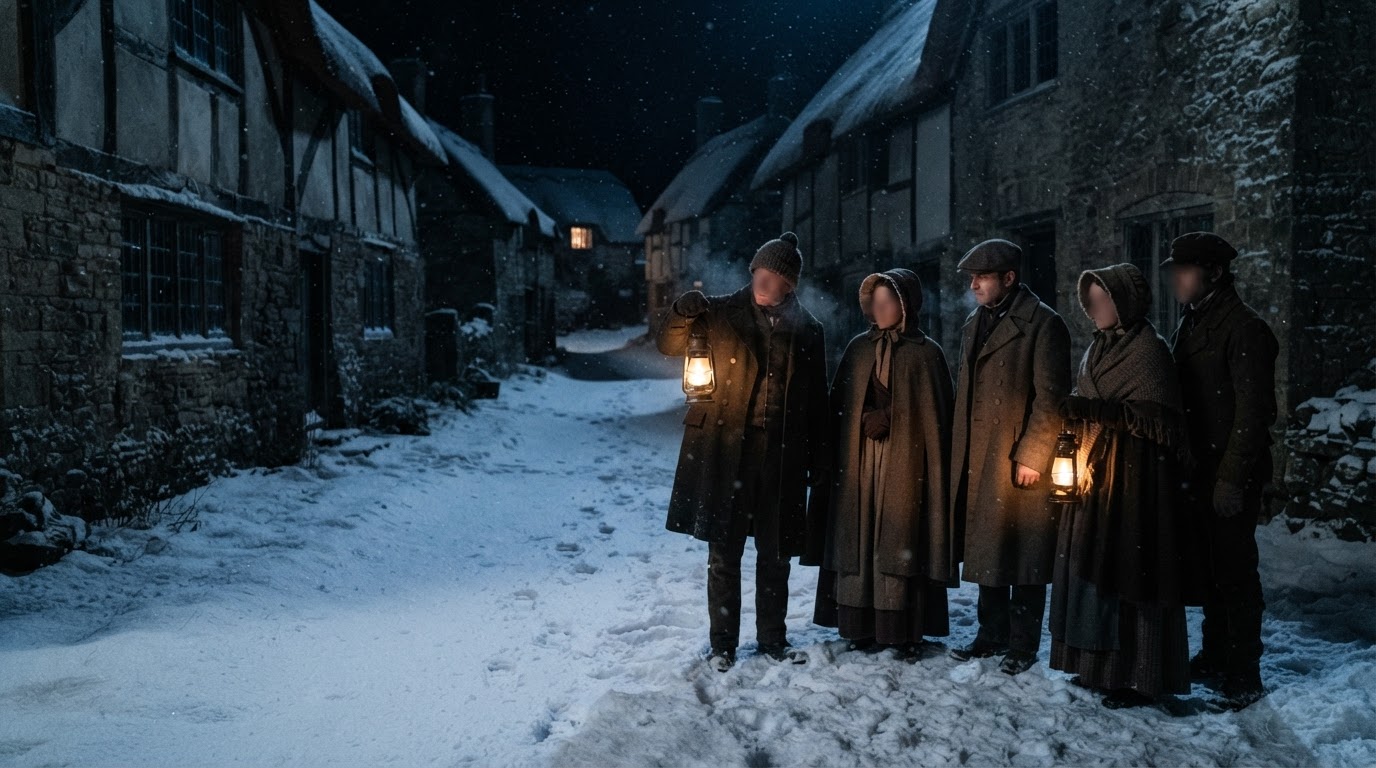
The Times of London reported "considerable sensation" in the towns of Topsham, Lympstone, Exmouth, Teignmouth, and Dawlish — a string of communities along the estuary of the River Exe. In an age when belief in the Devil was still very real and the long winter nights were lit only by candle and lantern, the sight of a cloven trail marching through the snow was enough to fill people with dread. Some were afraid to leave their homes after dark. Groups of men armed themselves and set out to follow the tracks, hoping to find — or perhaps fearing to find — whatever had made them.
The clergy could not stay out of it. The subject, one account records, "was descanted on from the pulpit," meaning that ministers preached about the marks to congregations already frightened by them. One clergyman, the Reverend G. M. Musgrave, was so worried by the mood of terror spreading among his parishioners that he decided to calm them with a story of his own — but that comes later. What matters here is how deeply the fear ran. This was not a handful of superstitious individuals but whole villages, gripped for days by the conviction that a supernatural visitor had passed through their snow-covered streets in the dark.
The Explanations Begin
Once the news reached the wider world, the theories arrived thick and fast, each one trying to reduce the diabolical trail to something natural. Sir Richard Owen, the celebrated naturalist who would later coin the word "dinosaur," weighed in from London in March 1855. He argued that the marks were made by badgers — "the only plantigrade quadruped we have in this island," in his words — hunting for food in the snow, and that a number of separate animals, not a single walker, had left the scattered trails. Others suggested it was the work of wood mice, which can leave curiously hoof-like impressions when they hop across soft snow; a correspondent to the Illustrated London News sent in drawings that spring to show exactly how such prints might form.
There were stranger ideas as well. One story held that a pair of kangaroos had escaped from a private menagerie at Sidmouth and gone bounding across the countryside. Another, recorded much later, claimed that an experimental balloon had broken loose from the naval dockyard at Devonport, trailing its mooring shackles behind it, and that the dangling chains had scored the strange marks into the snow as the balloon drifted for miles before coming down near Honiton. And beneath all of these lay the simplest explanation of all: that a night of ordinary animal tracks, half-melted and refrozen, had been seen through the lens of fear and stitched together by rumour into one impossible, unbroken trail.
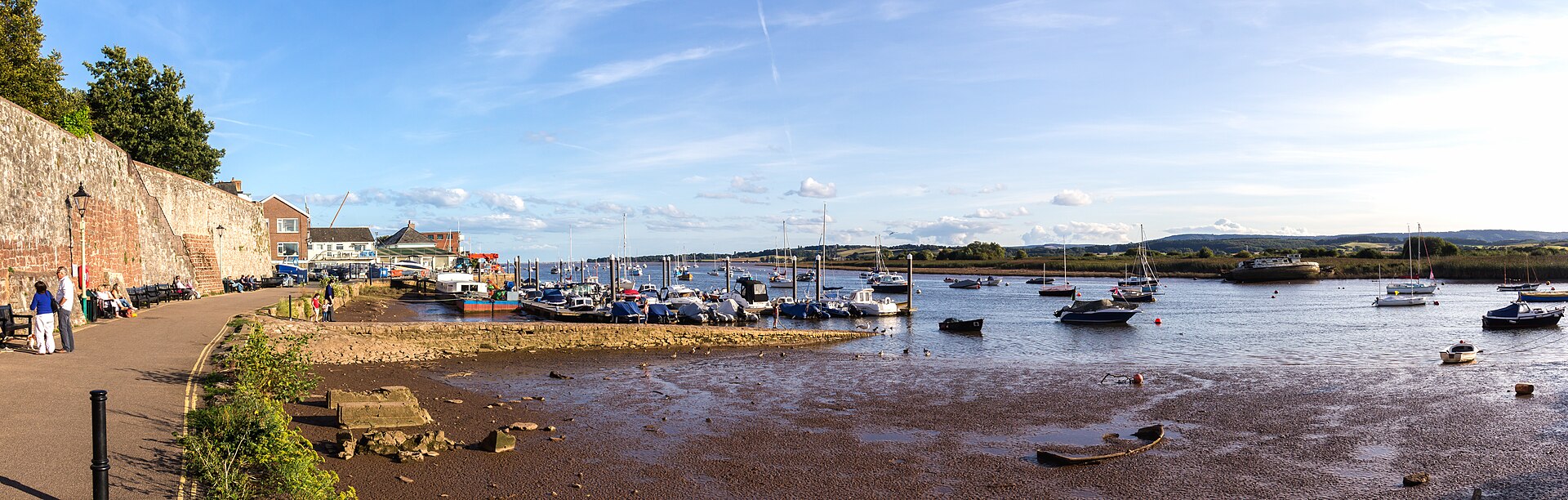
Photo: Wikimedia Commons, CC BY-SA 4.0
Why No Answer Ever Held
The trouble was that no single explanation ever fit the whole story. The badgers and mice could account for scattered prints, but not for a trail said to run in one continuous line for dozens of miles, nor for marks on high walls and rooftops. The escaped kangaroos made a memorable tale, but there is little to confirm the menagerie ever existed — and the Reverend Musgrave, who spread the version, later admitted he had never truly believed it, confessing that he had offered the kangaroo story mainly to talk his frightened parishioners out of their belief in the Devil. The runaway balloon is a striking image, but a drifting balloon does not lay down a neat, evenly spaced single file of prints that climbs over obstacles and crosses water.
The deeper problem was with the evidence itself. When later researchers examined the surviving letters and newspaper reports — including a cache of documents found in the twentieth century among the papers of the Devon vicar Henry Ellacombe — they discovered that the eyewitness accounts did not agree. The prints were not all the same size. They did not all fall on the same night. They did not, in truth, run in one perfect line clear across the county. It seems likely that many separate sets of marks, made by different causes on different nights, were gathered together in the retelling into a single grand trail far tidier and more terrifying than anything that actually lay in the snow. Yet even the careful skeptics, having explained away this piece and that, were left admitting that the affair as a whole had never been fully solved.
The Trail That Never Ends
The Devil's Footprints were not the only marks of their kind. Fifteen years earlier, in 1840, The Times had carried a report of similar hoof-like prints crossing twelve miles of the Scottish Highlands. Correspondents from continental Europe wrote in to say that comparable trails appeared from time to time in the mountains and were blamed there, too, on supernatural forces. And in the decades that followed, from remote Scottish glens to quiet corners of Devon, people would now and then wake to a line of prints in fresh snow and feel the same cold thrill their ancestors had felt in 1855. Each time, the natural explanations were offered; each time, something about the neat, purposeful single file refused to be entirely explained away.
The Ellacombe papers should have settled this for me, and in a sense they did. Different sizes, different nights, no single trail — the grand line across the county assembled after the fact, in the retelling. I have accepted that. What I have not managed to do is stop wondering what each of those separate nights actually was, because the explanation only dissolves the shape of the story; it does not account for a single print. Somewhere under all that tidy correction are thirty-odd real trails in real snow, and nobody has ever gone back for them.
What we can say for certain is only this. On a February night in 1855, snow fell across the villages of south Devon, and in the morning the people found a trail of small cloven prints running through it — over walls and rooftops and haystacks, up to drainpipes and out the other side, on for miles through town after frightened town. Naturalists blamed badgers and mice; a nervous clergyman blamed kangaroos; a later writer blamed a runaway balloon. None of it ever quite fit. And so the single line of prints in the Devon snow walks on through history, its maker never named, its purpose never known — a set of footsteps that led, in the end, nowhere and to no one.
---
This article combines contemporary documentary material and present-day photographs of the locations with AI-generated images produced to convey the mood of the story.

Comments
No comments yet — leave the first one.