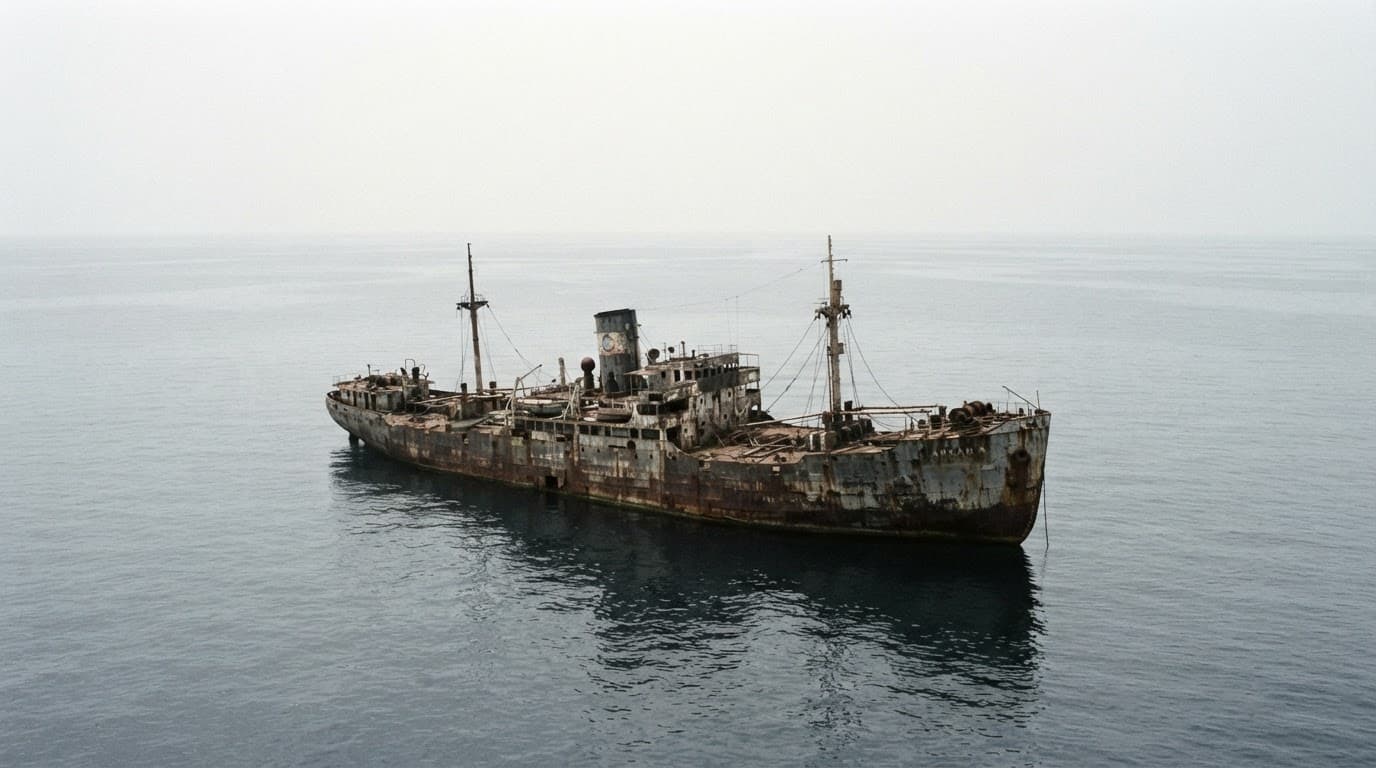
The first thing anyone ever knew of the Ourang Medan was a voice that should not have been able to speak.
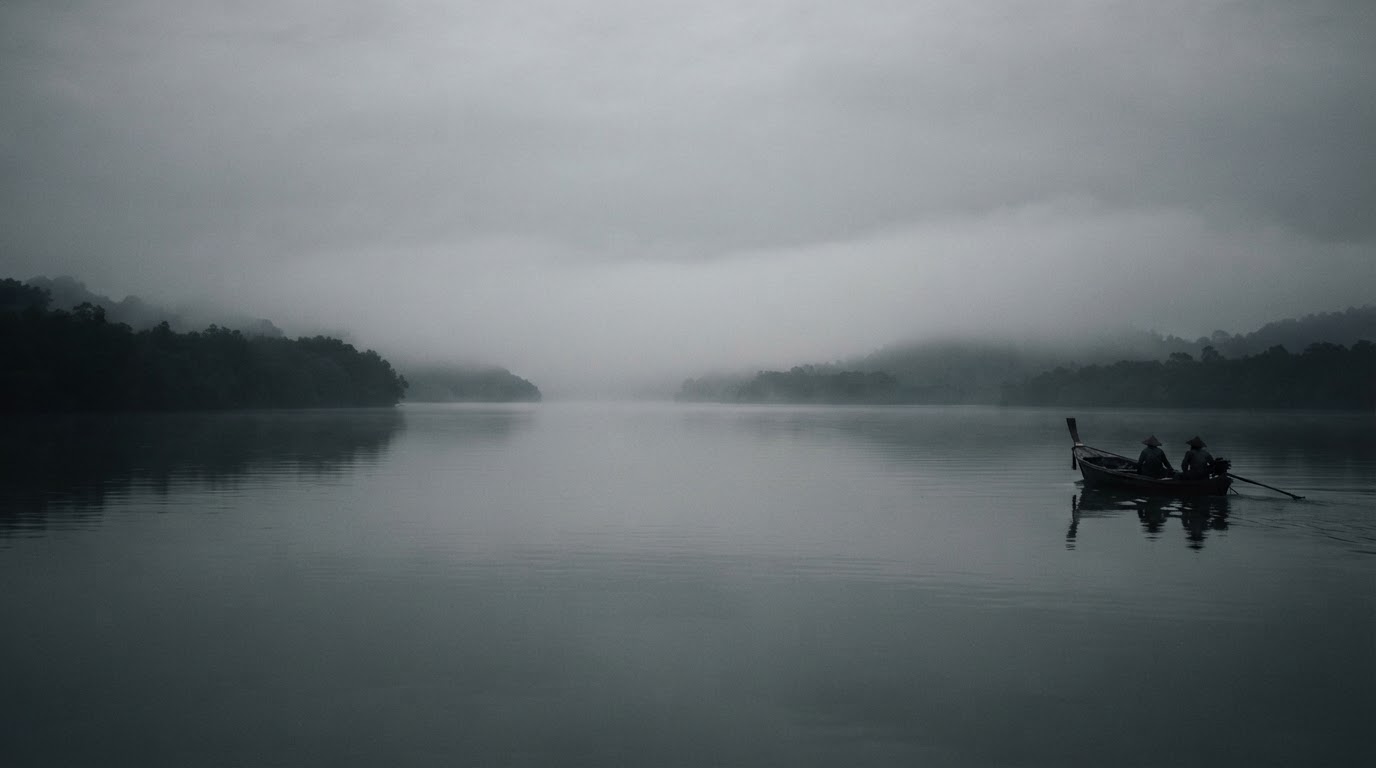
It came in over the wireless, the story says, sometime in the years just after the war — 1947, or 1948, the tellings never quite agree — crackling out across the flat, humid dark of the Malacca Strait, the narrow shipping lane between Sumatra and the Malay Peninsula where the traffic of half the world funnels through. A Dutch freighter, the Ourang Medan, tapping out a distress call in Morse. And the message that other ships copied down was not the ordinary language of a ship in trouble. It was this: All officers, including the captain, dead. Lying in chartroom and on bridge. Possibly whole crew dead. Then a burst of nothing — dots and dashes that resolved into no words at all, a hand losing its grip on the key. And then, out of that gibberish, two final words, clear and impossible.
I die.
And then silence. The strait went quiet, and somewhere out in that dark a ship full of the dead drifted on, still under power, still afloat, waiting for someone to come.
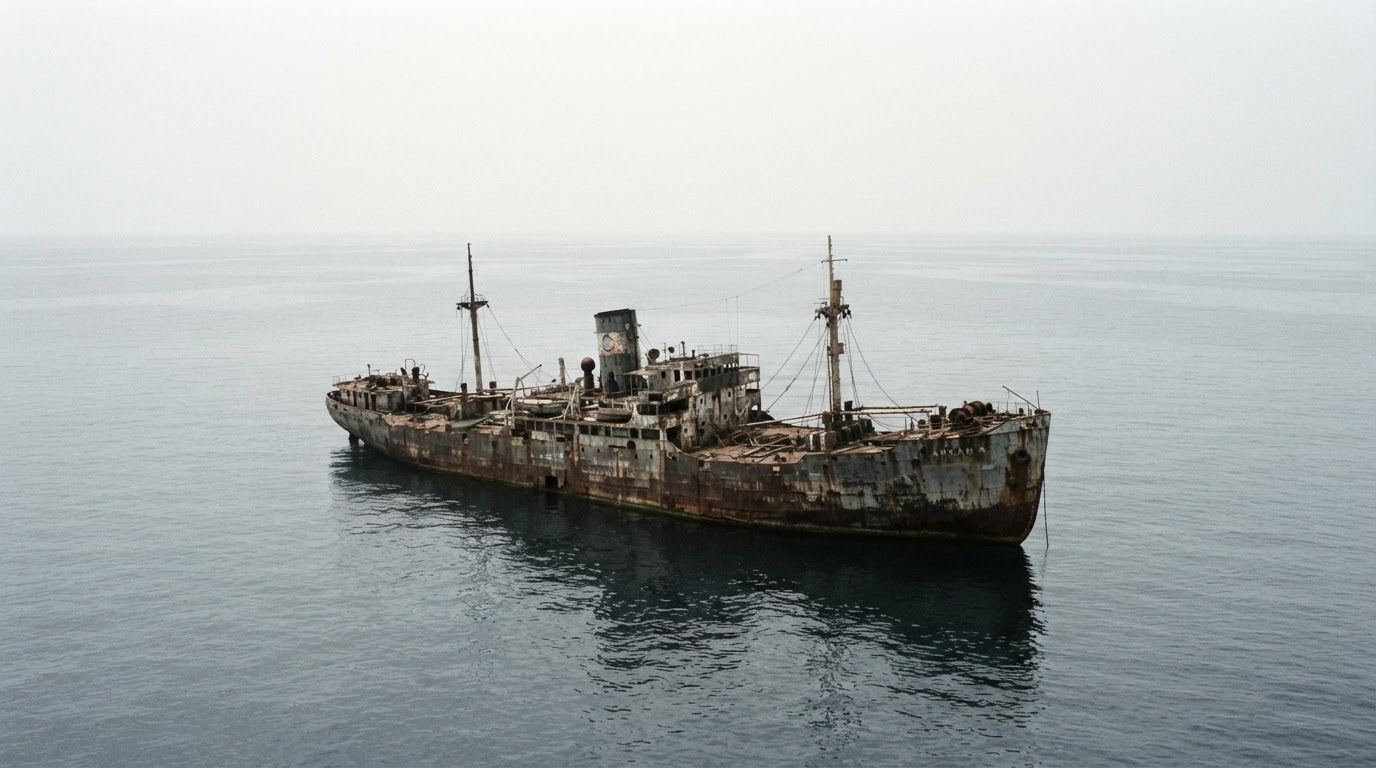
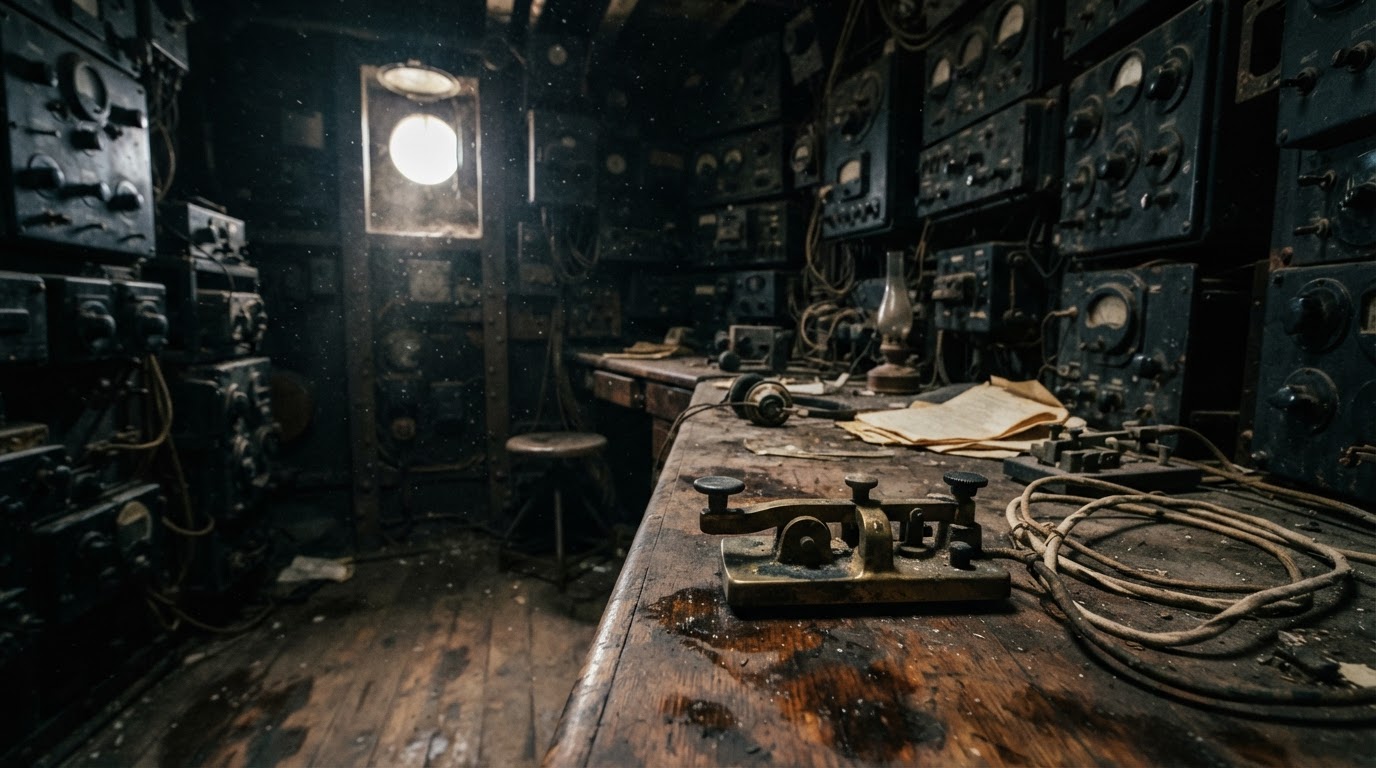
There is a specific kind of failure I have learned to watch for, and this case taught it to me. I am K. Woo, and I went into the Ourang Medan the way anyone would — starting with Lloyd's Register, expecting a tonnage and an owner and a date of loss, expecting the paperwork to be dull. Nothing was there. What unsettled me was not the absence itself but how long the story had survived without anyone apparently checking, decades of retelling stacked on a hull that no clerk ever wrote down. The two words I die have been quoted for seventy-odd years. I have never found a station log that records receiving them.
The Boarding
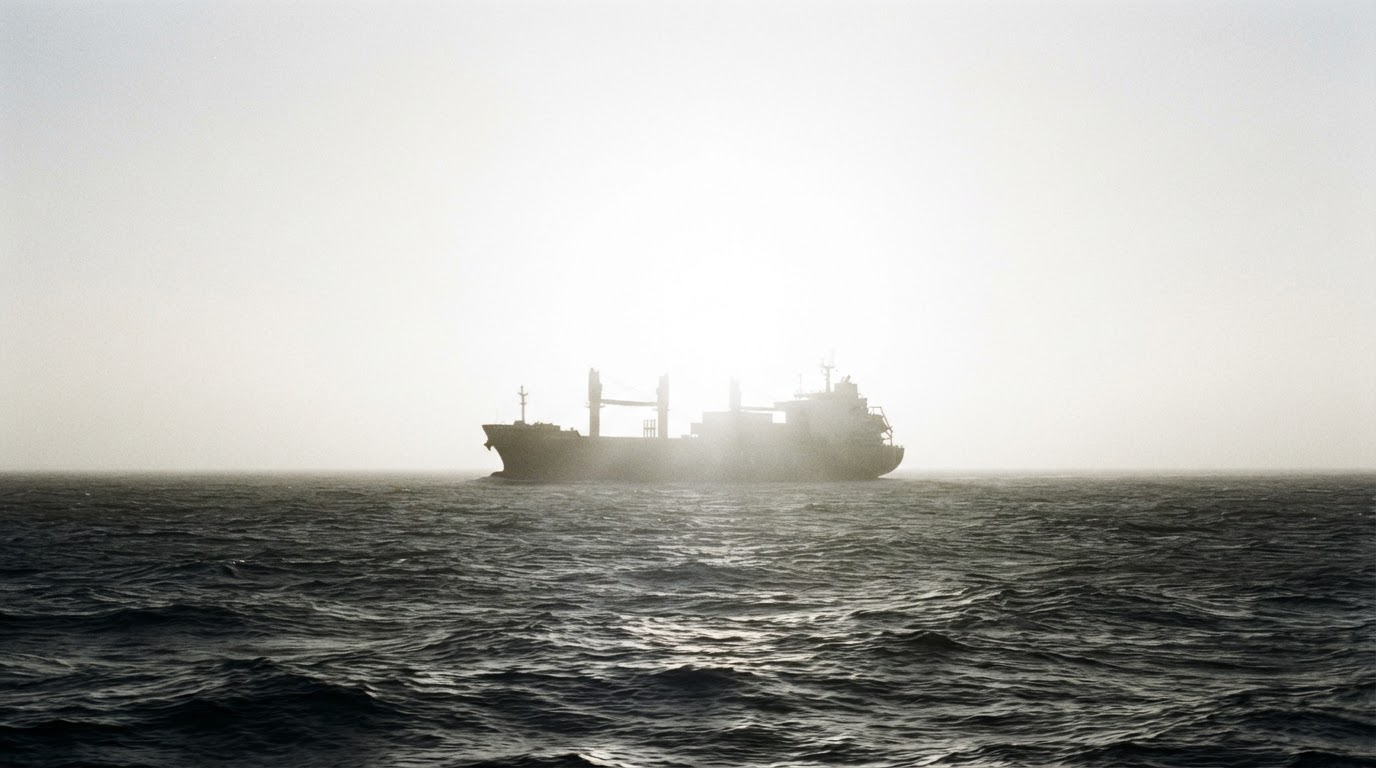
The stations that received the call took bearings and passed the message on, and two American vessels — most tellings name the Silver Star — turned toward the source. They found her exactly where the numbers said she would be, riding low and quiet on the swell, no lights, no answer to the hail, no movement on the decks. Her engines were stopped. She simply sat there in the heat, waiting.
A boarding party went across.
What they found is the heart of the legend, and it is worth telling the way the legend tells it, because the horror is entirely in the details — not in blood, of which there was none, but in a wrongness the eye could not reconcile. The crew were dead. All of them. They lay across the open deck and slumped in the passageways and sprawled on the bridge, and every one of them was in the same posture: on their backs, faces turned up toward the sun, arms outstretched, hands reaching at nothing. Their eyes were open. Their mouths were open. Every face, the story says, was fixed in the same expression — a look of terror caught and held, as if each man had seen the same thing in the same instant and died still staring at it.
There was not a wound on any of them. No blood, no violence, no sign of struggle, no injury the boarding party could find. And, most impossibly of all in that killing tropical heat, no decay — bodies that by every rule of the equator should already have begun to turn, lying instead as though the moment of death had frozen and would not move on.
Even the ship's dog was dead. They found it, the tellings say, caught mid-snarl, lips still peeled back from its teeth, snapping at something that was no longer there.
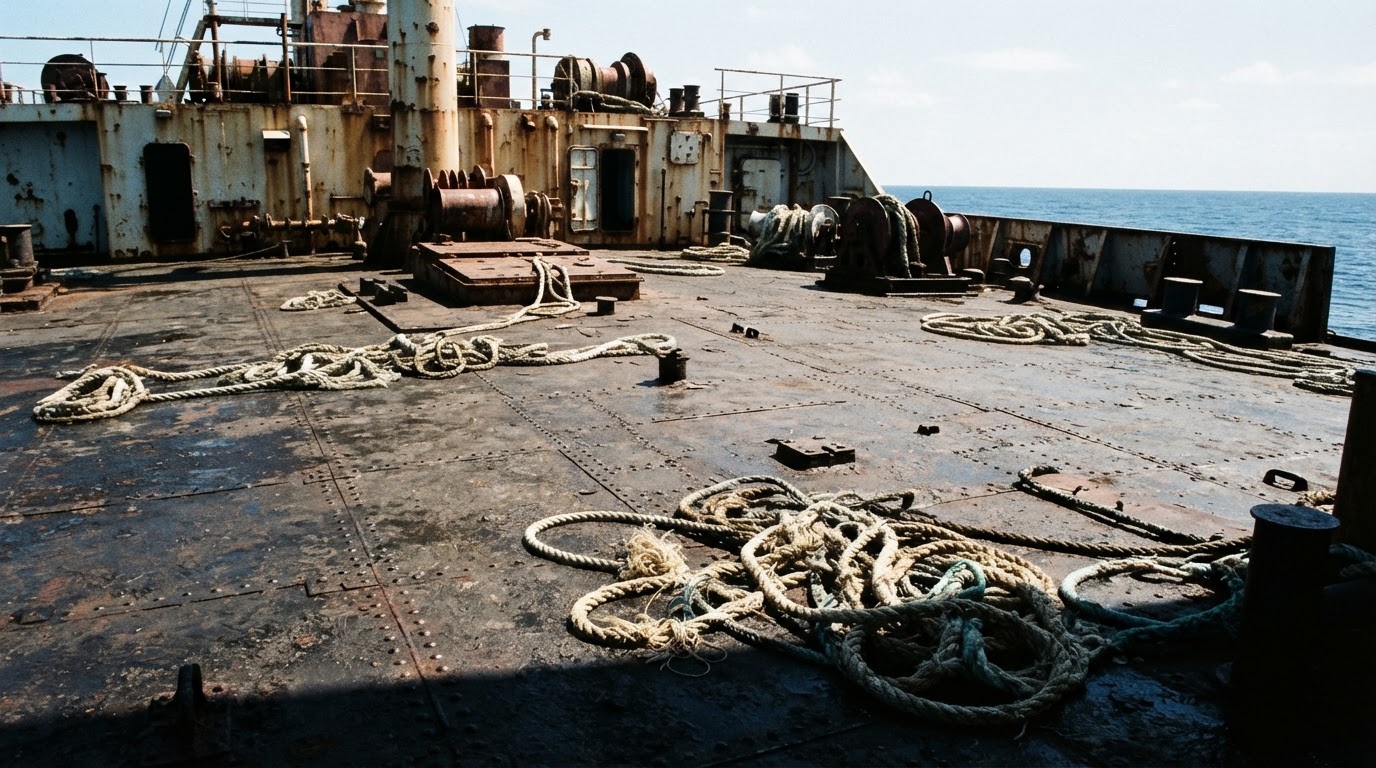
A cold spot, some versions add — a chill in the lower decks that had no business existing in those waters, a draft of something like winter breathing up out of the hold. The boarding party, unnerved, decided to take the ship under tow and bring her and her dead back to port, where the thing might be understood.
They never got the chance.
The Fire
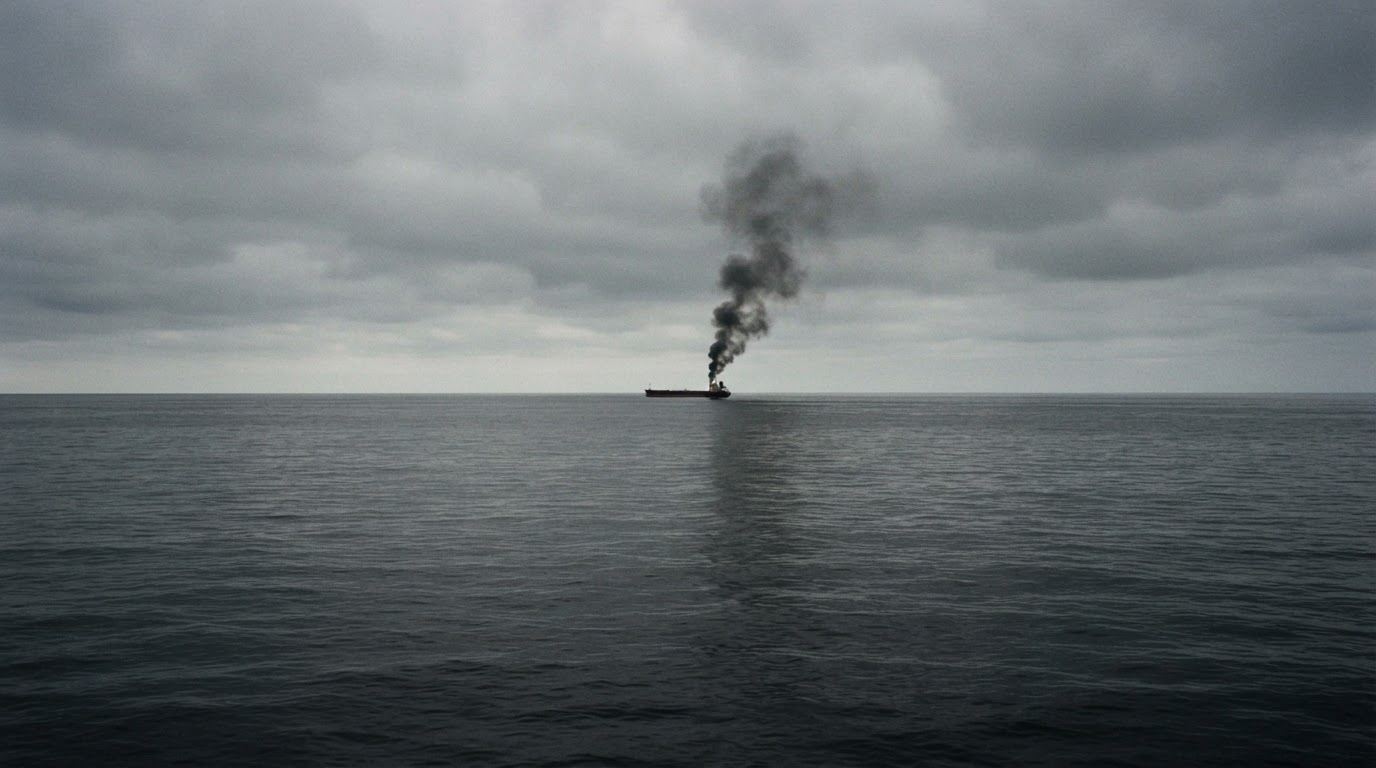
As they rigged the towline, the story goes, smoke began to rise from below — from the number four hold, in the versions precise enough to name it. It came fast, and it came wrong, and the boarding party barely made it back over the side and cast off before the fire took hold in earnest. They pulled away, and behind them the Ourang Medan began to burn.
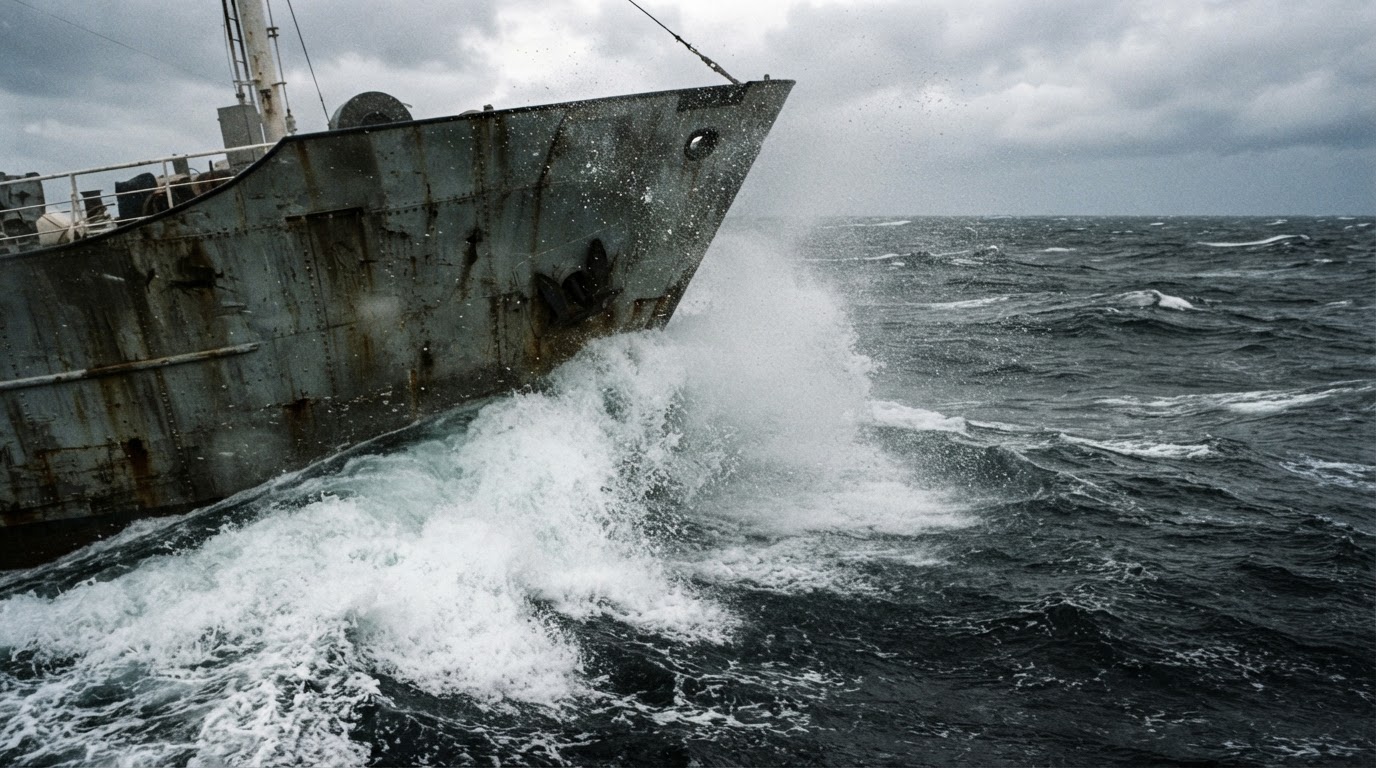
And then she exploded. A blast, the tellings say, powerful enough to lift the hull, to break her open, to throw her upward off the water before she settled back and went down — slipping under the flat surface of the strait and taking her cargo, her secret, and every one of her frozen, staring dead down with her into the dark.
By the time it was over there was nothing left to examine. No bodies to autopsy, no hold to search, no logbook to read, no evidence of any kind — only the memory of what the boarding party said they had seen, sinking with the ship into water too deep to recover it from. Whatever had killed the crew of the Ourang Medan, it had also, with terrible convenience, destroyed every trace of itself.
That is the legend, and told well it is one of the finest ghost stories the sea has ever produced. A ship of the frozen dead, a dying man's last words tapped out into the night, a fire that swallowed the evidence before it could be read. It has everything.
It has, unfortunately, one problem. When you go looking for the Ourang Medan in the records where a real ship must leave its mark, you find that she is not there.
The Ship That Isn't in the Register
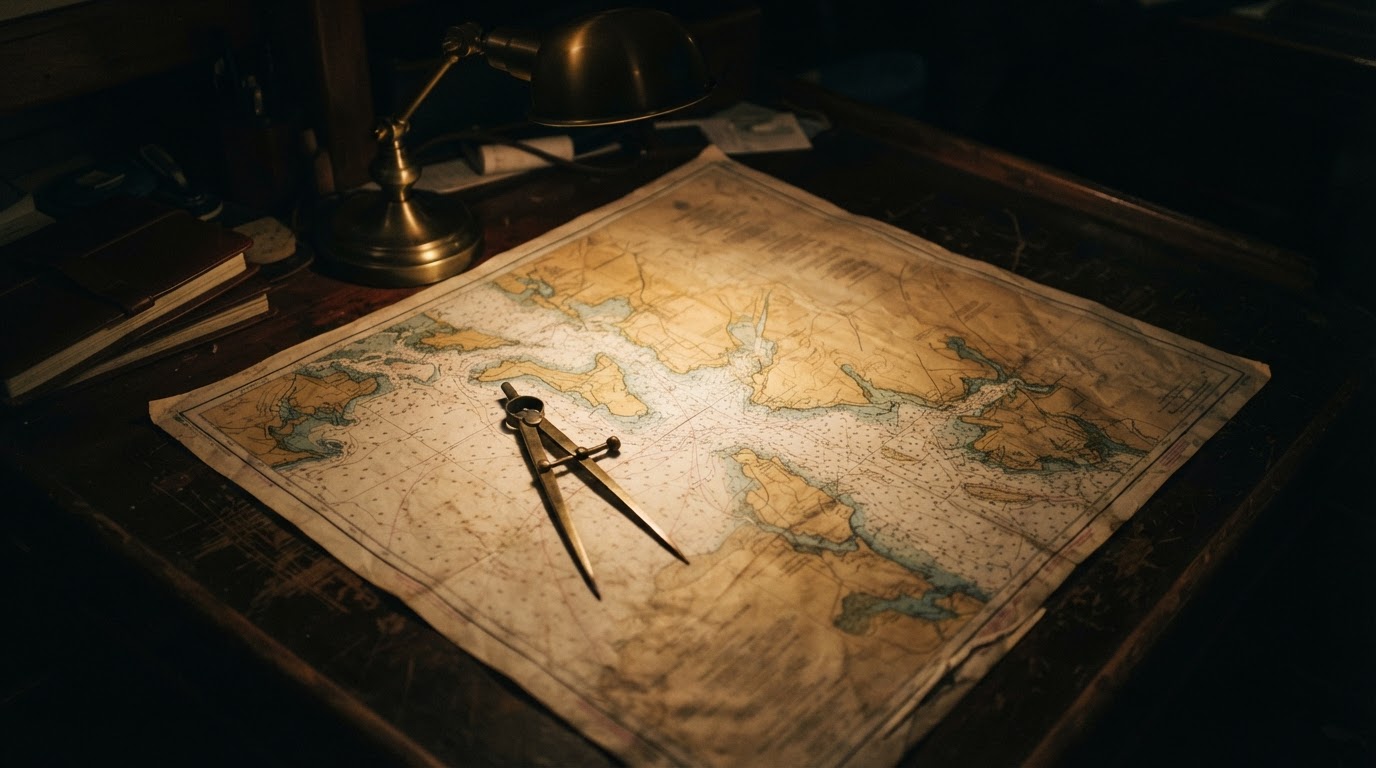
Every seagoing vessel of any size leaves a paper wake. It is registered somewhere. It is insured. It appears in Lloyd's Register of Shipping, the vast running catalogue of the world's merchant fleet that has tracked hulls, tonnages, owners, and fates for more than two centuries. When a ship is built, it enters the record. When a ship is lost, the record notes it. This is not folklore; it is bookkeeping, and it is nearly inescapable.
There is no Ourang Medan in Lloyd's Register. There is no Ourang Medan in the Dutch shipping records where a Dutch-flagged freighter of that name should appear. Researchers who have gone looking — and many have — turn up no registration, no owner, no port of build, no insurance file, no crew manifest, no record of a ship by that name being lost at sea in 1947 or 1948 or any adjacent year. The rescuing Silver Star has been the subject of the same searching, with the same inconclusive results: no clean documentary trail ties a real vessel of that name to a real rescue on a real date.
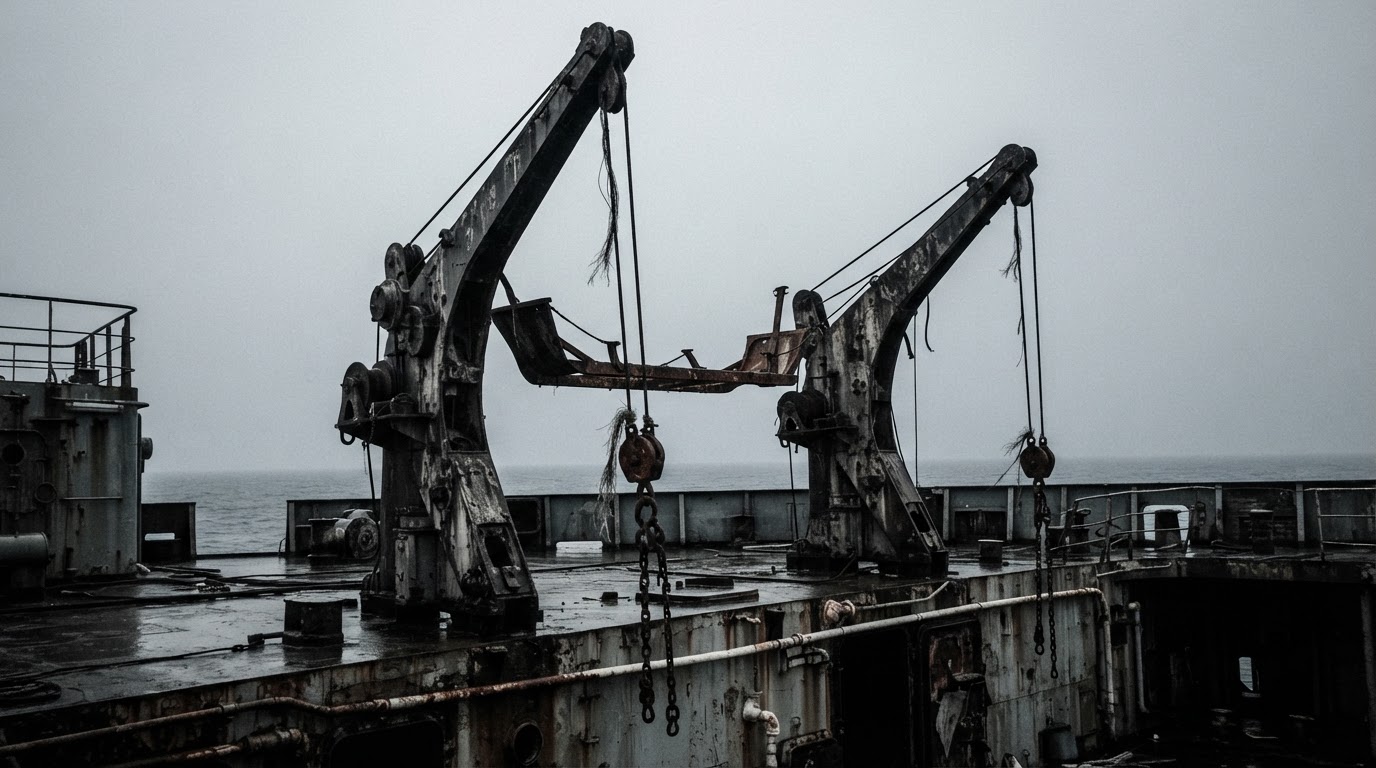
A ship that sank leaves wreckage and paperwork. The Ourang Medan left neither. And a ship that leaves no trace of ever having existed is a ship you have to start wondering about in a different way — not what killed her crew, but where did she come from, if not from the sea.
Tracing the Paper Back
If the Ourang Medan did not come from the shipping registers, it had to come from somewhere. And here the story's real history — the history of the story, rather than the ship — begins to surface, and it is nearly as interesting as the legend it explains.
The trail does not run back to a rescued sailor or a naval inquiry. It runs back to print. The earliest known appearances of the tale are in newspapers — a series of articles published in 1948 in a Dutch-Indonesian paper, De locomotief, in what was then the Dutch East Indies, recounting the incident as a dramatic sea mystery. The story circulated in that regional press before it circulated anywhere else, and it circulated as a story: vivid, atmospheric, and unsupported by the documentation a real casualty would have generated.
From there it worked its way westward and, crucially, into a document that would later be waved around as proof. In 1952 a version of the tale appeared in the Proceedings of the Merchant Marine Council, a publication of the United States Coast Guard — not as an official investigation, but as a retold sea-mystery of the kind such bulletins sometimes carried to fill their pages and entertain their readers. Its presence in a Coast Guard publication has been cited ever since as if it lent the legend an official stamp. It did not. A government bulletin retelling a spooky story is not a government finding that the story is true.
And behind the newspaper serials, researchers keep arriving at a single name: Silvio Scherli, an Italian writer and journalist associated with Trieste, connected to the earliest tellings and, in the reckoning of the skeptics who have worked the case hardest, its most probable author. On this reading the Ourang Medan was never a ship at all. It was a piece of writing — a maritime horror tale, well told, that slipped its fictional moorings in the endless retelling and drifted into the record as a thing that happened.
Why the CIA Memo Keeps It Alive
If the case against the Ourang Medan is so strong, why does the legend refuse to die? Part of the answer is a single document that surfaces in every modern retelling and that sounds, on first hearing, like a bombshell: the CIA has the story in its files.
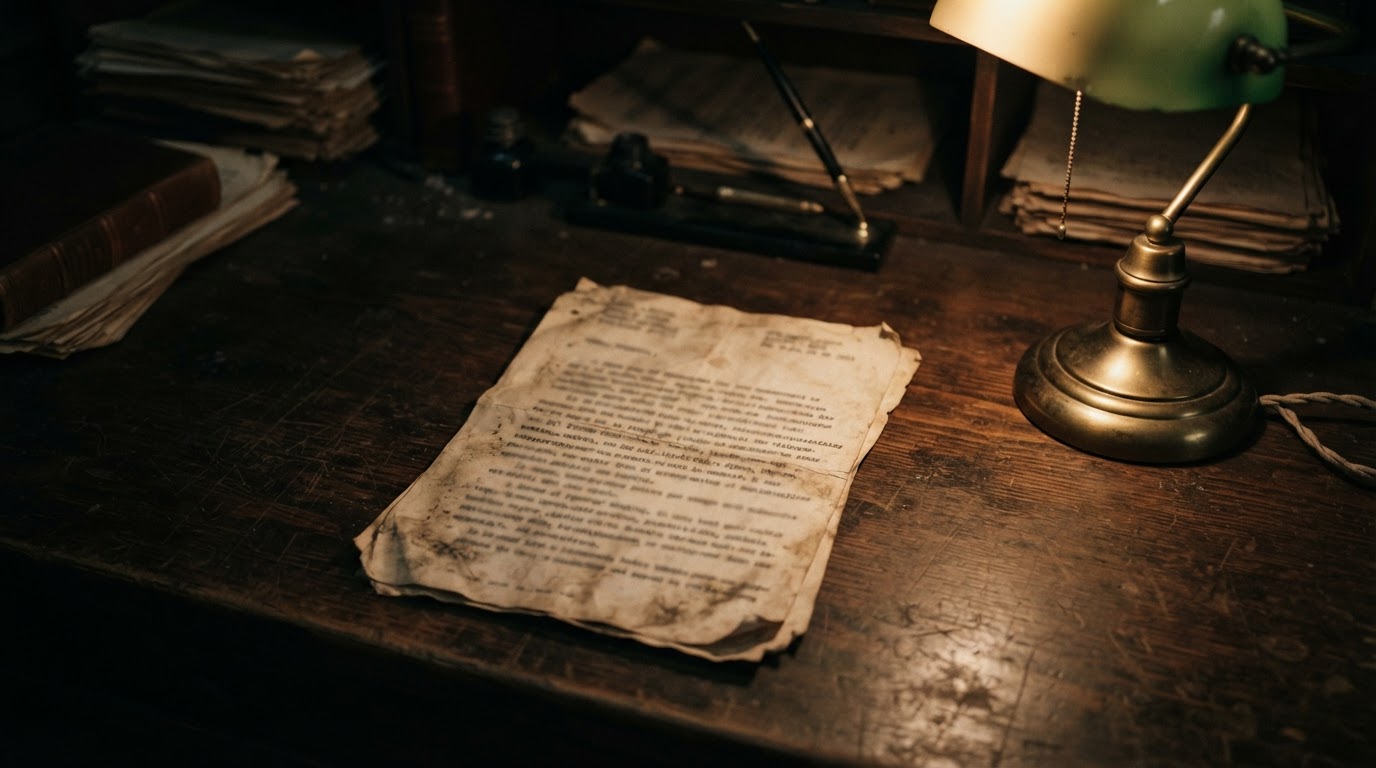
This is true, and it is also far less than it appears. Among declassified U.S. government records is a 1959 letter — later held in CIA files — in which a private correspondent lays out the Ourang Medan tale and presses the recipient to take it seriously, essentially forwarding the legend along with his own speculation about what it might mean. That is what the "CIA document" is: not an intelligence finding, not an investigation, not a confirmation, but a letter from a member of the public repeating a story he had read, which ended up archived along with millions of other pieces of correspondence a government agency happened to keep.
But the phrase "it's in the CIA files" is a spell, and it does what spells do. Stripped of context and dropped into a retelling, it converts a filed letter into official acknowledgment, and the legend borrows an authority it was never granted. A great deal of the Ourang Medan's modern staying power runs on exactly this — on documents that exist, and are real, and prove nothing, but that sound like proof to anyone who does not read past the letterhead.
If It Were True: The Theories
Set the doubts aside for a moment — as the legend always invites you to — and suppose that something like the Ourang Medan really did drift dead across the Malacca Strait. What could kill an entire crew at once, leave no wound, and freeze every face in the same terror? The theories that try to answer this are, in their own right, part of why the story endures, because several of them are genuinely plausible, and one of them is quietly sinister.
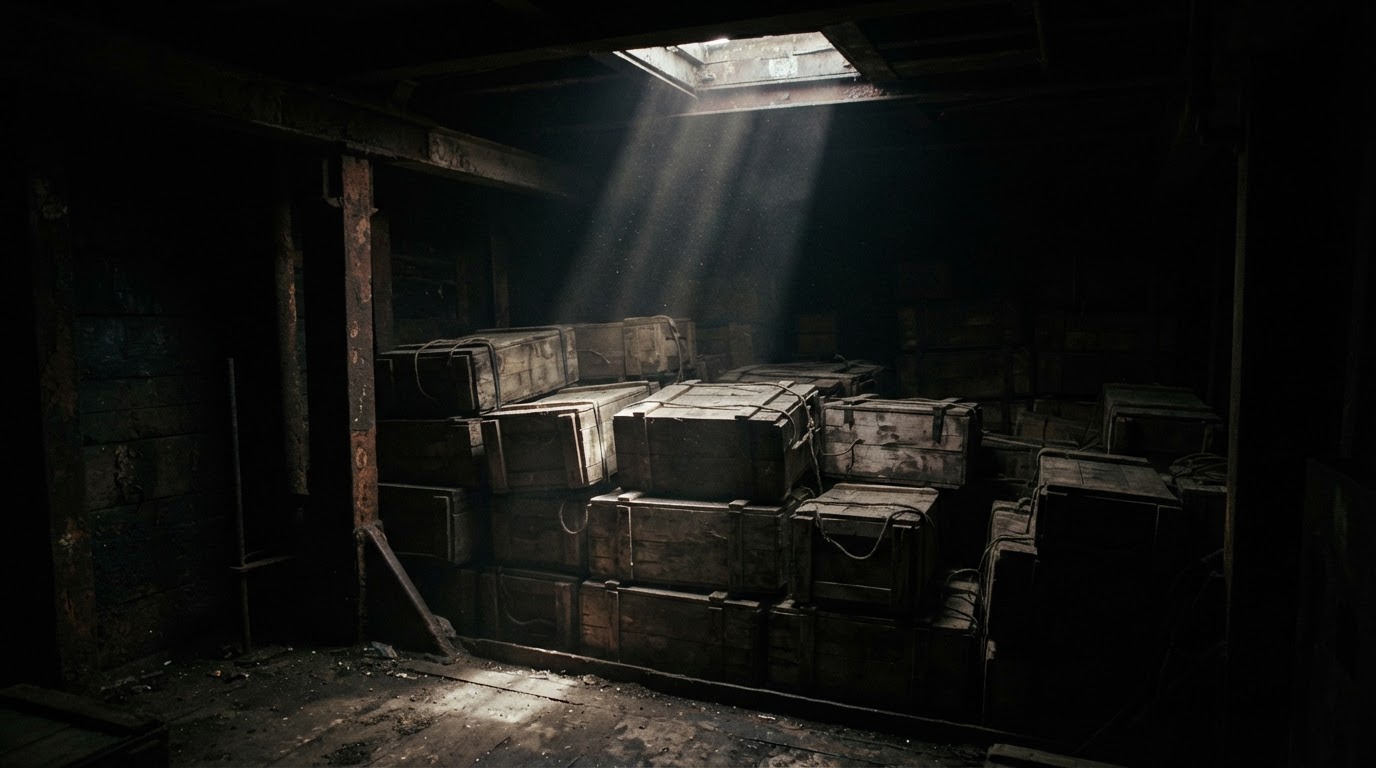
The poisoned cargo. The most popular explanation, and the one that dovetails eeriest with the era, is that the Ourang Medan was carrying something she should not have been carrying, and that it killed everyone aboard. In the years just after the war, the story runs, the ship was moving a clandestine chemical cargo — potassium cyanide, nitroglycerin, the rumored makings of chemical weapons quietly shifted between ports. A leak, or seawater reaching the drums, could in this telling have released a cloud of hydrogen cyanide gas through the ship, killing the crew where they stood. It would explain the absence of wounds. It might, with some generosity, be stretched to explain the fixed expressions. And a cargo of unstable chemicals would explain the fire and the explosion that so conveniently erased the evidence.
Carbon monoxide. A quieter cousin of the same idea: a smouldering fire or a failure in the ship's own systems could have flooded the enclosed spaces with carbon monoxide, an odorless, colorless gas that kills without a mark and can drive its victims out into the open air as they gasp for a breath that never comes — which would, chillingly, put the bodies exactly where the legend puts them, out on the deck, faces to the sky.
The methane burst. A stranger geological theory points to methane clathrate — frozen gas locked in the seabed that can, under the right conditions, release suddenly and boil up through the water. A large enough eruption could, in principle, both asphyxiate a crew and destabilize a ship. It is a real phenomenon and an old suspect in sea disappearances, invoked for the Ourang Medan as for others.
The cover story. And the most deflating theory of all: that the whole tale is a dressed-up account of ordinary human violence — a piracy or smuggling operation gone wrong, a crew killed for their cargo, the supernatural trappings added later to make a grubby crime into a ghost story. If men killed the crew of the Ourang Medan, the frozen faces and the snarling dog are simply the embroidery the legend needed to lift itself out of the police blotter and into myth.
A Death Ship in a Long Tradition
Even the name carries a shiver once you know it. Ourang Medan is usually rendered from Malay/Indonesian as "Man of Medan" — Medan being the great port city of northern Sumatra, hard by the strait where the story unfolds. A man of Medan; a ship named for a person; a vessel that turns out to be crewed entirely by the dead. Whether the name was chosen for that resonance or acquired it by accident, it fits the legend like a shroud.
And the legend does not stand alone. The sea has always bred ships like this. The Ourang Medan is a twentieth-century entry in a tradition that runs back through the Mary Celeste — the American brigantine found in 1872 sailing the Atlantic in perfect order with not a soul aboard, her crew vanished into a mystery never solved — and back further still to the Flying Dutchman, the spectral vessel doomed to sail forever without reaching port, and haunting, in many tellings, the very waters off the Cape and the Indies through which the Ourang Medan was said to move. Sailors have always told stories of ships that carry death instead of cargo, and they have told them for a reason.
Because the sea does not explain itself. It takes ships and gives back nothing — no bodies, no wreckage, no answer — and into that silence the people left ashore must put something. A death ship is what the silence gets filled with. It gives a shape to the way the ocean can empty a vessel of every living soul and leave the hull sailing on, indifferent, as if nothing had happened. The Ourang Medan is that ancient dread wearing the clothes of its own century: not a plague ship or a cursed galleon but a rusting diesel freighter with a chemical cargo and a wireless key, dying in Morse.
If the pull of an unsolved case is what draws you, the Ourang Medan has famous company on land as well — the nine hikers of the Dyatlov Pass, found dead in the Urals under circumstances that half a dozen sober theories still cannot fully close. Some mysteries are unsolved because the evidence was destroyed. Others, like this one, may be unsolved because there was never anything to solve.
The Ship That Exists Only in Static
In 2019 the Ourang Medan sailed again — this time as Man of Medan, the first chapter of a horror videogame anthology that put players aboard a derelict ship of the frozen dead and let a new generation feel the old chill. It was a fitting resurrection for a vessel whose entire existence is, and always has been, a matter of retelling. The Ourang Medan has no wreck on the seabed for divers to find. It has no grave, no register entry, no verified survivor, no photograph, no plank of salvaged wood. It has only the story — and the story, it turns out, was enough.
That is the strange, quiet truth the case leaves you with. Somewhere the legend insists there is a stretch of the Malacca Strait where a Dutch freighter went down burning with her staring dead aboard. But when you sail out to that stretch of water, there is nothing there. No ship. No wreck. No sign that any of it ever was. The Ourang Medan exists only in two places: in the crackle of a radio message no confirmed station ever confirmed receiving, and in the mouths of the people who keep passing the story on. It is a ghost ship in the most literal sense available — not a ship that is haunted, but a ship that was never anything but a haunting.
And still, on a windless night in those waters, with the wireless hissing its empty static across the dark, it is not hard to imagine the dots and dashes assembling themselves one more time into that last impossible message, tapped out by a hand that the records say never existed, on a ship that the records say never sailed. All officers, including the captain, dead. A pause. I die. And then, as it always does, the silence — into which we have been pouring this story for the better part of a century, and into which, unable to leave the silence alone, we will go on pouring it still.
The Scherli attribution ought to close this file, and on most days I let it. But I have handled the 1959 letter in the CIA holdings, and it does something I cannot square with a man tidily authoring a hoax and walking away. A private citizen sat down eleven years later and wrote to a government agency, unpaid and unasked, pressing them to look into a ship that had never been built. Whatever Scherli made, it had already stopped belonging to him by then. That is the part I keep. The Ourang Medan has no wreck, no register, no crew — and it has been recruiting correspondents for seventy years, each one convinced they are the first to notice something out on that strait that no one else has bothered to look at.
---
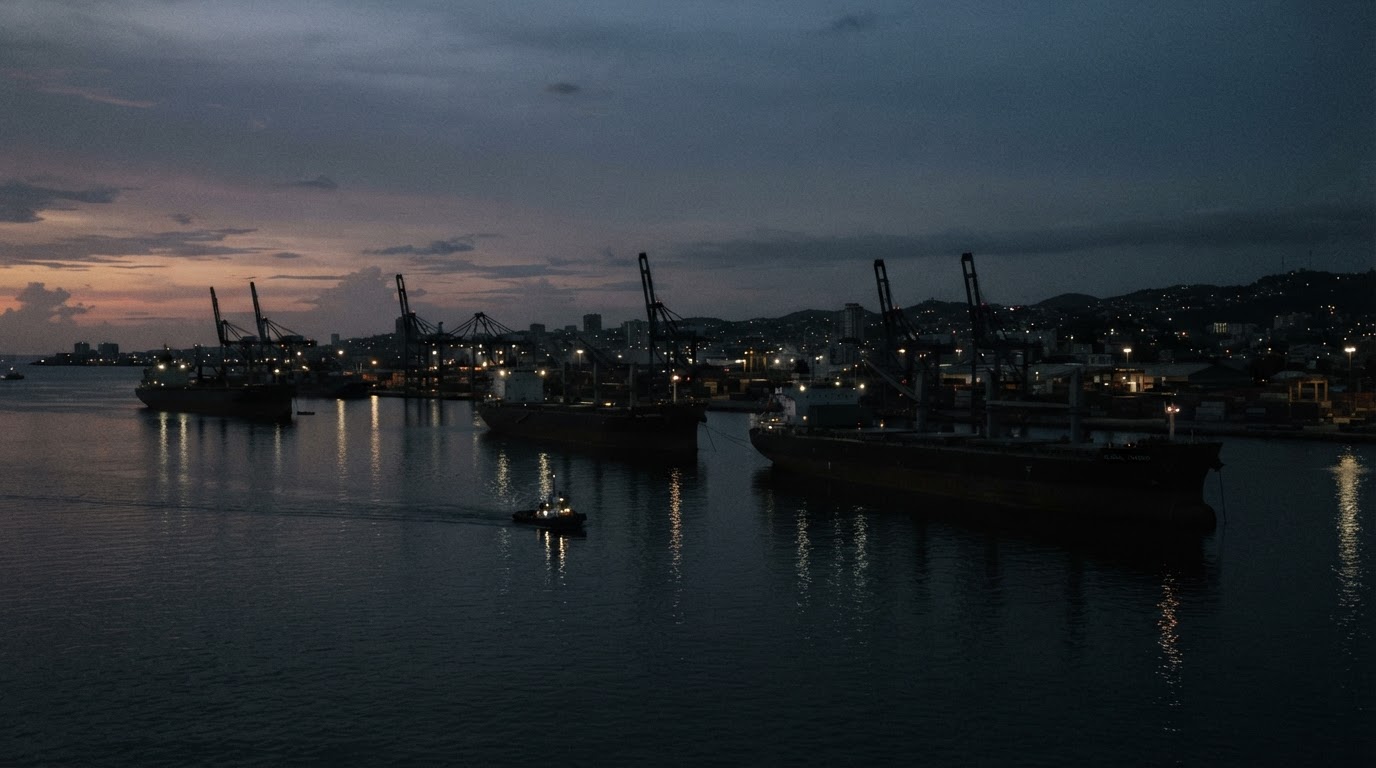
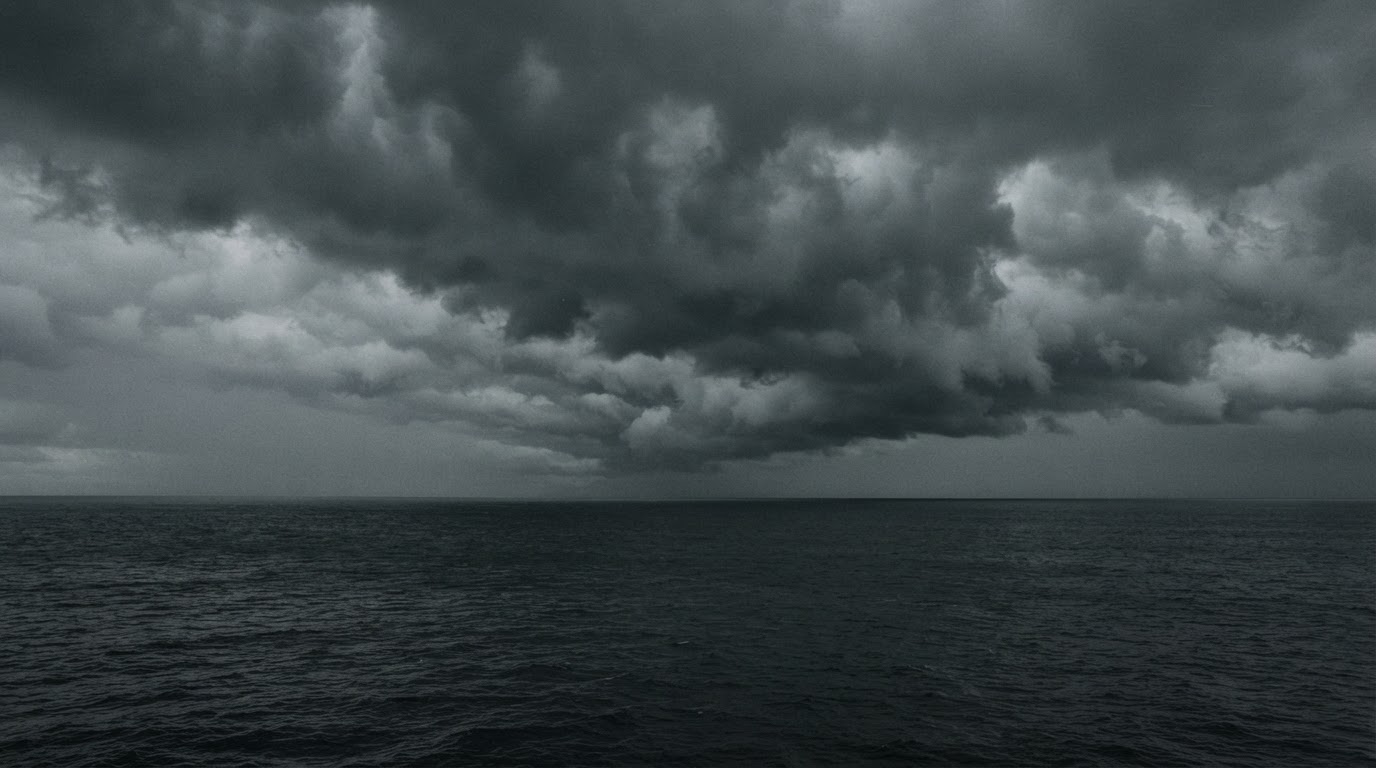
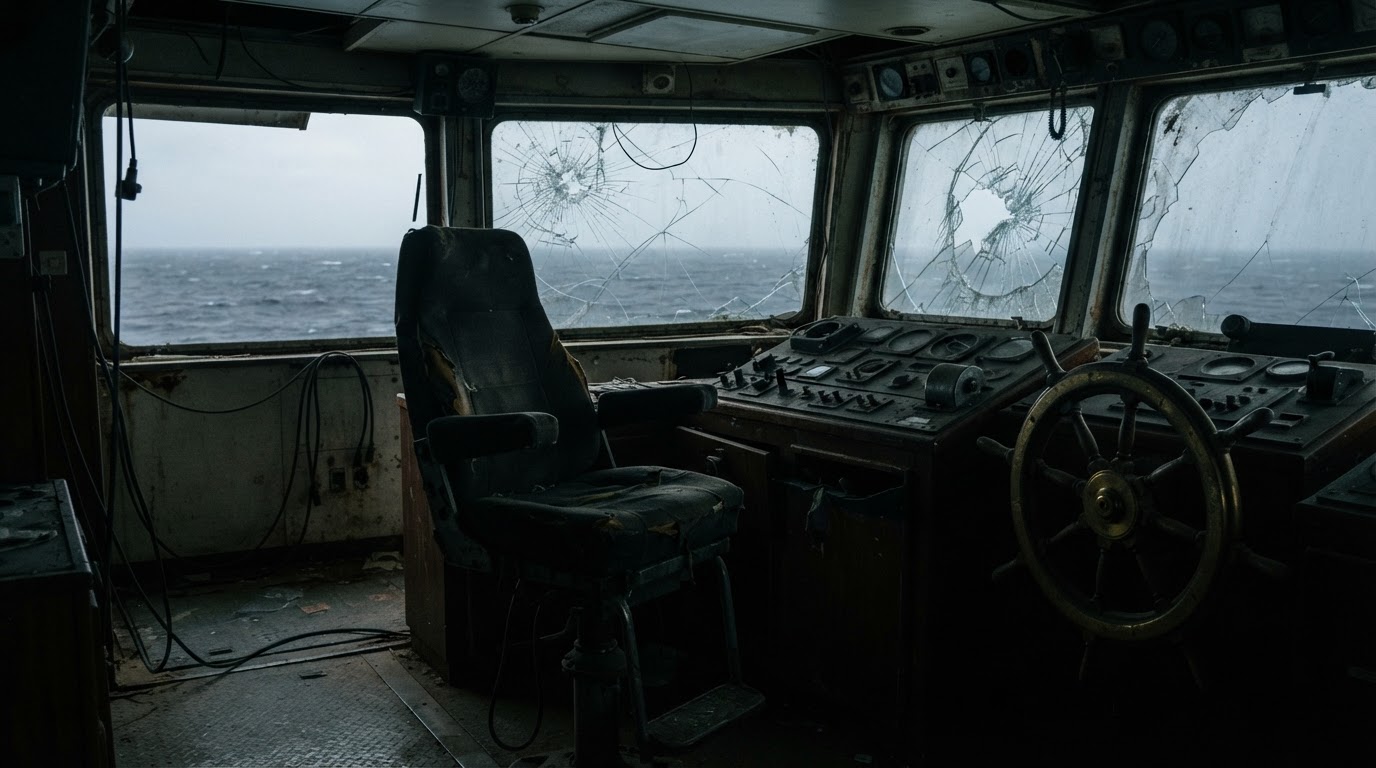
The images and video in this article are AI-generated works produced to convey the mood of the story, and are not photographs of any actual person or event.

Comments
No comments yet — leave the first one.