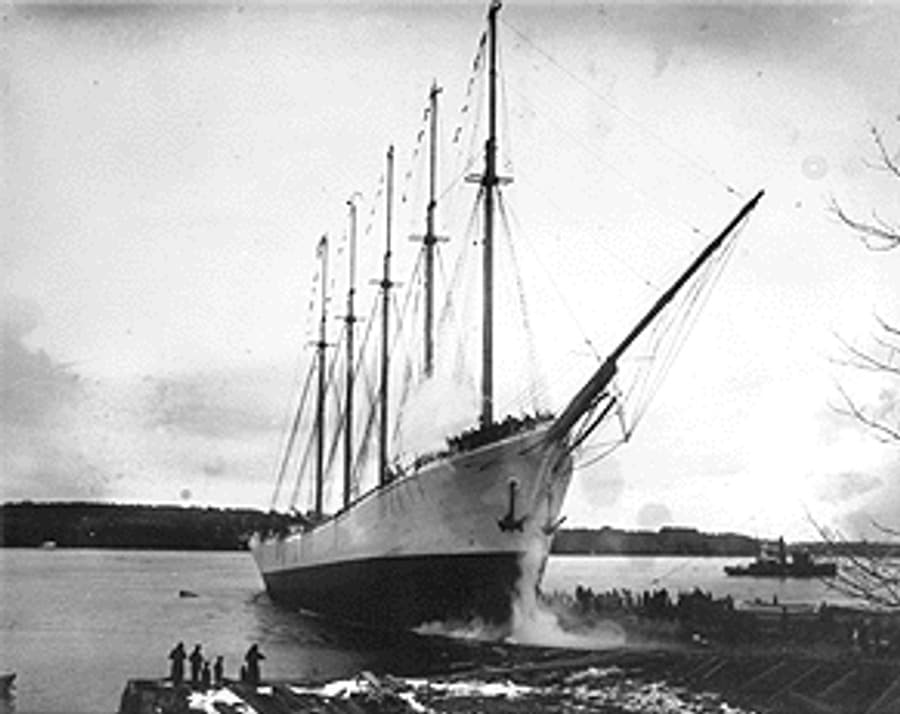
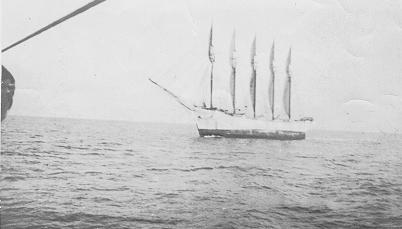
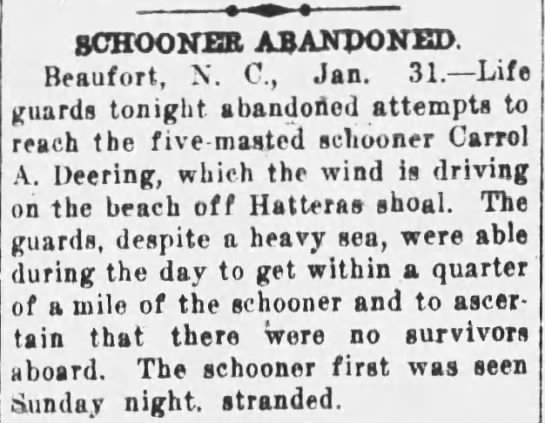
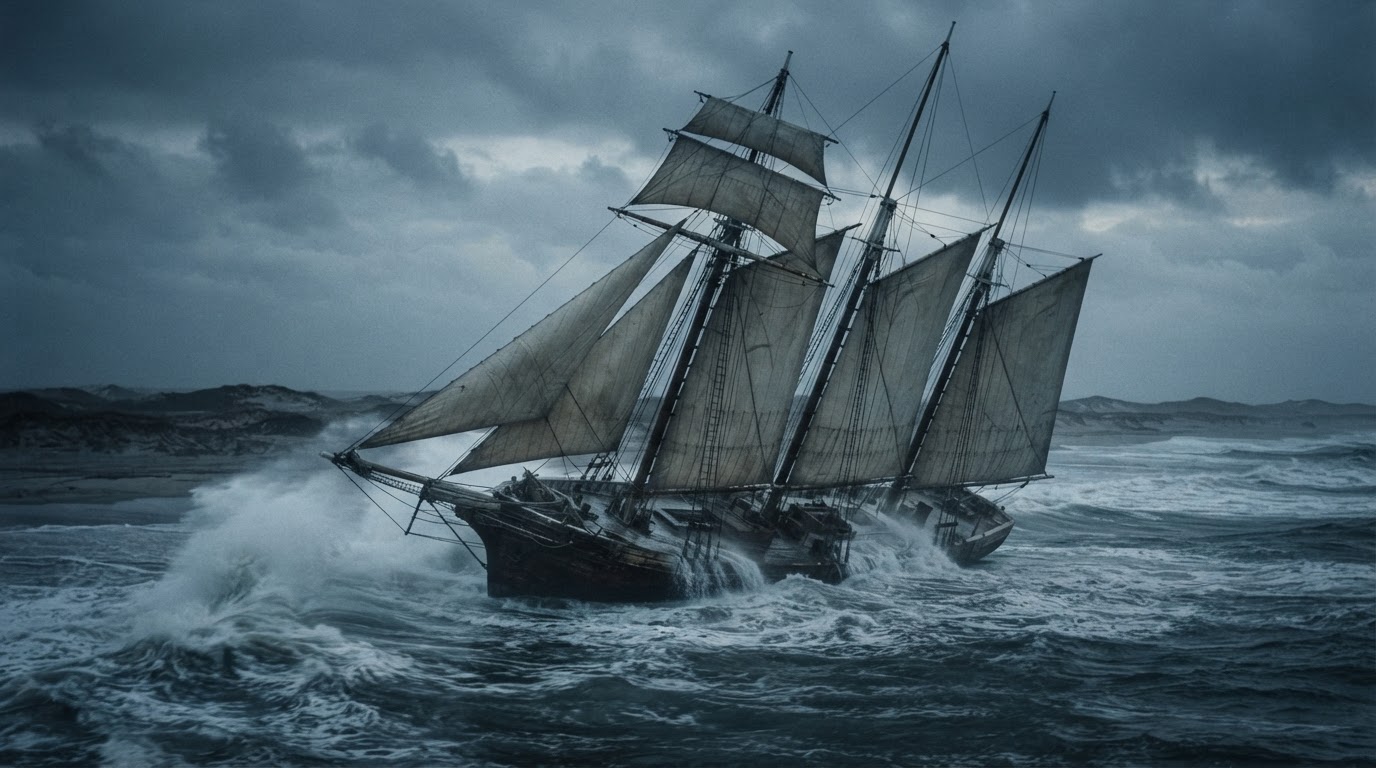
On the morning of January 31, 1921, the men at the Cape Hatteras Coast Guard station on the North Carolina coast saw something that should not have been there. A huge five-masted schooner sat run hard aground on Diamond Shoals, the treacherous sandbars that reach out from the Outer Banks into the Atlantic. Her sails were still set, filled by the wind as though she were under way, yet she was not moving, and no one answered the signals from shore. When rescuers finally managed to reach her days later, through the pounding surf that guards the shoals, they climbed aboard to find her utterly empty. In the galley, food sat half-prepared on the stove, as if the cook had stepped away only a moment before. But the ship's log was gone. The navigation instruments were gone. The crew's personal papers were gone. Both lifeboats were gone. And every one of the eleven men who had sailed her had vanished without a trace. This is the story of the Carroll A. Deering, the "Ghost Ship of the Outer Banks," and one of the most enduring maritime mysteries in American history.
Abandoned-ship cases usually reach my desk thin — a paragraph in a gazetteer, a date, a hull, and nothing else to hold. The Deering reached me thick. Five federal departments left paper behind, and paper is what I work with; my name is K. Woo, and the sorting of it is my job. Reading through it, the detail that would not let me file the case away was the arithmetic of the lifeboats. Both gone. Eleven men. Whatever they were leaving, they had time to decide how to leave.
The Ship on the Shoals
Diamond Shoals, off Cape Hatteras, has earned its grim nickname: the Graveyard of the Atlantic. Shifting sandbars stretch far out beneath the surface, and countless ships have been lost there over the centuries. So when the great schooner appeared on the shoals that January morning, aground and motionless, it was not in itself a miracle — ships came to grief on Diamond Shoals with terrible regularity. What made this wreck different was the state in which she was found.
The surf was too violent for days to allow anyone aboard. Rescue vessels circled her, unable to close the distance, while lifesaving crews watched from the beach. When men from a wrecking company finally boarded her in early February, they found a ship in eerie good order. There was no sign of storm damage severe enough to explain an abandonment, no fire, no evidence of a collision. The sails were set as if for ordinary sailing. And yet there was not a living soul aboard, and not a body either. The ship's cat, some accounts say, was the only thing left alive. A vessel of that size did not simply lose all eleven of her crew — but that, impossibly, is exactly what seemed to have happened.
Food on the Stove, and Everything Gone
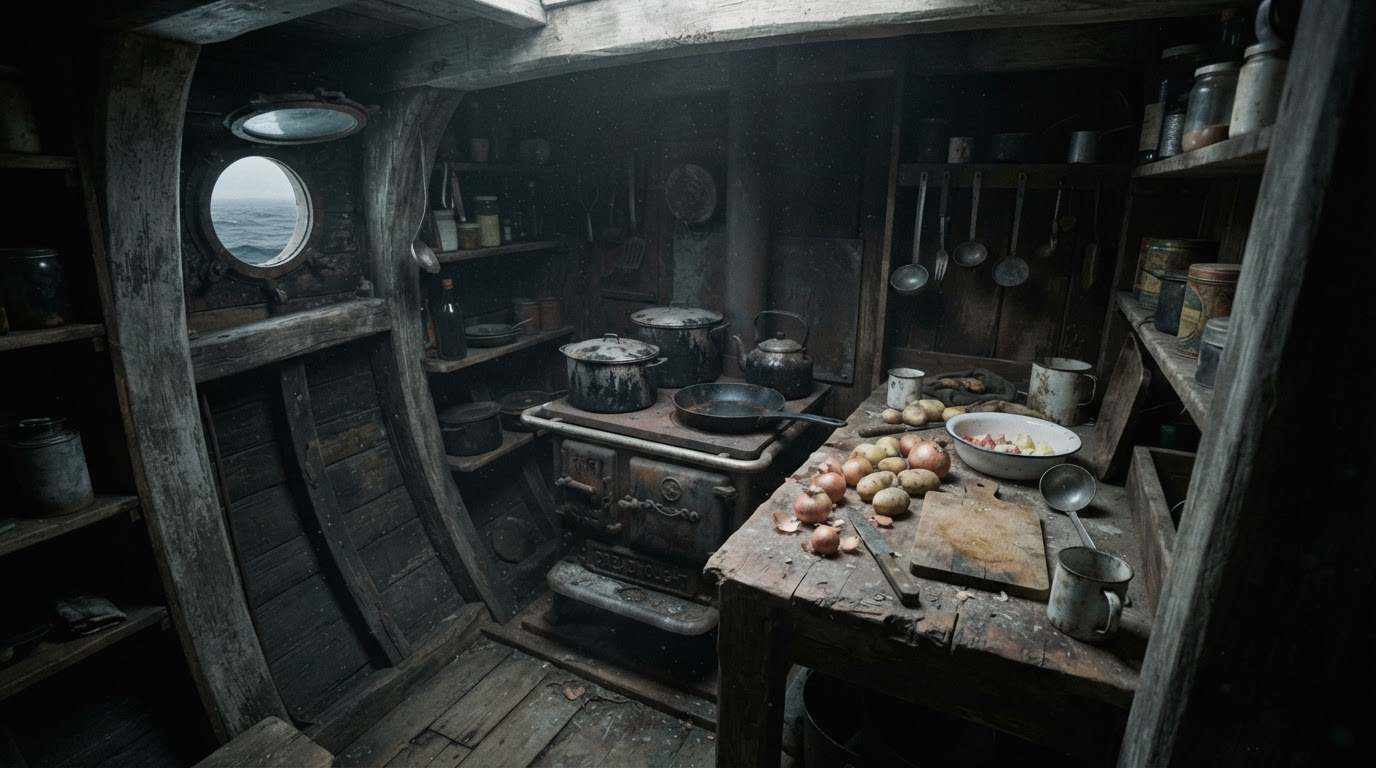
Of all the details recorded by the men who boarded her, the one that struck hardest was the galley. Food sat out as though a meal were being prepared — pots on the stove, provisions laid ready, the ordinary evidence of a crew about to eat. Everything suggested that the men had been aboard, going about the routine of ship's life, only a very short time before. Nothing about the galley spoke of panic or a long, slow disaster. It spoke of an interruption — sudden, and complete.
Set against that domestic ordinariness was a list of absences that made no sense. The ship's log, the single most important document aboard any vessel, was gone. The navigation instruments and charts by which the crew had steered were gone. The personal effects and papers of the sailors were gone. And crucially, both of the ship's lifeboats were gone, along with certain gear. Some things had clearly been taken deliberately, as men might take them if they meant to leave the ship and did not expect to return. Yet the food on the stove told the opposite story — of men who had every intention of staying. The two facts sat side by side and refused to be reconciled, and they have refused ever since.
A Voyage That Had Already Gone Wrong
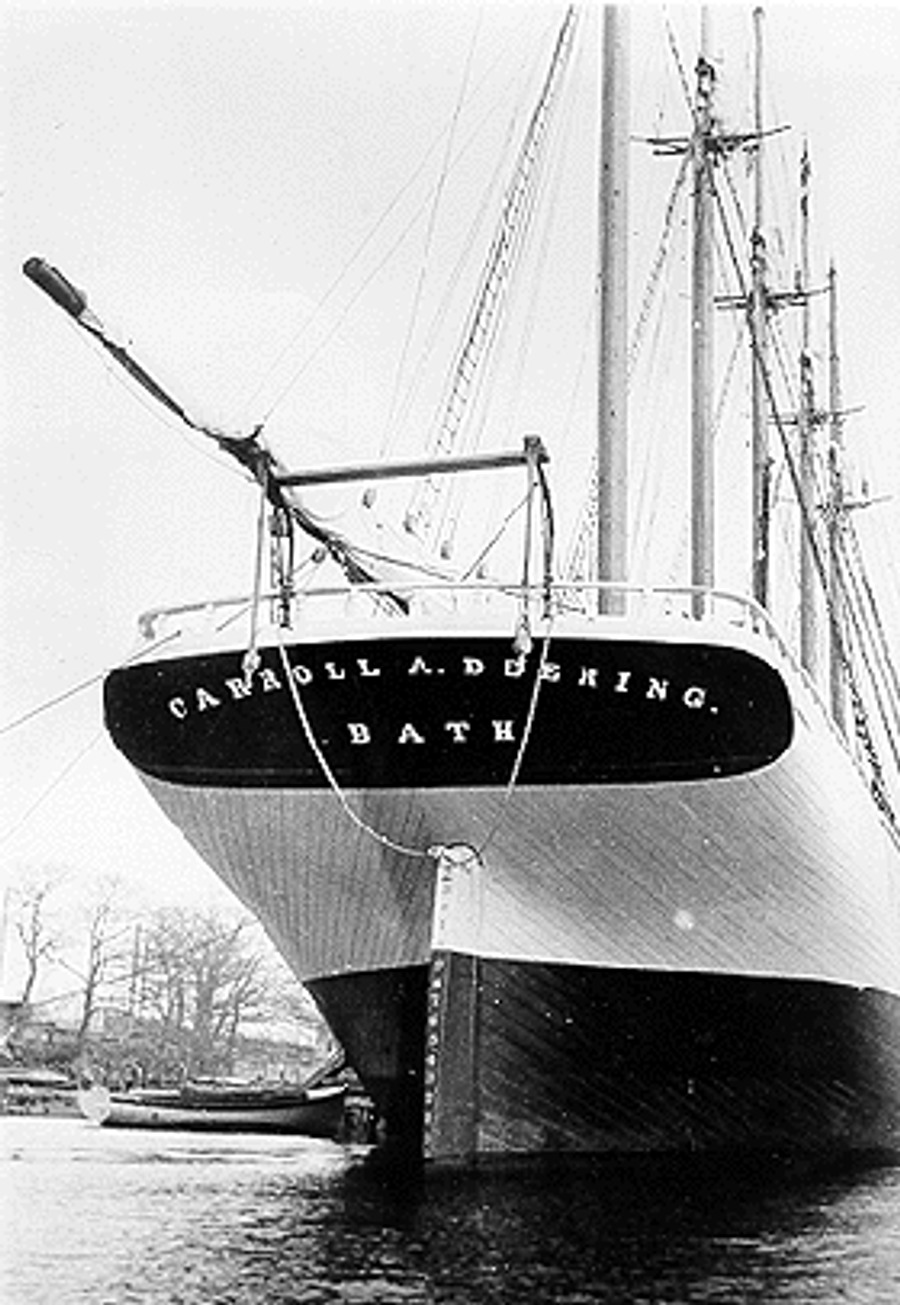
The Carroll A. Deering was a commercial schooner built in Maine in 1919, a large and modern sailing vessel of her type. Late in 1920 she sailed for Rio de Janeiro carrying a cargo of coal, and it was on the return leg of that voyage that things began to go astray. Her original captain fell ill and had to be replaced at a port of call, and command passed to a veteran mariner, Captain W. B. Wormell, who took the ship on with a crew largely of foreign sailors.
By several accounts the voyage home was an unhappy one. There were tensions aboard, and Captain Wormell was said to have voiced worries about his crew — men he did not know well and did not fully trust. On the way north the ship stopped at Barbados, where the captain and his first mate went ashore. There, witnesses later reported, the mate was heard complaining bitterly about the captain, and there was talk of friction and even threats among the men. When the Deering left Barbados in January 1921, bound for her home port on the American coast, she carried aboard her not only her cargo but a crew already strained by conflict. It was the last port at which she was seen with her people still aboard.
The Lightship's Strange Report
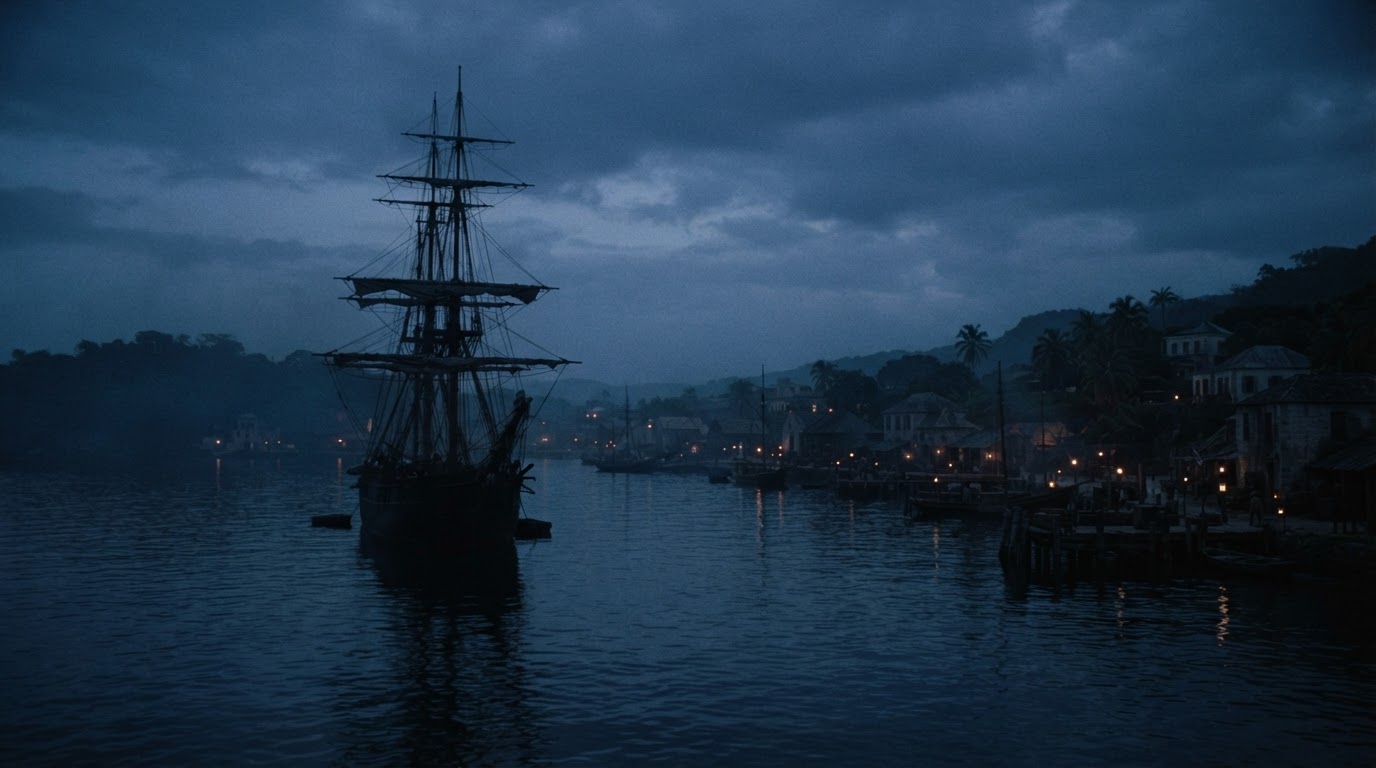
As the Deering made her way up the coast toward home, she passed the Cape Lookout lightship, a floating lighthouse anchored off the North Carolina shore. What the lightship's keeper reported would become one of the most talked-about details of the whole affair. As the schooner passed, he said, a man came to her rail and called across to the lightship that the Deering had lost her anchors, asking that the news be reported to her company. The keeper found the exchange odd. The man who hailed him did not look or sound like an officer, and the crew he could see loitering on deck seemed to be milling about the quarterdeck — an area normally reserved for the ship's officers, not a place where ordinary sailors would gather.
To the keeper, watching from his anchored post, the whole scene felt wrong, as though the usual order of command aboard the schooner had somehow broken down. He was unable to relay the message — his own radio was out of order — and the Deering sailed on up the coast and out of sight. It was, as far as anyone knows, the last time a living person spoke with anyone aboard the ship. A few days later she was on the shoals at Cape Hatteras, empty. The lightship keeper's uneasy impression — of a crew out of place, of a ship whose discipline had failed — would feed one of the leading theories for decades to come.
The Investigation That Reached Washington
The abandonment of the Carroll A. Deering did not stay a local curiosity for long. It came at a time when several other ships had gone missing along the same coast under unexplained circumstances, and the coincidence raised alarm. Before long the case had drawn in a remarkable range of the United States government — the Department of Commerce, the State, Treasury, and Navy departments, and the newly powerful federal Bureau of Investigation, the forerunner of the FBI, all took part in the inquiry. A missing schooner had become a matter of national attention.
Investigators chased every lead the era could offer. They pursued the theory of mutiny, given the reported friction aboard and the lightship keeper's strange account. They pursued piracy, in a decade when the possibility did not seem absurd. For a time they even weighed whether Prohibition-era rum-runners or foreign agents might be involved, and a mysterious message purportedly found in a bottle briefly sent the inquiry down a false trail before it was judged a hoax. Yet for all the agencies and all the theories, the investigation ran into the same wall every time. There were no bodies. There were no survivors. There was no log and no captain's record to reconstruct the ship's final hours. After more than a year, the great inquiry quietly closed, having proved nothing at all.
The Theories, and the Silence That Remains
Where the record ends, speculation begins, and the Deering has attracted a full century of it. The most sober and widely held theory is mutiny — that the crew, already at odds with Captain Wormell and perhaps his mate, rose against their officers, and that in the chaos the ship was abandoned. It fits the lightship keeper's report of sailors loitering where they should not have been, and the taking of the lifeboats. Others favour piracy, or the idea that the crew took to the lifeboats in a genuine emergency — a failure of the ship, foul weather off the shoals — and were simply lost at sea, drowned before they could reach shore, their small boats swallowed by the same Atlantic that had wrecked so many others.
Every theory in my notes founders on the same rock, and I have set them beside each other often enough to be sure of it. Mutiny explains the missing log and the loitering men on the quarterdeck. Emergency abandonment explains the boats. Neither explains the stove. A crew in revolt does not lay out provisions; a crew fleeing a foundering ship does not begin a meal it will not eat. I have gone back through the boarding accounts looking for a way to make those pots cold before the boats went over the side, and the record simply will not arrange itself that way.
And then there are the wilder theories, the ones that have kept the Deering a fixture of mystery lore. Because Cape Hatteras lies within the loosely drawn bounds of what would later be called the Bermuda Triangle, the ship has often been folded into that legend, offered up as evidence of some unknown force that swallows crews whole. There is no basis for this beyond geography and coincidence, but the image is irresistible: a great ship sailing on with her sails set and no one at the wheel. What can be said for certain is far smaller and far stranger. In the winter of 1921, a five-masted schooner ran aground off Cape Hatteras with her sails set and food waiting on the galley stove, and every one of her eleven men was gone, along with the log and the boats and any record of what had happened. The most powerful investigative machinery of the age was turned upon the mystery and could not solve it. A hundred years later, the Graveyard of the Atlantic has still not given up the men of the Carroll A. Deering.
---
This article combines genuine archival and on-site photographs with AI-generated images and video produced to convey the mood of the story.

Comments
No comments yet — leave the first one.