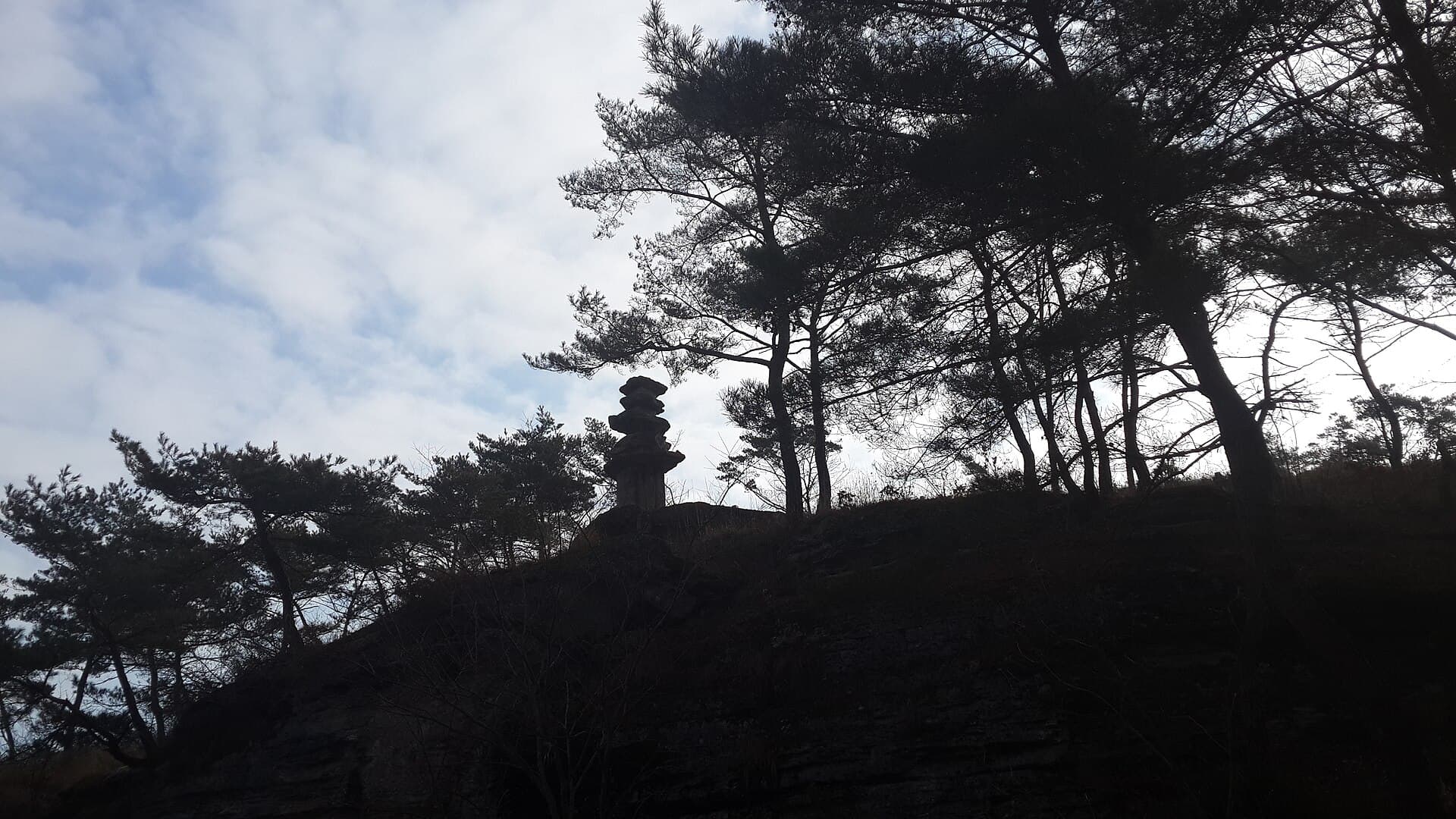
When you first step into the shallow valley below Cheonbulsan — "The Mountain of a Thousand Buddhas" — in Dogam-myeon, Hwasun County, it looks like nothing more than an ordinary mountain path. Then, a few steps in, you stop walking. Scattered across the slopes and along the streambed are stone Buddhas taller than a grown man: some leaning against rock faces, some carved directly into the living stone, some simply laid out on the ground. Rising among them are stone pagodas stacked tier upon tier — one rounded like a jar, another cut with diamond-shaped patterns unlike anything found at any other temple in the country. This is Unjusa. Legend says that a thousand Buddhas and a thousand pagodas once stood here — the cheonbul-cheontap, "a thousand Buddhas, a thousand pagodas" — and that all of them were raised in the span of a single night. Yet to this day, scholars cannot say with any confidence who built these stones, or when, or for what purpose. Among all of Korea's ancient temples, there is scarcely another whose origins are wrapped in fog this thick.
An archive is built out of names, and this file has almost none, which is why it took me so long to work out how to keep it. Korea's old temples are usually generous with their paperwork — a founding year, a founding monk, a patron king. Here I went looking for the first documentary appearance of the name Unjusa and found it no earlier than the early Joseon period, centuries after the stones were carved. Ninety-three Buddhas survive, twenty-one pagodas, and not one carver's name among them. Every other kind of record wore away; the stone did not.
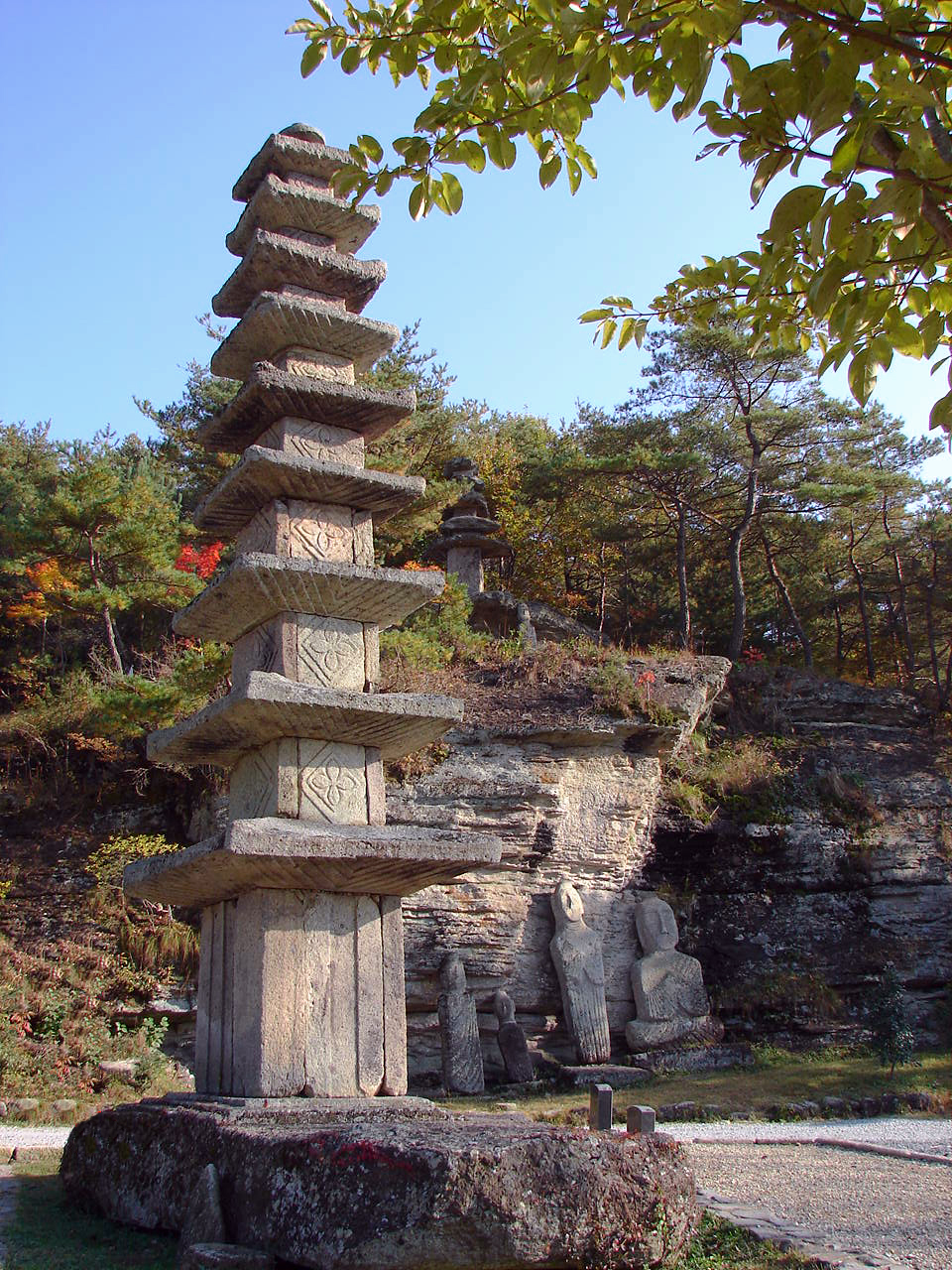
Photo: Wikimedia Commons, CC BY-SA 3.0
A Temple No One Remembers Building
The first thing that grips visitors is not the scale of Unjusa, nor its beauty, but an absence — the absence of any record. Korea's famous old temples usually come with a written pedigree: the year they were founded, the monk who founded them, the king who lent his support. Unjusa is different. The date of its founding is unknown, and so is the name of whoever built it. The temple's name appears clearly in surviving documents only from the early Joseon period. Everything before that — the era when these hundreds of stone Buddhas and pagodas were actually raised — is submerged in the gaps of the written record.
Scholars fall back on the one clue they have: the style of the surviving statues and pagodas. Judging by their carving technique and form, most researchers place their creation somewhere in the twelfth or thirteenth century — the Goryeo period. But this is an estimate based on style alone. No inscribed stele, no dated document has ever surfaced alongside the stones to pin down who commissioned them. Not a single name of a builder survives. Only the stone itself has crossed the centuries to stand here. And it is precisely that silence that cleared a wide, fertile field in which legends could grow.
Scattered Stones, and the Weight of Their Number
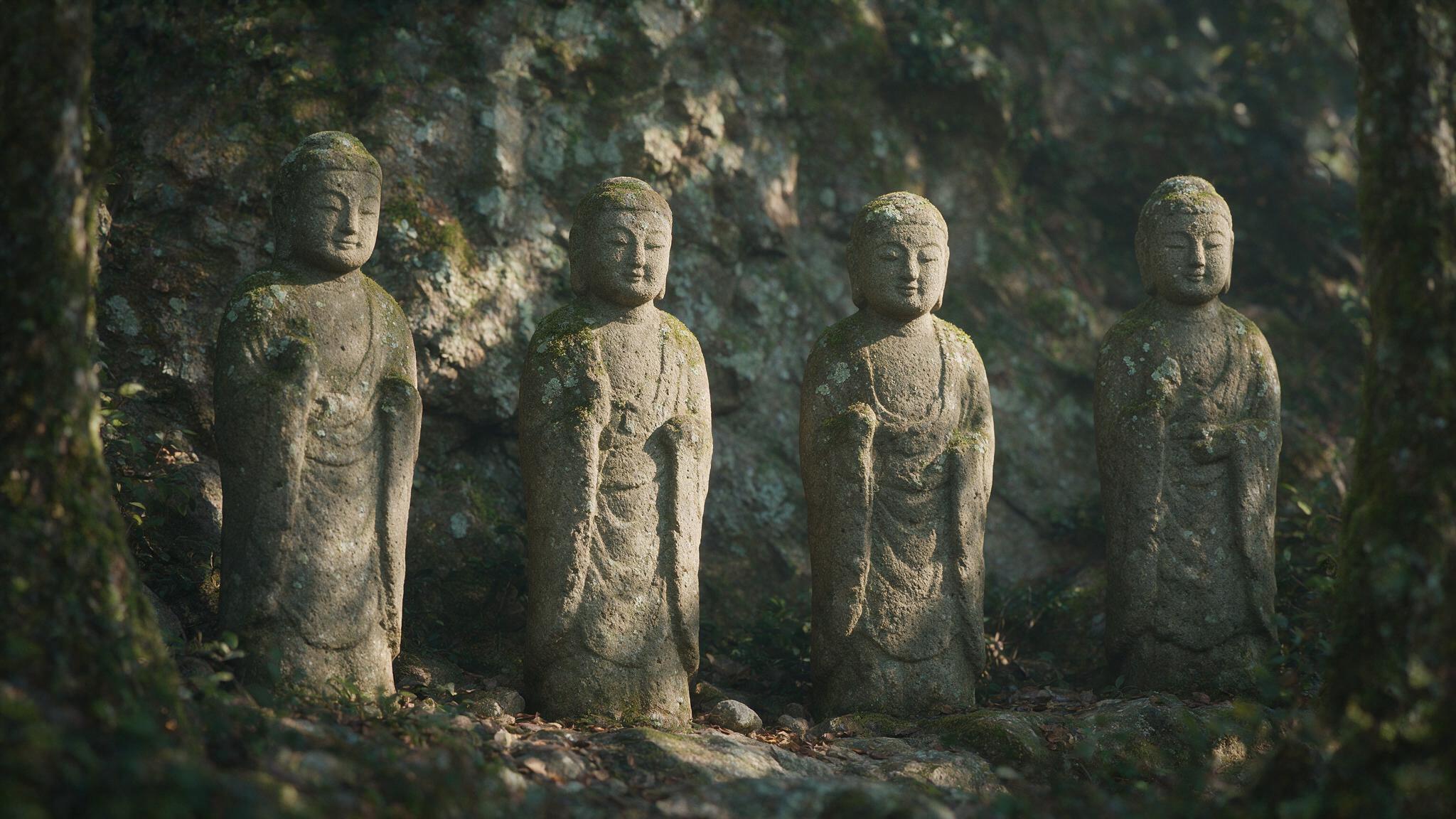
Whether a literal thousand Buddhas and a thousand pagodas ever stood here is impossible to confirm. But some old accounts do describe more than a thousand statues and pagodas at this site, which suggests the name was not pure exaggeration. Over the centuries, as the stones toppled, scattered, and vanished, only a fraction remained. Counts vary from one survey to the next, but roughly twenty-one pagodas and around ninety-three Buddha statues survive in reasonably intact form. Add in the broken and half-buried fragments of pagodas and figures, and the number climbs much higher.
What startles people even more than the count is the arrangement. At an ordinary temple, the Buddha is enshrined with dignity at the center of the main hall, and the pagoda stands alone in its own careful place. At Unjusa, Buddhas and pagodas are strewn in clusters along the hillsides and down the valley, beside boulders, wherever the ground allowed. The point seems to have been less about the perfection of any single figure than about the sheer act of setting up many stones in one place. It looks, more than anything, like a spot where someone — a great many someones — each raised a single stone and prayed for the same thing, together.
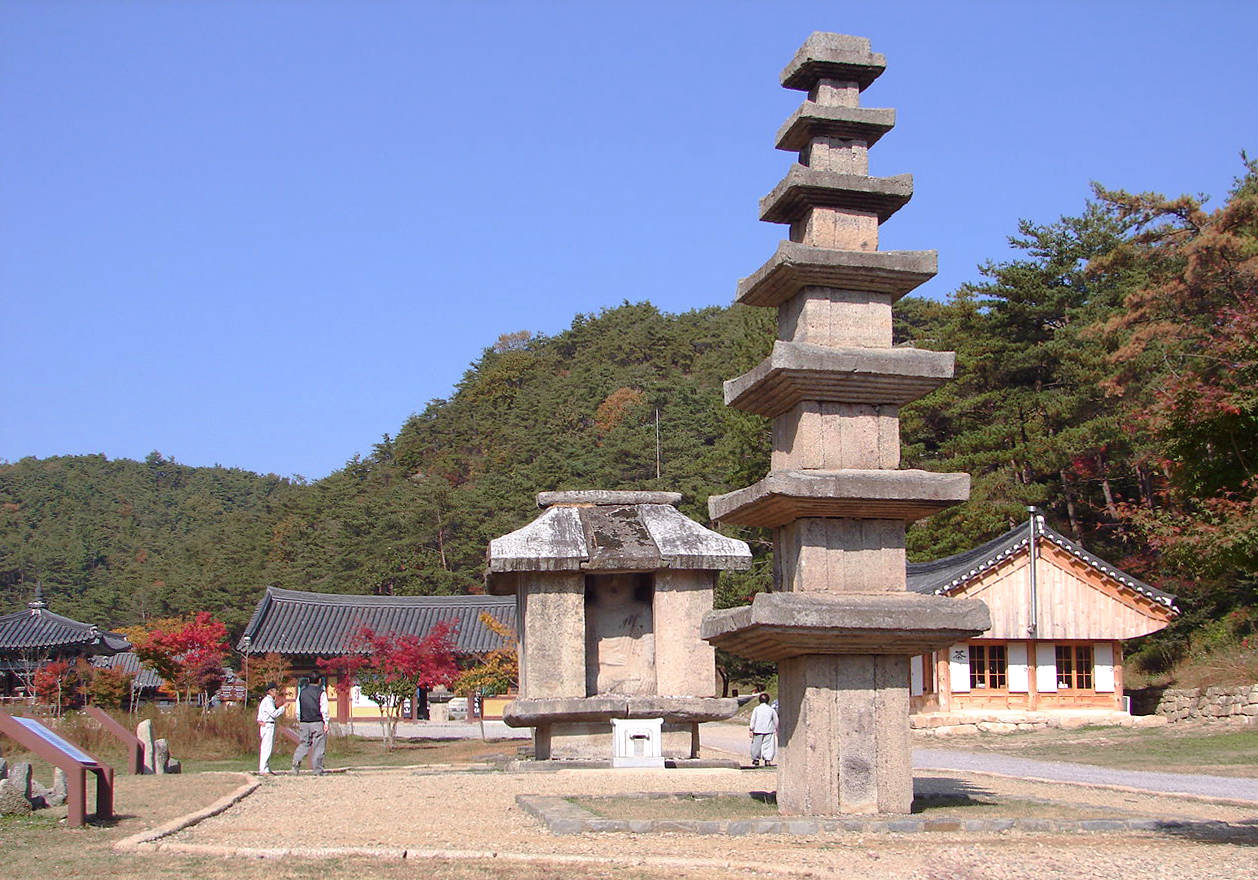
Photo: Wikimedia Commons, CC BY-SA 3.0
The Monk Doseon and the Legend of a Single Night
Where the documents fall silent, legend rushes in with a staggering tale. The most widely told version centers on Doseon, a celebrated monk of the late Silla era, said to have been a master of geomancy. He is remembered as having likened the shape of the Korean peninsula to a ship. One side of that ship — the southwestern Honam region — had too few mountains, and he feared the vessel would tilt and sink. So, the story goes, to balance the listing ship, he set out to raise a thousand Buddhas and a thousand pagodas in this valley in a single night, loading the stones onto the weak side as ballast.
No single man could raise a thousand Buddhas and pagodas between dusk and dawn. And so the legend summons stonemasons from heaven. Doseon used his powers to hold back the sunrise, and the celestial masons carved through the night. The valley rang with the sound of chisels, and one by one the Buddhas and pagodas took shape. If all thousand could be finished before the first light of dawn, a new world was set to begin upon this land. But at that very final moment, the story swerves into the unexpected.
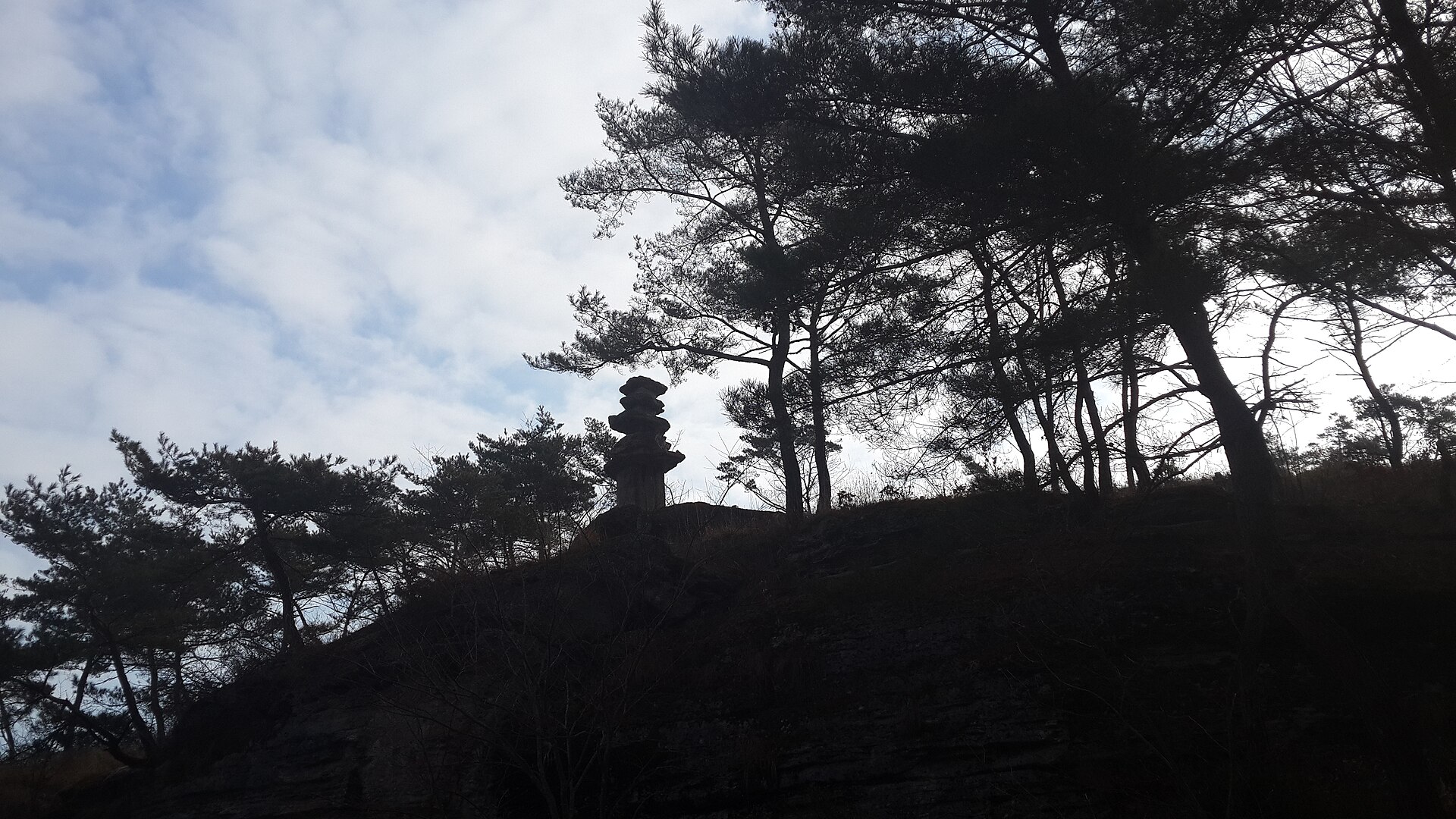
Photo: Wikimedia Commons, CC BY-SA 4.0
Why the Last Buddha Came to Lie Down — The Legend of the Reclining Buddha
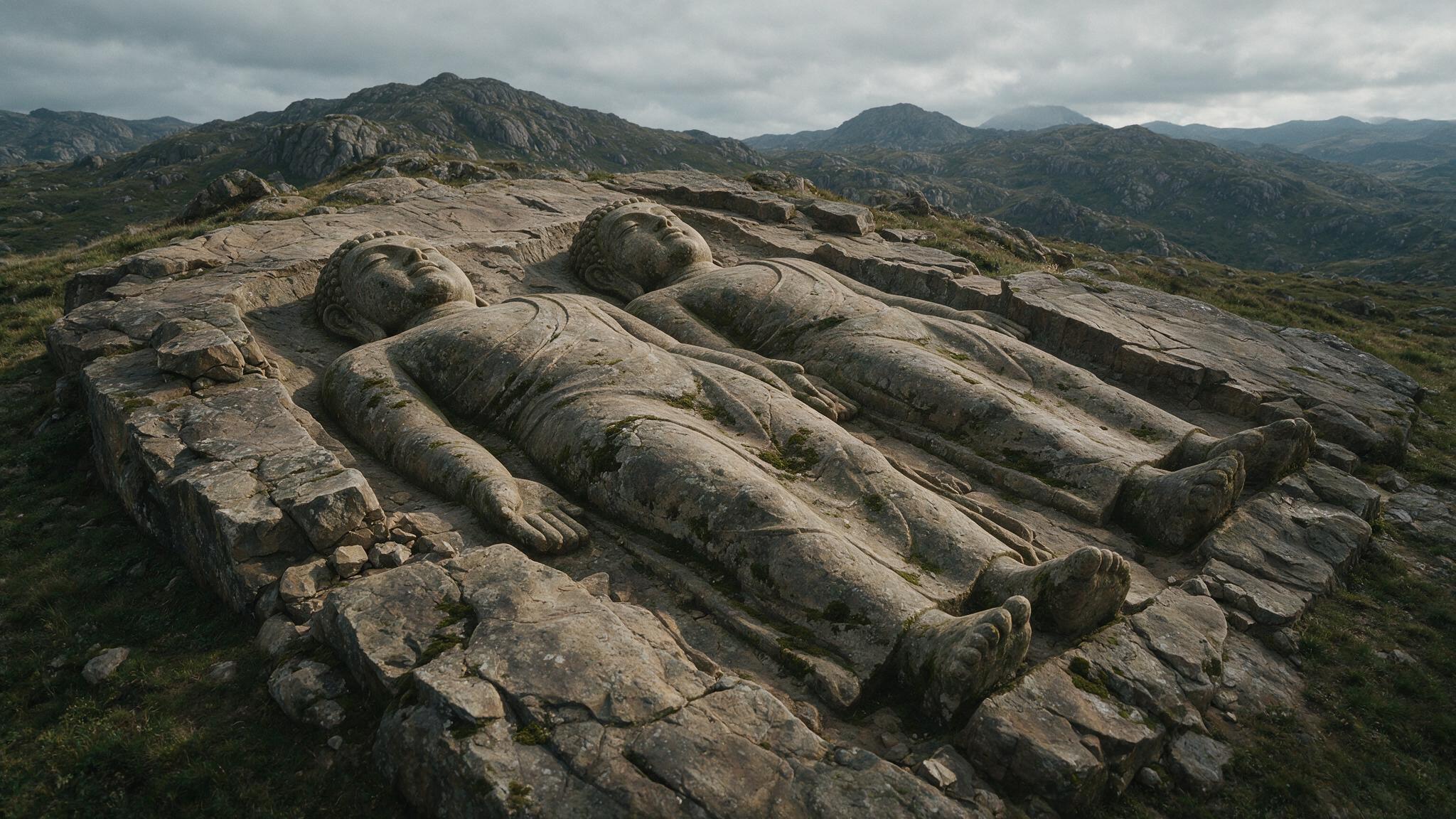
Here is how the legend ends. The one worn down by the long night of labor was none other than Doseon's young disciple, a boy monk. Exhausted from running errands back and forth between the masons and his master, the child ached for the night to be over. So, before dawn had broken, he mimicked the crow of a rooster: cock-a-doodle-doo. The heavenly masons, believing day had arrived, dropped their tools and hurried back to the sky. It happened at the precise instant they were about to raise the final pair of statues. That unfinished Buddha was left behind, stretched out across the ridge forever. This is the origin story of Unjusa's most famous feature — the wabul, the Reclining Buddha.
And indeed, on a low ridge behind Unjusa lie two colossal Buddhas, carved side by side into the bedrock and gazing up at the sky. This reclining stone Buddha, more than ten meters long, remains exactly as it was left: a body lying in the rock, never lifted upright, forever unfinished. A second story clings to this reclining figure — that on the day it rises and stands tall, a new age of Maitreya, the Buddha of the future, will dawn upon this land: the Dragon-Flower World. The thousand Buddhas raised in a night and the one last Buddha that never rose are threaded together on a single strand — a longing for a world about to be made new.
A misty dawn, light slowly spreading over the giant Reclining Buddha stretched along the ridge — this is an atmospheric recreation, not actual documentary footage.
The Truth Cut Into Soft Stone
Set the legend aside for a moment and look at the stone itself, and another intriguing fact surfaces. The rock around Unjusa is not hard granite but a kind of tuff — volcanic ash compressed and hardened over ages. Tuff is far softer and easier to work than granite. This geological quirk may be a clue to why so many Buddhas and pagodas could be raised in this one valley. Had the stone been hard granite, carving even a single Buddha would have demanded great labor; but with soft tuff, many more hands could shape many more stones, far faster.
And this soft stone adds an unexpected footnote to the legend of the Reclining Buddha as well. Tuff is easy to carve, but weak at bearing weight. Had anyone tried to prise so massive a figure loose from the bedrock and stand it upright, it would very likely have cracked under its own mass. Where the night's miracle came to a halt at the very end, there may lie not a myth but the cold physics of the stone. The legend blames a rooster's cry; the stone tells a different story.
So Who Really Built It?
Strip away the legend, and scholars are still searching for the answer. The tale of Doseon is beautiful, but there is a gap of centuries between the late Silla era in which Doseon lived and the Goryeo period to which the surviving statues point. It is more natural to read the Doseon founding story as a later addition, layered on to lend authority to this mysterious place. If not the great monk, then whose were the hands that raised this vast congregation of stone?
Among the various hypotheses, one has held people's imagination for a long time: the theory of a grassroots vow. It reads the thousand Buddhas and pagodas of this valley as the work of nameless commoners, each raising a single stone with a wish pressed into it. Bound up with the belief in Maitreya — the future Buddha who will descend and open a world without suffering — the theory imagines people crushed by rigid status and poverty stacking these stones as they dreamed of "the day the Reclining Buddha rises." This landscape — not one flawless masterpiece but a great crowd of statues, each a little clumsy, each a little different — deepens the suspicion that it was made by many hands rather than a few master carvers. This too, of course, is unproven. Other views stand alongside it: that a royal court or a regional power sponsored the work, or that it was tied to a particular esoteric or astral faith. Until a decisive document surfaces, these readings remain side by side, none of them narrowed down to the one true answer.
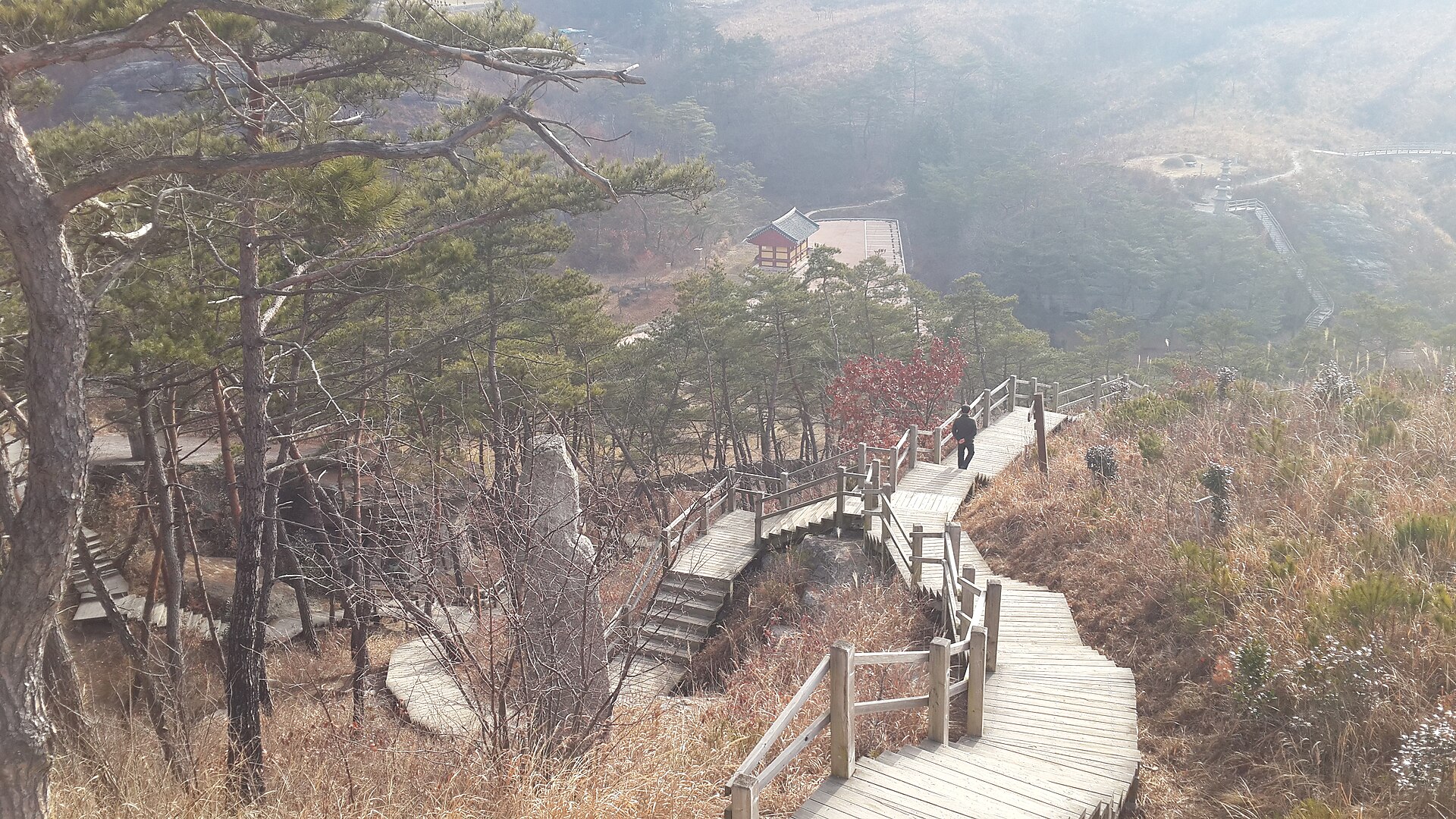
Photo: Wikimedia Commons, CC BY-SA 4.0
The Question the Mist Has Kept
When the story arrives here, the many threads around Unjusa gather in one place. The silence of a founding no one recorded; the legend of Doseon raising a thousand Buddhas in a single night; the last Buddha that never rose and lies down still; the old belief that a new world begins when it stands; and the cold physical fact of soft volcanic stone. Each of these pieces is clear on its own, yet strung together they still leave a single question mark.
Unjusa was officially designated a national Historic Site in 1985, and in 2017 it was placed on UNESCO's Tentative List of World Heritage under the name "Stone Buddhas and Stone Pagodas of Unjusa Temple, Hwasun." Even now, with the world recognizing its value, the question of who raised a thousand Buddhas and pagodas in this valley, and why, has never been fully resolved. There is no need to hurry and cover that gap with a supernatural miracle or the mystic powers of a monk. What holds people at this valley for so long is, rather, the way two facts stand side by side: that someone's hands unmistakably raised all these stones, and that those hands never left a name behind.
There is a line in the material I have never been able to read as calmly as the rest. The reclining Buddha is unfinished not because a rooster crowed but, most likely, because tuff cannot bear its own weight standing — the stone would split. Which means the prophecy attached to it, that a new world begins on the day it rises, was fastened to a figure that physically cannot be raised. I do not know whether whoever carved it understood that. I have gone back through the geological notes more than once hoping to find that they could not have known.
Even today, mist descends over the valley of Cheonbulsan each dawn. When it lifts, hundreds of stone Buddhas keep watch over the valley, each with its own face, and the Reclining Buddha on the ridge meets the morning still lying on its back, gazing at the sky. Whether it was raised by one night's longing, or stacked stone by stone across many generations — Unjusa has withheld the answer for centuries, and meets another morning quietly in the mist. When that reclining Buddha will finally rise, no one knows.
---
This article uses a mix of real documentary and location photographs and AI-generated images made to convey the mood of the story.
Comments
No comments yet — leave the first one.