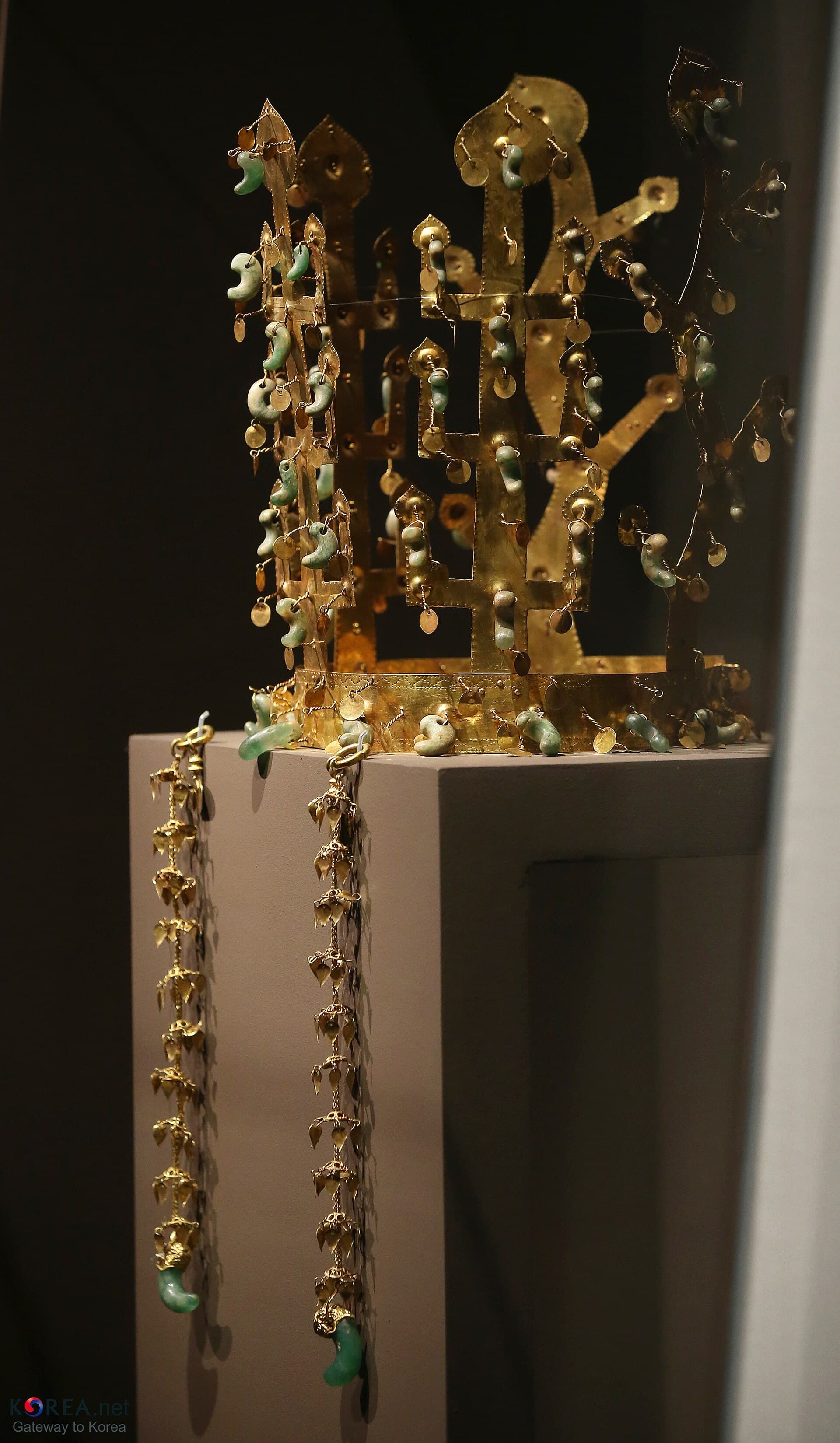
In the autumn of 1921, in the Noseo-dong quarter of Gyeongju, a family digging the foundations of a new house struck something they had not expected. Under the soil lay a mound of river stones packed over a wooden chamber — an ancient tomb of the kind the Silla kingdom had raised more than fifteen centuries before. Inside was a golden crown so fine, so complete, that it would go on to define the very image of Silla in the modern imagination: uprights shaped like trees and antlers, hung with curved jade and hundreds of tiny gold spangles that must once have trembled at the slightest movement. The tomb was named Geumgwanchong — the Tomb of the Golden Crown. And for more than ninety years, no one could say whose head that crown had rested on. Then a few faint scratches on the metal of an old sword offered up a name that belonged to no known king. This is the story of Geumgwanchong and the riddle of King Isaji — a mystery not of horror, but of a single name that history seems to have forgotten on purpose.
The Tomb That Was Found by Accident
Geumgwanchong was not the prize of a careful, planned excavation. It was found by chance, in September 1921, when a household in Gyeongju was carrying out ordinary building work and cut into the edge of a low mound. Gold objects began to surface from the disturbed earth, and word spread quickly. What followed was an excavation conducted at speed, under the conditions of the colonial period, and by the standards of modern archaeology it was closer to a rushed clearance than a scientific dig. In a matter of days the chamber was emptied.
Yet what came out of it was staggering. Somewhere around ten thousand objects were recovered — vessels of clay, ornaments of bronze and jade, weapons, and above all a wealth of pure gold: the crown, a gilded belt with dangling pendants, earrings, rings, and more. The golden crown and the golden belt would later both be designated National Treasures. For a tomb whose owner remained completely anonymous, Geumgwanchong had yielded a treasure fit for royalty. And that was precisely the problem it left behind. Everything about the grave said "someone of the very highest rank" — and nothing at all said who.
This file sits oddly in my collection, since nothing in it is meant to frighten anyone. I opened it because of a discrepancy in the numbers: roughly ten thousand objects out of a single chamber, emptied in a matter of days in 1921. I went looking for a proper excavation record and there is essentially none to find — the dig outran its own documentation. What I have instead is an inventory of treasure with almost no account of where in the chamber any of it lay. The gold survived. The context did not.
A Grave Built of Stone and Timber
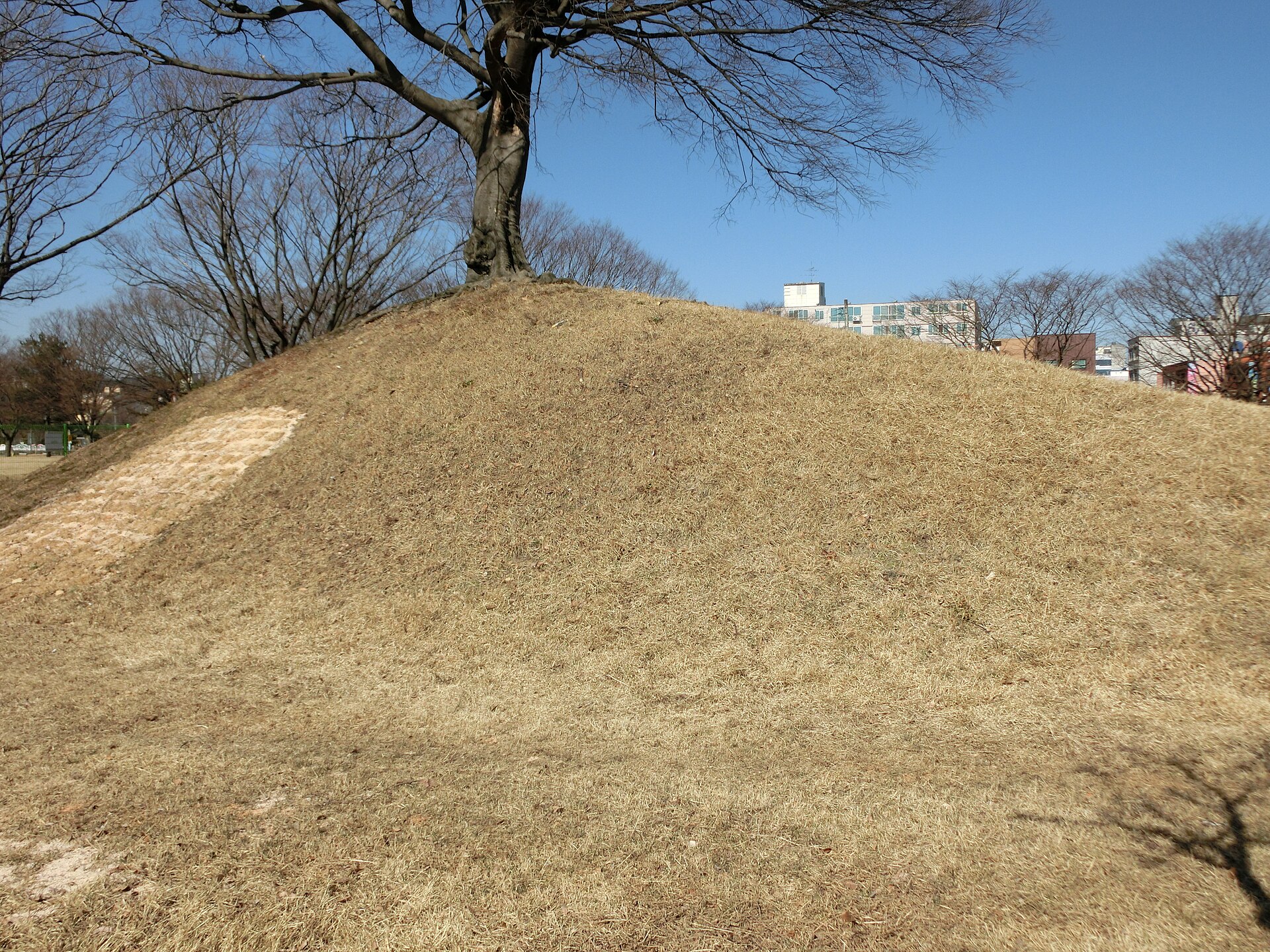
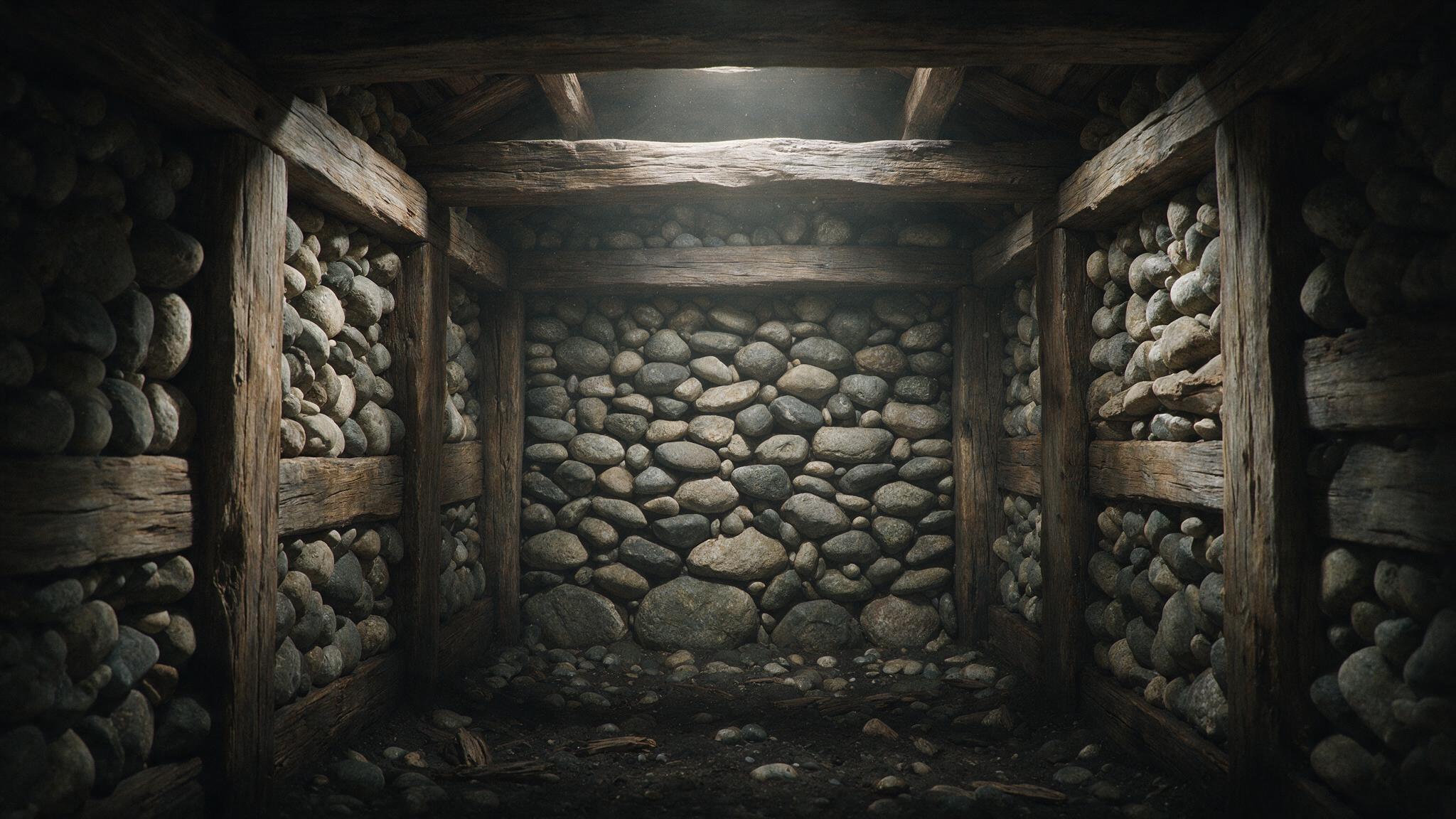
To understand why Geumgwanchong keeps its secrets so well, you have to understand how it was built. The tomb belongs to a type archaeologists call the wooden-chamber tomb with a stone mound — in Korean, the dolmuji-deotneol-mudeom. First a wooden chamber was constructed to hold the coffin and the grave goods. Over and around it, workers heaped an enormous cairn of river cobbles, and over that, a final covering of earth was raised into the great rounded mound that still marks the Gyeongju skyline today.
This design has an unusual consequence. Unlike a stone-lined chamber with a doorway, a stone-mound tomb cannot easily be re-entered. Once the timber chamber eventually rots and the weight of the stones settles down onto everything inside, the tomb effectively seals and collapses in on itself. That is a large part of why so many Silla tombs of this kind were never robbed — there was no door to force, and digging through tons of loose stone would bring the whole mound down on the thief. The good news is that the treasures survived intact for a millennium and a half. The bad news is that these same tombs almost never contain what an archaeologist most wants: an inscription, a plaque, anything at all that says a name. Geumgwanchong, for ninety years, was mute.
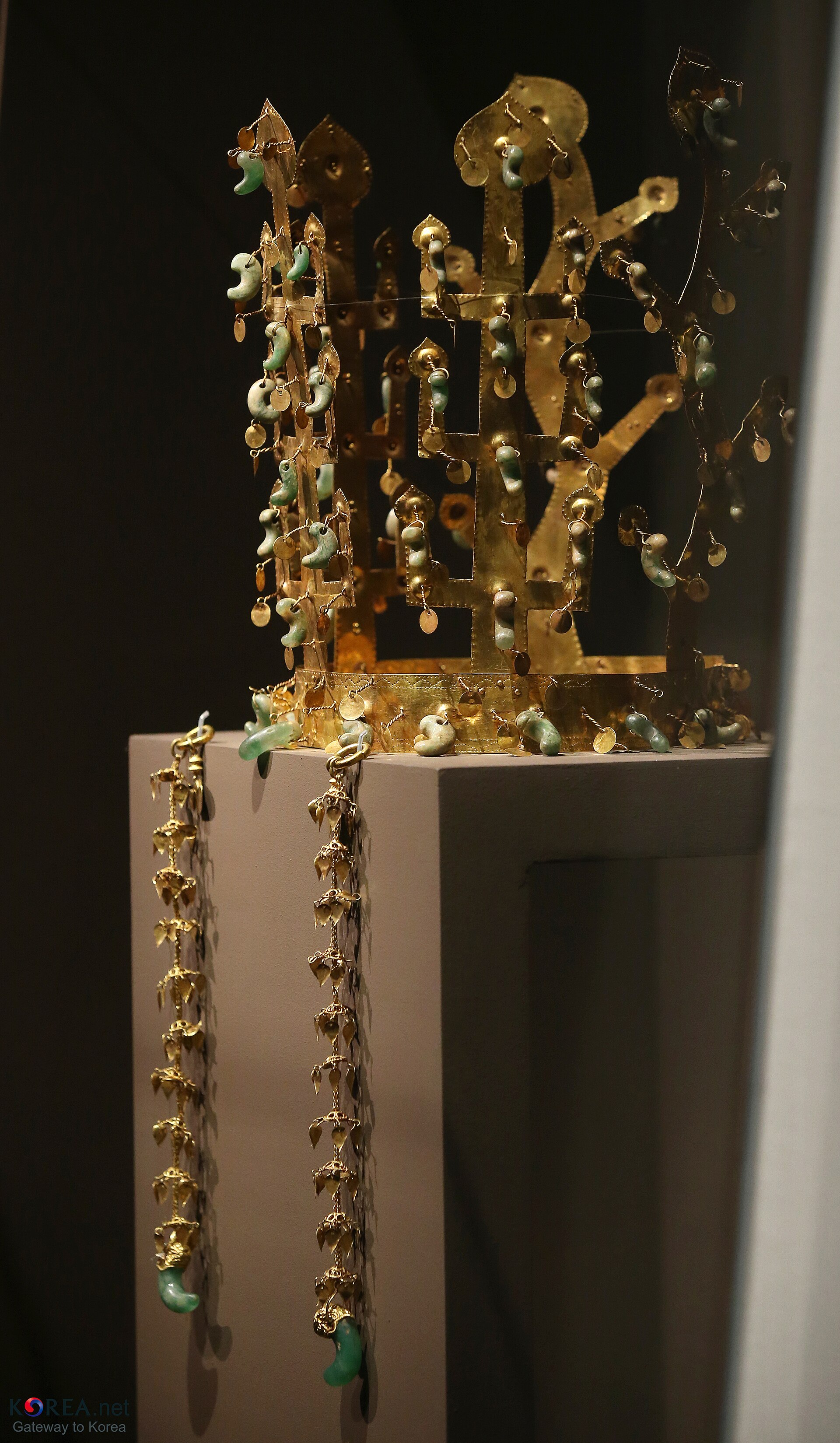
Photo: Wikimedia Commons, CC BY-SA 2.0
Ninety Years of Silence, and Then a Name
The break came not in the field but in a laboratory. In 2013, conservators at the National Museum of Korea were carrying out preservation work on one of the great ring-pommel swords — the hwandudaedo — that had been buried at the dead man's waist. As they cleaned and stabilized the corroded metal of the scabbard fittings, characters began to emerge from beneath the patina. Four of them, read together, spelled out a title: Isaji-wang — 尒斯智王 — "King Isaji." It was, astonishingly, the first time the name of a tomb's occupant had ever been recovered from a Silla royal-style burial. A grave that had been anonymous since 1921 had, ninety-two years later, finally spoken.
The discovery did not end there. When the National Museum of Korea returned to re-excavate the site in 2015 — part of a wider project to revisit several old Silla tombs with modern methods — investigators found more. Among the fragments recovered from the ground was a piece of scabbard bearing five characters this time: 尒斯智王刀, "the sword of King Isaji." In all, several great swords connected to the tomb turned out to carry inscriptions, and they were eventually put on display across the National Museum of Korea and the Gyeongju National Museum. After a silence of nearly a century, the tomb had not offered one whisper of a name but several. The trouble was that the name it gave did not fit anywhere.
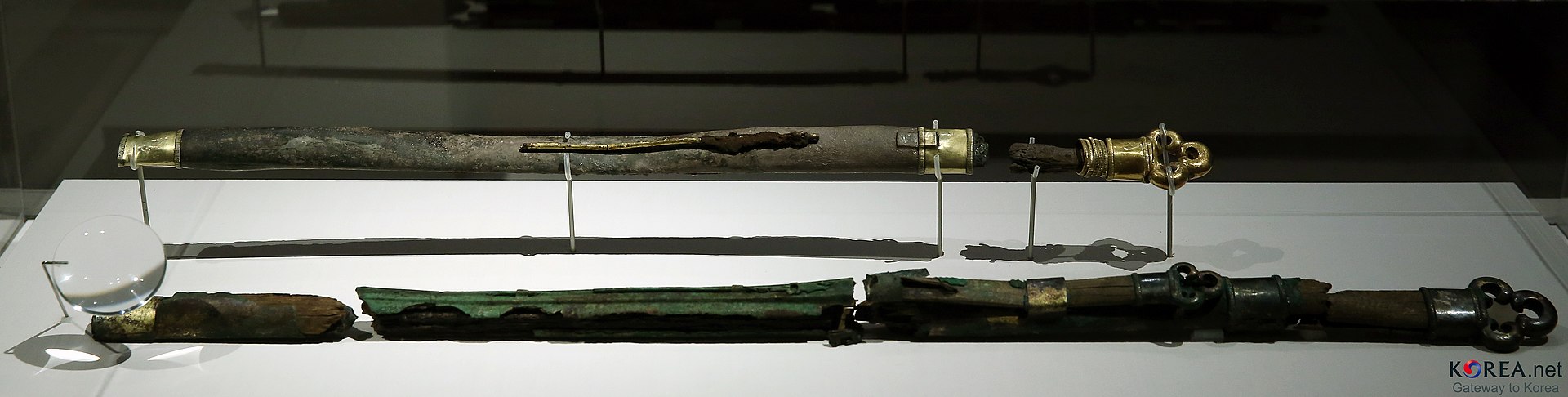
Photo: Wikimedia Commons, CC BY-SA 2.0
The King Who Is in No Chronicle
Silla is, by the standards of ancient states, remarkably well documented. Its kings are listed in the Samguk Sagi, the twelfth-century "History of the Three Kingdoms," and their doings are retold in the Samguk Yusa a little later; stone monuments and other inscriptions fill in still more. We know the sequence of Silla's rulers, their reign names, their titles. And in that long, carefully kept roll of kings, there is no Isaji. The name appears in none of the chronicles, on none of the other known monuments. It surfaces, so far, on the swords of this one tomb and nowhere else in the historical record.
So who was he? The most important clue is hidden in that single word wang — "king." In later Korean usage the title belonged to the sovereign alone, but Silla in its earlier centuries was different. Its paramount ruler did not even use the word "king" in the ordinary sense; he bore the archaic title maripgan. Meanwhile the word wang, as it appears in early Silla inscriptions, seems to have been applied more broadly — not only to the supreme ruler but to other members of the highest aristocracy, the leaders of the great clans who stood just below the throne. If that is right, then "King Isaji" need not have been a monarch at all in the sense we would expect. He may have been a magnate, a prince, one of the ruling elite whose name the court histories never troubled to preserve. The inscription, in other words, may not be the missing name of a lost king so much as proof that early Silla used the word "king" in a way we had only half understood.
Photo: Wikimedia Commons, CC BY-SA 2.0
King or Nobleman? A Debate Still Open
That single question — was the man in Geumgwanchong a reigning maripgan, or an aristocrat honored with the title wang — is where the scholarship divides, and it has not closed. On the archaeological side, the tomb is dated on the evidence of its construction and contents to roughly the late fifth or early sixth century. Line up that window against the king-list, and if the occupant really were a supreme ruler, the likeliest candidates would be Jabi or Soji, the maripgans of that era. Some researchers have argued exactly that. Others have reached further back and proposed the earlier maripgan Nulji, and a persistent strand of speculation has attached the name to Isabu, the famous Silla general and statesman — though on the plain evidence this remains a guess. Still others suggest a son of one of these kings, a prince rather than a monarch.
But a growing body of opinion pulls the other way. When scholars weigh not just the date but the scale of the tomb — its size and rank relative to the truly monumental royal mounds of Gyeongju — Geumgwanchong comes out, by some assessments, in the third tier of Silla graves, too modest to be the resting place of a supreme maripgan. On this reading the occupant was not the paramount ruler at all, but a figure from the very top of the six great clans of the capital — comparable, it has been suggested, to the "seven kings" named on the Silla stele found at Naengsu-ri, where the word "king" is plainly used for several men at once. Which is to say: the more carefully the tomb is measured, the more the answer seems to slide from "a forgotten monarch" toward "one of a class of great lords each entitled to be called king." Neither side has won. The debate remains genuinely open.
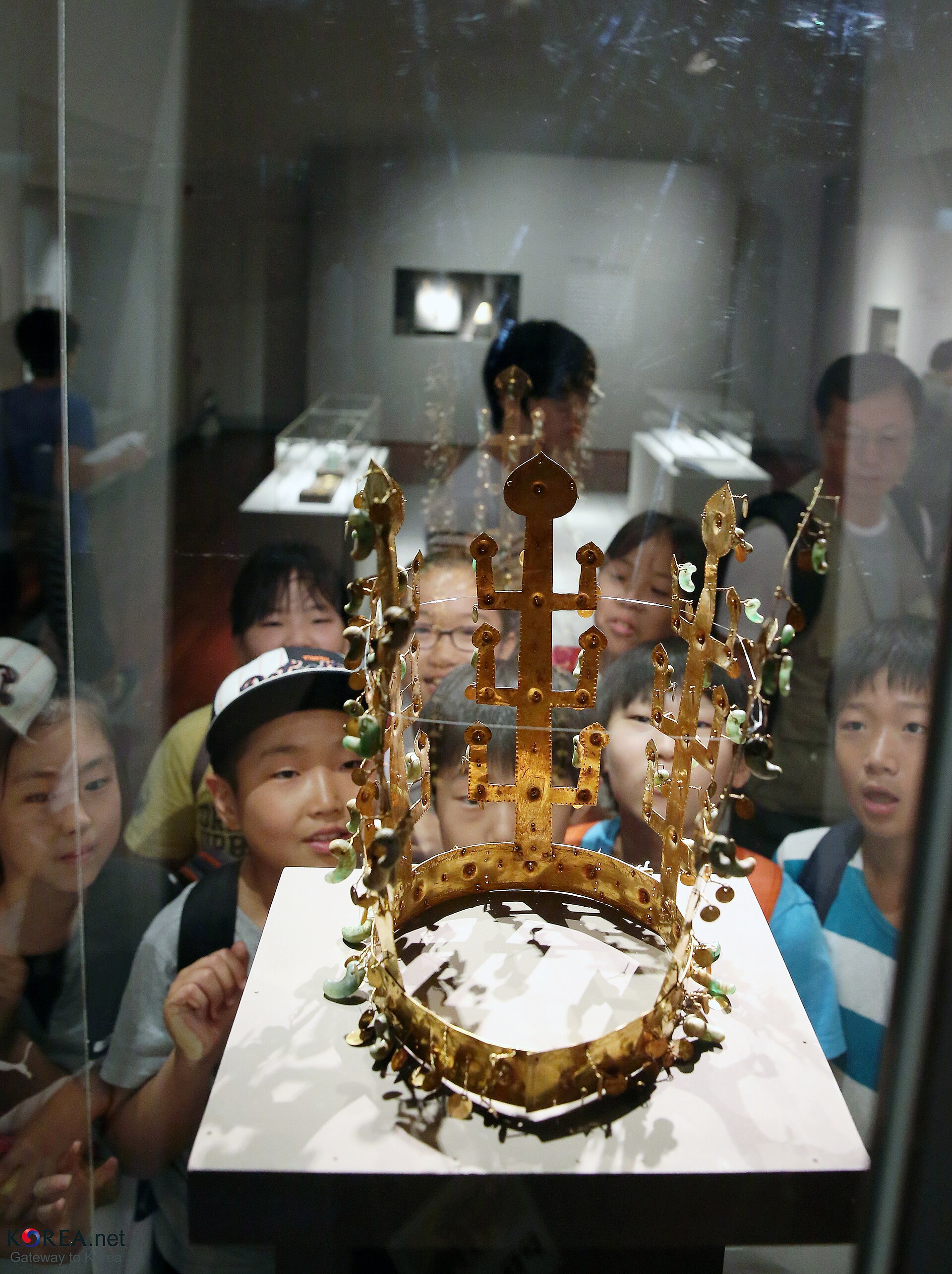
Photo: Wikimedia Commons, CC BY-SA 2.0
What the Golden Crown Still Won't Tell Us
There is something almost poetic in how this mystery is shaped. Most unsolved cases are missing a body, or a motive, or a piece of evidence. Geumgwanchong is the opposite. It gave up almost everything — a complete golden crown, a golden belt, ten thousand objects, and finally, against all odds, a name carved into iron. It withheld only the one thing that would tie it all together: who "Isaji" actually was. A name without a man; a king absent from every list of kings.
Every archive I keep is arranged around the hope that a name will eventually turn up and resolve a case. Geumgwanchong is the one file that has broken that assumption for me. The name arrived in 2013, cleanly, in four characters on a scabbard — and it explained nothing. I have set 尒斯智王 against the king-lists more times than the exercise deserves, and each time the result is the same blank. I no longer entirely trust the instinct that a name is an answer.
What can be said with confidence is modest and strange. Sometime around the turn of the sixth century, a person of the highest rank in Silla was laid to rest near what is now Gyeongju, crowned in gold, girdled in gold, and buried with great swords whose scabbards named him King Isaji. The stone mound over him kept his treasures safe and his identity hidden for fifteen hundred years, until conservators reading corroded metal in 2013 pulled a name out of the dark — a name that matches no ruler history remembers. Was he a maripgan the chronicles somehow dropped, a prince, a great general, or one of a circle of clan-lords each called "king" in a Silla that used the word more freely than we assumed? The crown does not say. It only gleams, and keeps its wearer's secret, as it has since the day the stones came down.
---
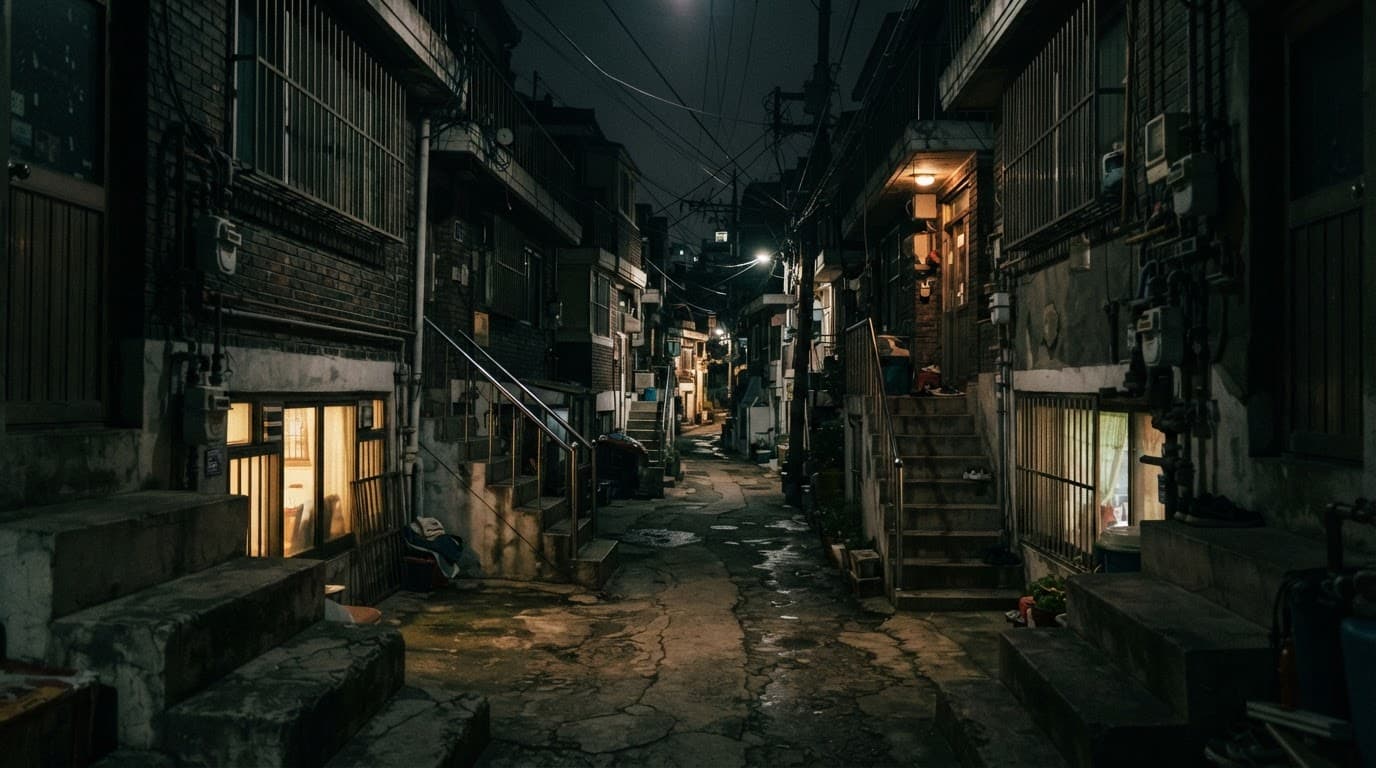
This article combines real photographs of the Geumgwanchong artifacts and tomb site with AI-generated images and video produced to convey the mood of the story.
Comments
No comments yet — leave the first one.