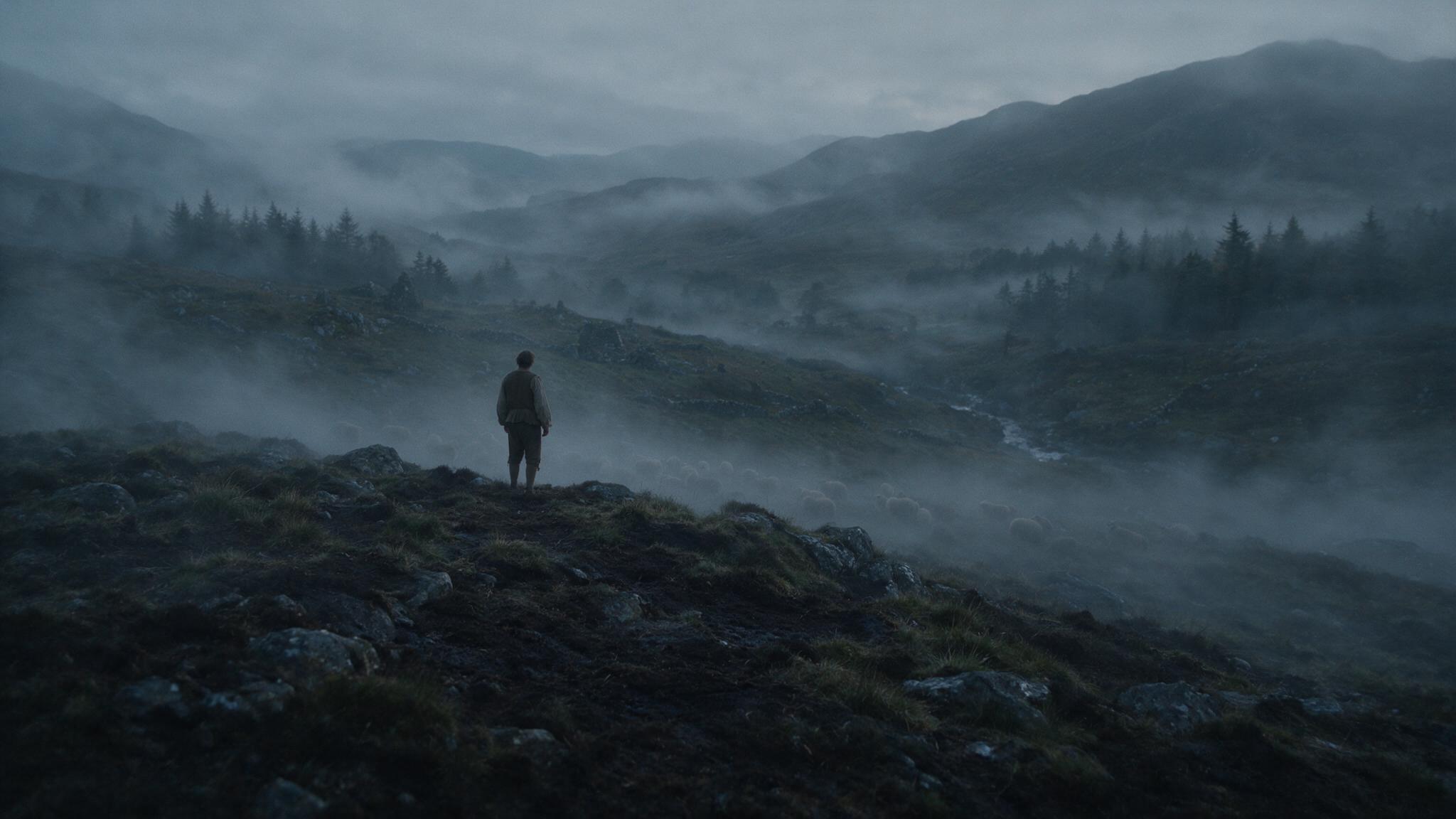
In the summer of 1764, in the mountainous province of Gévaudan in southern France, a young woman tending her cattle looked up from the fog and saw something coming toward her across the pasture. It was low, and it was fast, and it was far too large to be any dog she knew. Her herd scattered. The animals put themselves between her and the shape, and she lived to describe it — an account that would soon be repeated, in one terrified variation after another, all across the highlands. Over the next three years, something moved through these hills killing shepherds and shepherdesses, mostly women and children out alone with their flocks. Before it was over, more than a hundred people were dead. The King of France sent professional hunters and, in the end, his own gun-bearer. A monstrous wolf was shot and stuffed and carried to court. And still, more than two and a half centuries later, no one can say for certain what the Beast of Gévaudan actually was. This is the story of Europe's most famous unsolved terror.
Parish burial registers are the driest documents I work with, and they are the reason this file exists in my collection at all. The Paris engravings — the scales, the hunched dragon shape — I set aside early; they tell you only what a printmaker who had never left the city thought would sell. The registers do something worse. They give you Jeanne Boulet, fourteen, the thirtieth of June 1764, in a clerk's ordinary hand, and then they keep going, entry after entry, in the same hand, for three years. Nothing in that is embellished. That is what makes it hard to read straight through.
A Province in the Mountains
Gévaudan was a remote, thinly populated corner of what is now the Lozère region, a country of high granite plateaus, deep wooded ravines, and cold, treeless uplands where the wind never quite stops. In the eighteenth century it was poor and isolated, its people living scattered across small farms and hamlets, their days spent driving cattle and sheep out onto the open moors. Wolves were a fact of life here, as they were across much of rural France; children learned early to watch the tree line. What began to happen in the summer of 1764, though, was something the people of Gévaudan had no name for, and no defence against.
The first recorded death came on the thirtieth of June, 1764. A fourteen-year-old girl named Jeanne Boulet was killed while watching her flock. She would not be the last such victim, nor even close to it. As the weeks passed, more herders were found — or, more often, not found whole. The attacks followed a pattern that terrified the province precisely because it seemed so deliberate: the thing struck the ones who were alone, out on the high pasture, away from the houses. It went for the throat and the head. And it did not behave, the survivors insisted, like an ordinary wolf.
What the Survivors Described
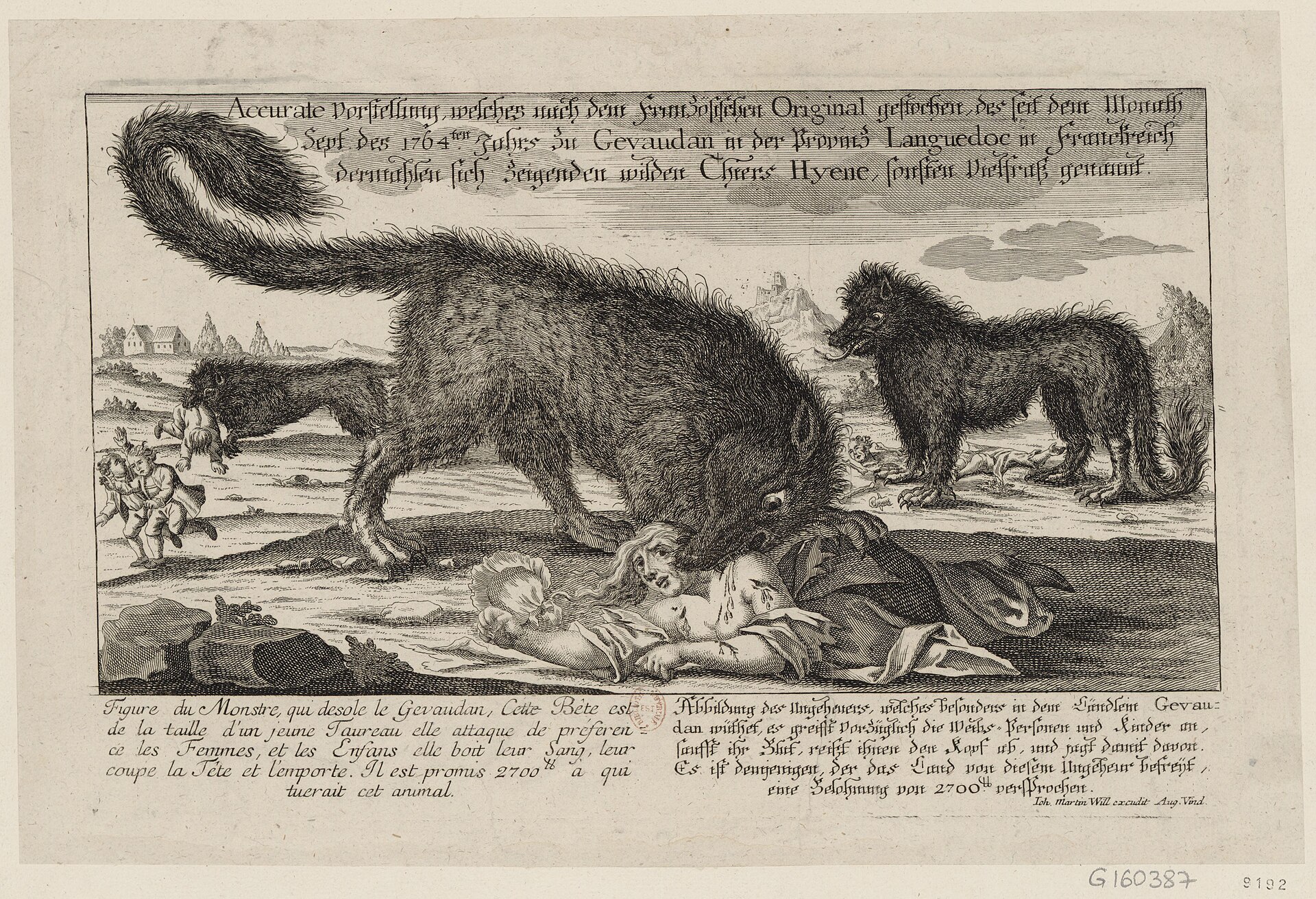
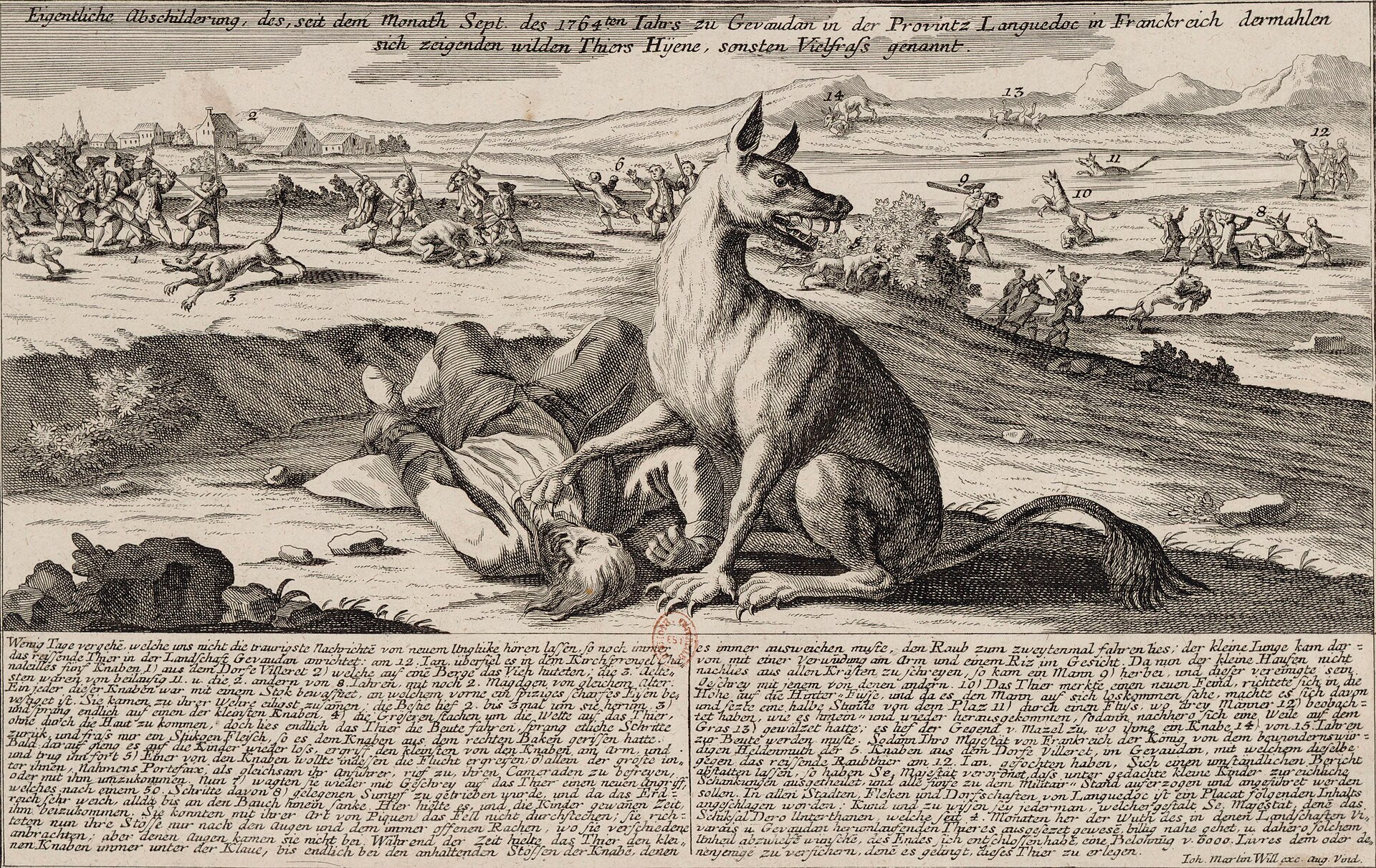
Not everyone who met the Beast died. Some fought it off; some were saved by their cattle or by a passing traveller; some simply survived to talk. And what they described, again and again, did not sit easily with the wolves they had known all their lives. The creature was enormous, they said — as large as a calf, or a young cow. Its fur was reddish, some said, with a dark line running down the spine; others swore it was nearly black, so that it seemed to dissolve into the dusk. It had a broad, almost flat head, a wide chest, and a long, thick tail that it used, witnesses claimed, almost like a whip. It could leap. It could stand, briefly, on its hind legs. And it seemed, unnervingly, unafraid of people.
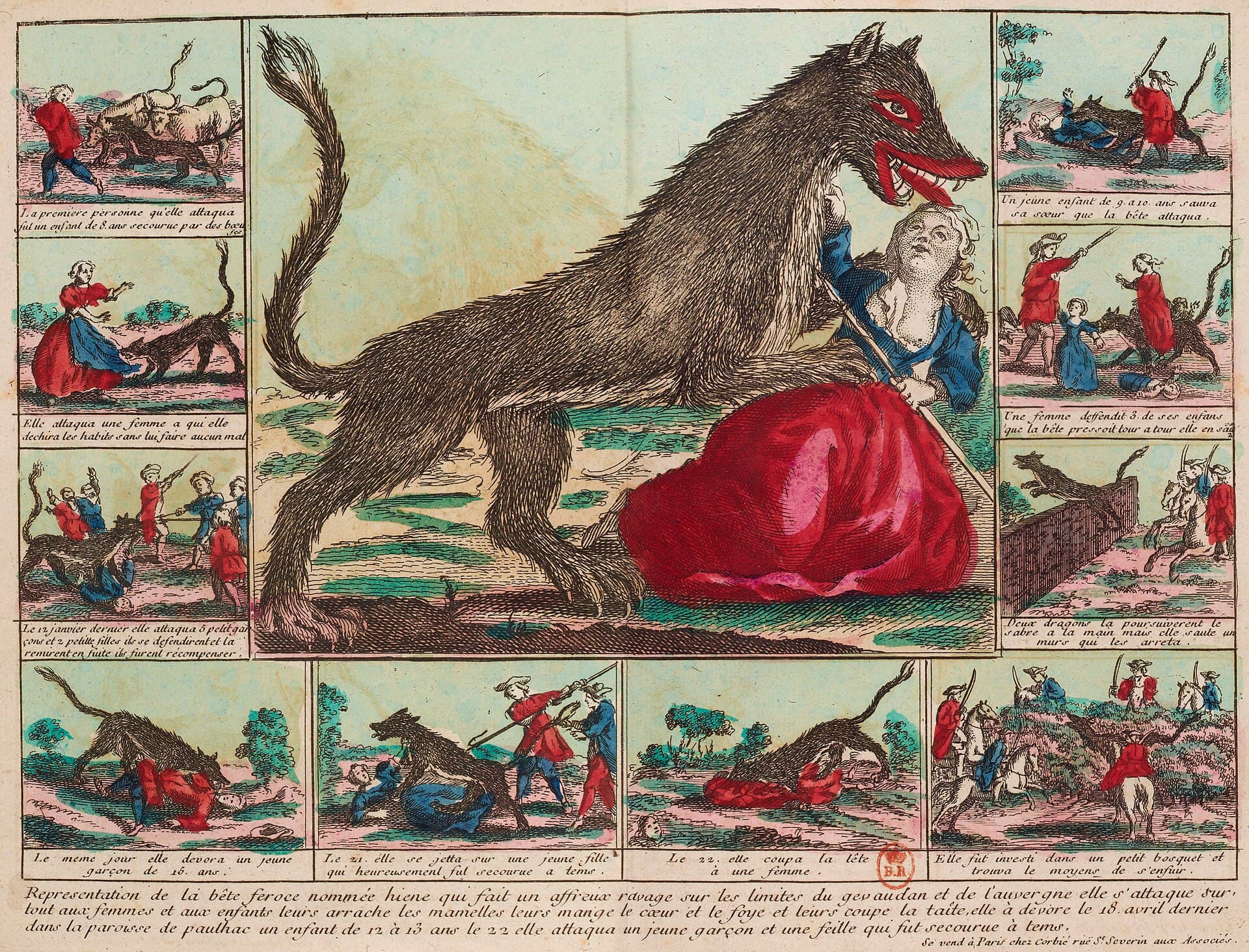
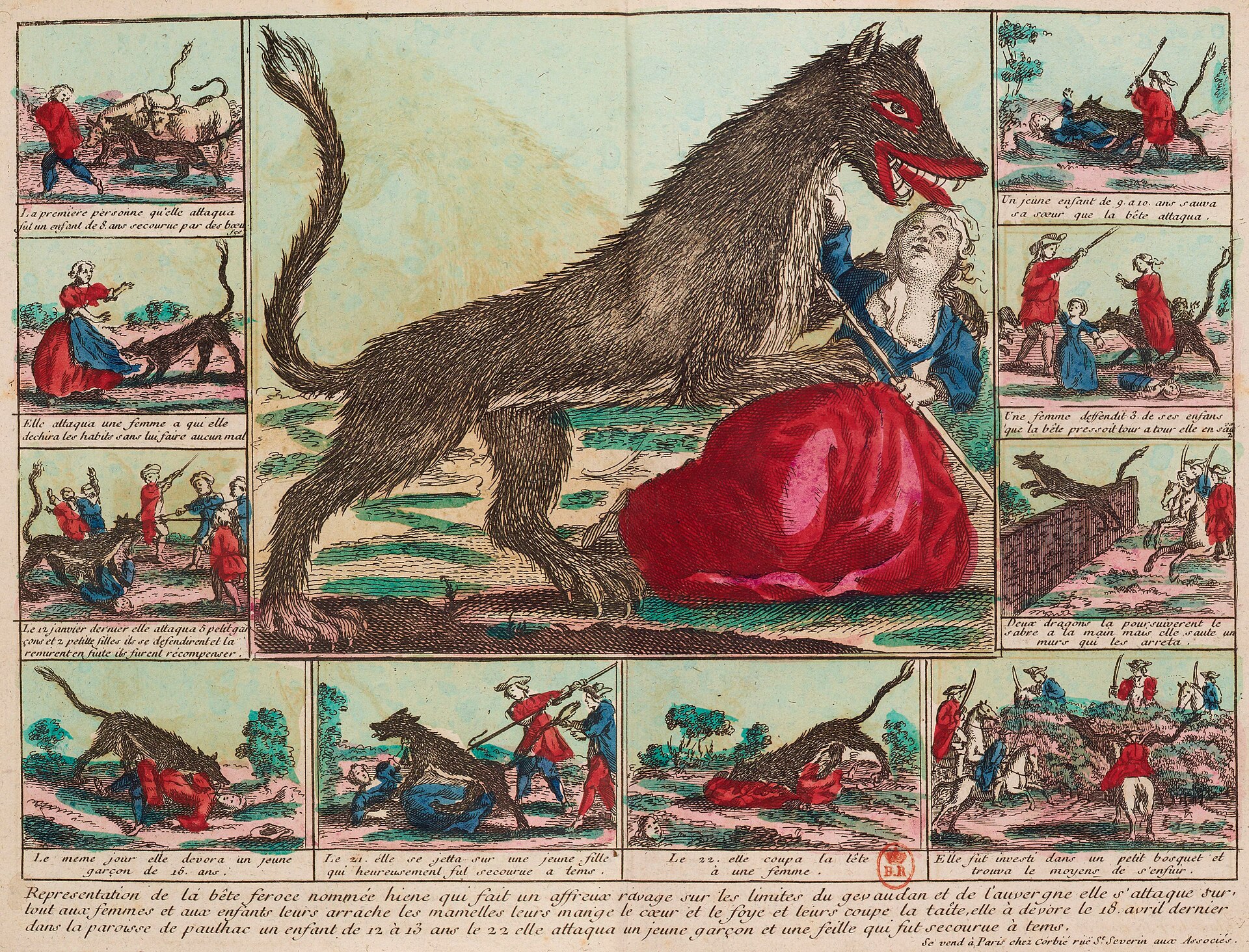
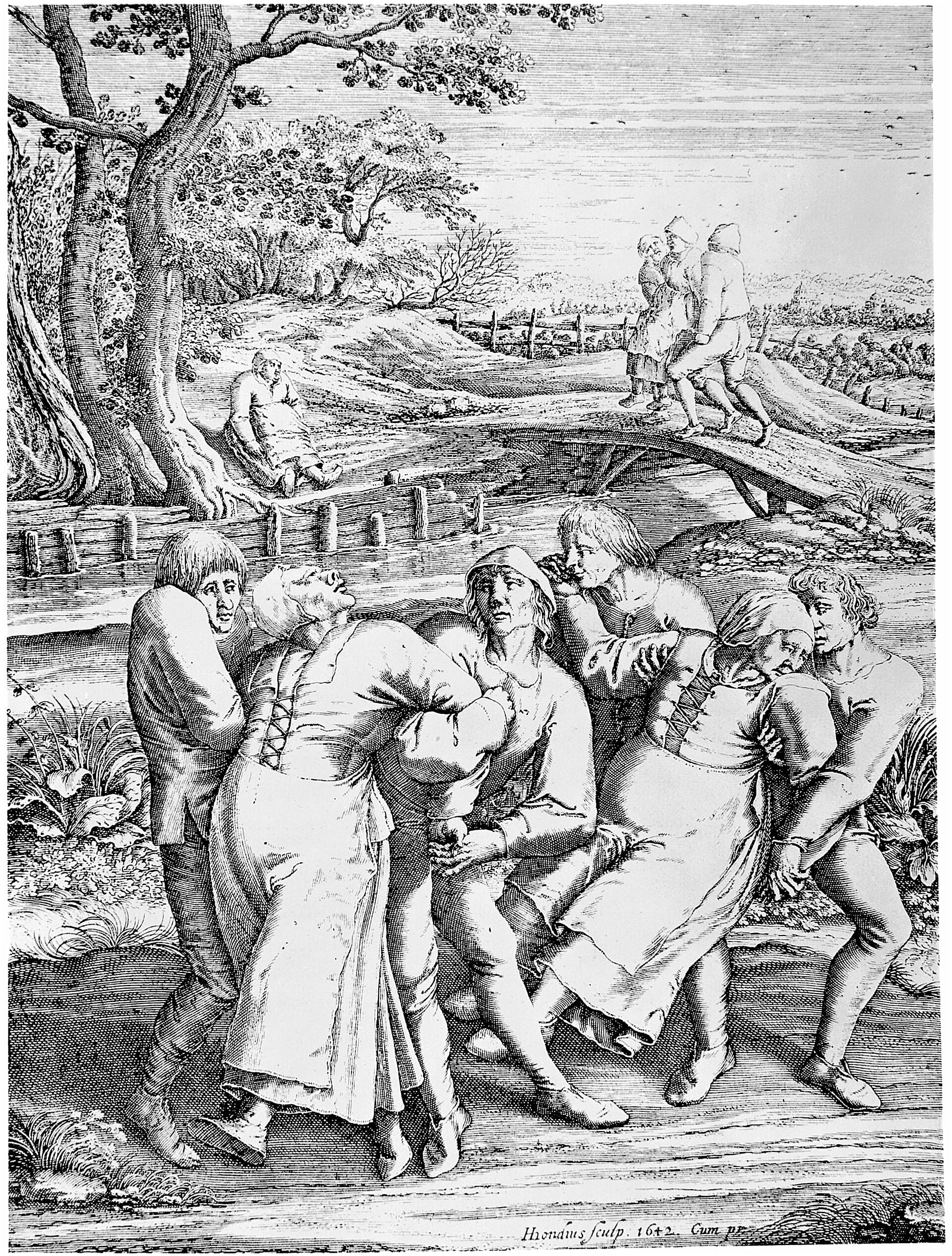
These accounts spread outward from the mountains and into the newspapers of Paris, and from there across Europe, growing stranger and grander with each retelling. Engravings were printed showing a hunched, scaled, dragon-like monster stalking a helpless victim — pictures that owed as much to imagination as to any eyewitness. But strip away the woodcut horror, and a stubborn core remained: a large, bold, unusually aggressive predator, hunting people across a defined stretch of country for years, in a way that the wolves of Gévaudan simply never had.
The King Sends His Hunters
By the winter of 1764 the terror had outgrown the province. Word of the Beast reached the court of King Louis XV at Versailles, and the affair became a matter of national embarrassment as much as national fear — a kingdom that fancied itself the most civilised in Europe, unable to protect its own peasants from a single animal. The Crown acted. A bounty was posted, large enough to change a poor family's fortunes. Professional wolf-hunters, a father-and-son pair named Denneval, were dispatched to the highlands with their packs of hounds. When months of hunting brought no end to the killings, the King sent a more prestigious figure still: François Antoine, his own arquebus-bearer, the royal gun-carrier.
In September 1765, Antoine and his men brought down an enormous grey wolf in the forest of the Chazes — a beast so large that it seemed, at last, to fit the terror. It was measured, praised, and preserved. Some survivors, shown the carcass, said they recognised the scars of its teeth. The great wolf was carried in triumph to Versailles and displayed before the court, and François Antoine was rewarded and sent home a hero. The King's Beast was dead. The province could breathe.
Except that it could not. The attacks began again.
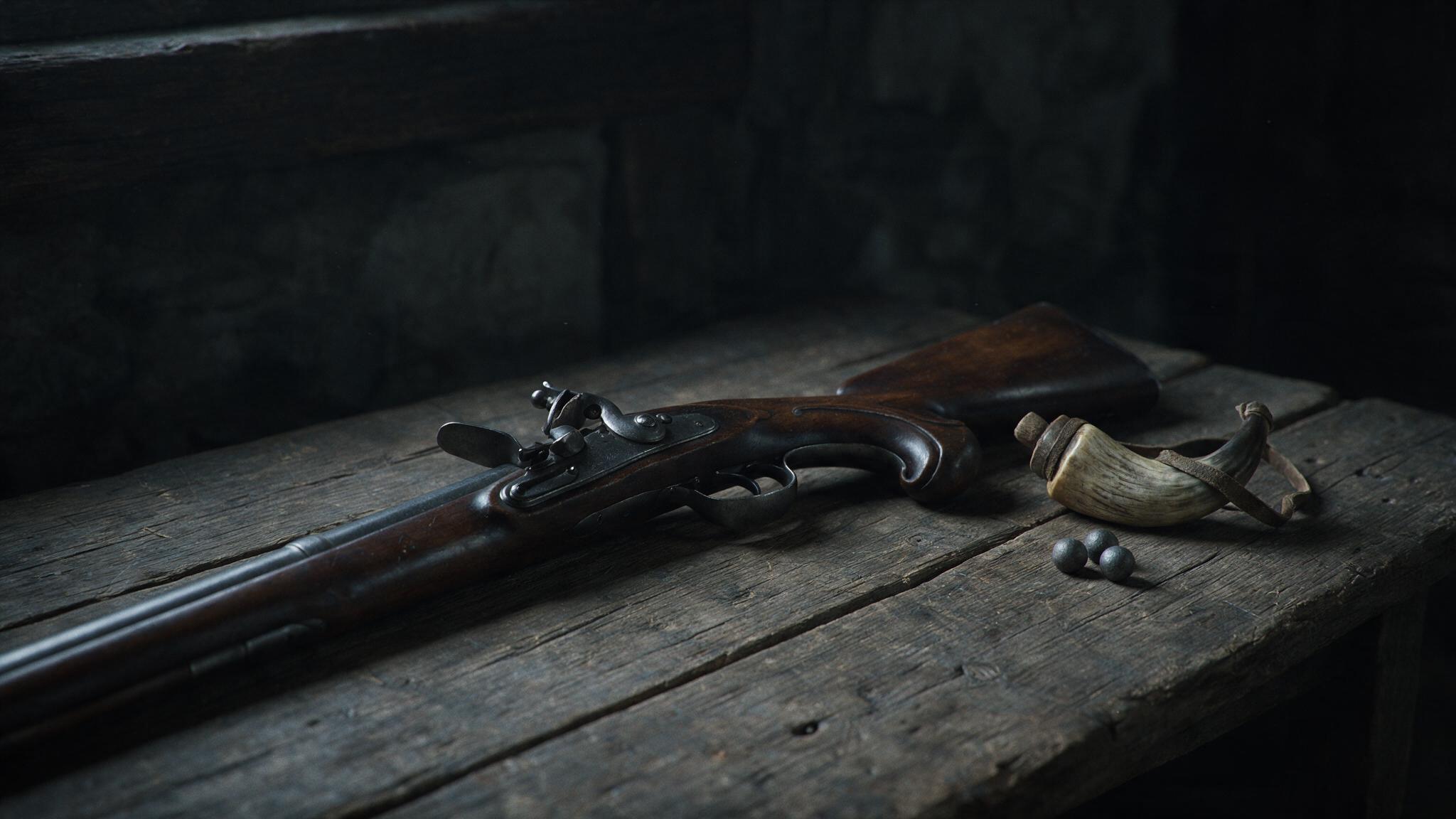
Jean Chastel and the End
For nearly two more years the killings went on, quieter now in the newspapers of Paris — the court had already declared victory and moved on — but no quieter in the hills of Gévaudan, where people still died on the high pasture. The end, when it came, belonged not to a royal huntsman but to a local man. On the nineteenth of June, 1767, during a large hunt organised by a regional nobleman, the Marquis d'Apcher, a farmer named Jean Chastel is said to have shot and killed the animal that finally stopped the attacks.
Around Chastel's shot a legend quickly grew, the kind of story a frightened country tells to make sense of three years of dying. It was said that ordinary bullets had never harmed the Beast; that Chastel loaded his gun with bullets cast from a blessed silver medal, or from a melted-down religious object; that he sat calmly reading his prayer book as the creature approached, closed the book, and fired. How much of this is true and how much is folklore grown over the bones of a real event, no one can now separate. What is recorded is simpler and stranger: after that June day, the deaths in Gévaudan stopped. Whatever had been killing the people of the mountains was, at last, gone.
So What Was It?
Here the history ends and the mystery begins, because we have never truly known what died that June, or what had been doing the killing. The animal Chastel shot was buried, exhumed for display, paraded, and eventually lost to time; no reliable remains survive for a modern examination. All we have are the eyewitness accounts, the parish burial records, and the theories — and the theories have never agreed.
The most sober explanation is the simplest: wolves. Gévaudan had wolves, France had a long and bloody history of wolf attacks on people, and a large, bold wolf, or a pack of them, hunting an isolated province over three years could account for much of the horror without any monster at all. Yet the wolf theory strains against the details survivors insisted upon — the sheer size, the strange colouring, the boldness, the sustained pattern over so long a time. So other explanations crowded in. Some proposed an exotic animal, a striped hyena or a big cat escaped from a travelling menagerie, which would explain the odd fur, the flat head, the unfamiliar shape. Others pointed to a hybrid, a huge dog crossed with a wolf, bred deliberately or otherwise.
And then there is the darkest theory of all — that behind the animal stood a man. Some victims, it was reported, had been decapitated or precisely wounded in ways that unsettled those who believed no wolf could do such a thing; and from this grew the idea of a human killer, a murderer using the panic of the Beast, perhaps even using a trained animal, to hide his own crimes. It is a chilling notion, and an old one, and it has never been proved — no witness in three years of close encounters ever described seeing a man where the Beast should have been. Wolf, exotic import, monstrous hybrid, or murderer in a beast's shadow — every theory answers some of the questions and stumbles on the rest. That is the true unease of Gévaudan: not that a monster came out of the fog, but that a hundred people died over three years, and history closed the file without ever agreeing on who, or what, held the knife. The hills kept their answer, and keep it still.
There is one absence in this material I have never been able to argue away, and I have tried, because the human-killer theory is the one I would most like to be able to settle. In three years of encounters — survivors who fought the thing off, who were pulled from it, who stood close enough to describe the line down its spine — not one of them ever reported seeing a man where the Beast should have been. Every theory I can build needs that testimony and none of it exists. The animal Chastel shot was buried, dug up, carried about, and lost. There is nothing left to examine. Only a hundred entries in a register and a shape nobody could name.
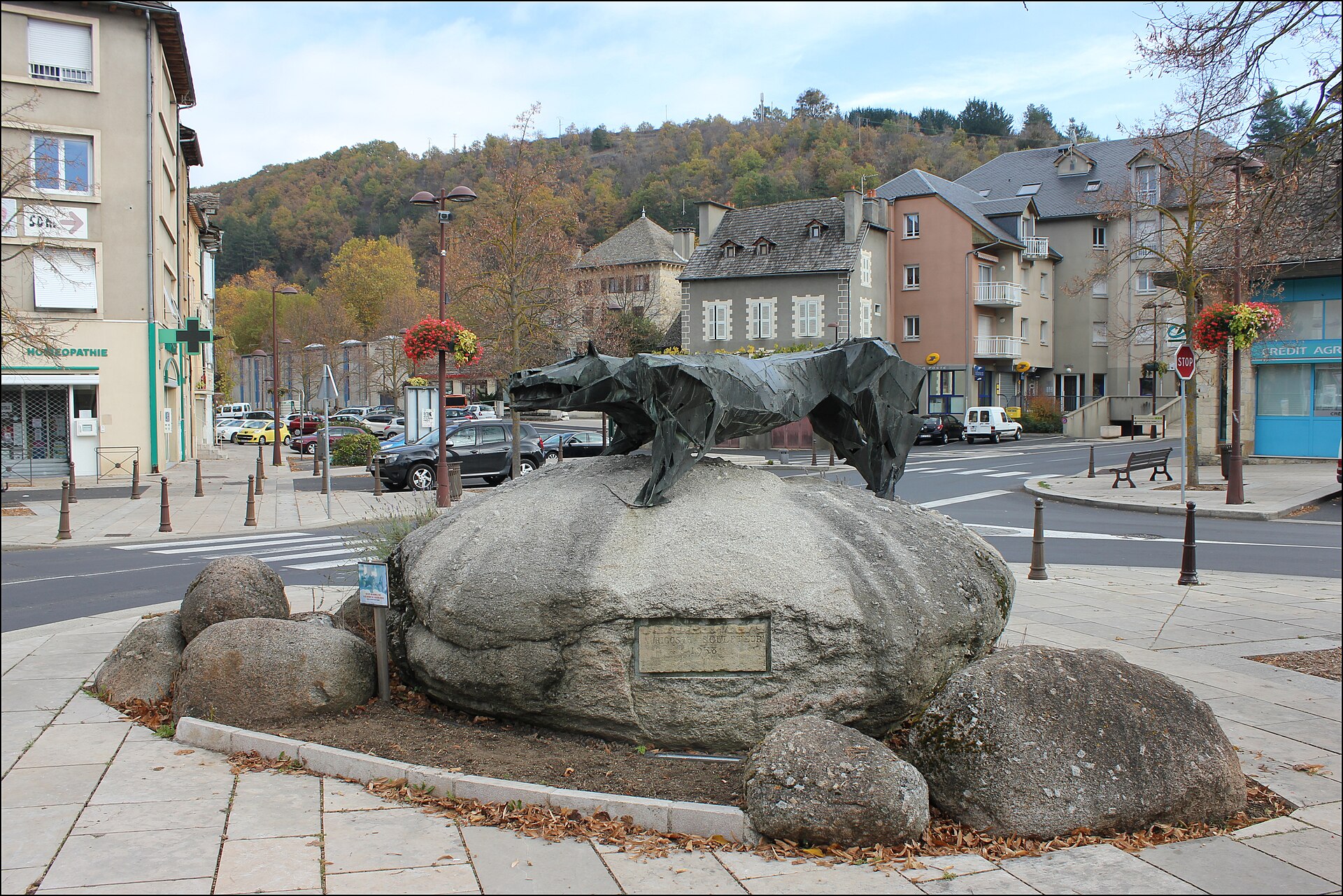
Photo: Wikimedia Commons, CC BY-SA 4.0
---
This article uses both genuine archival and on-site photographs and AI-generated images and video produced to convey the mood of the story.
Comments
No comments yet — leave the first one.