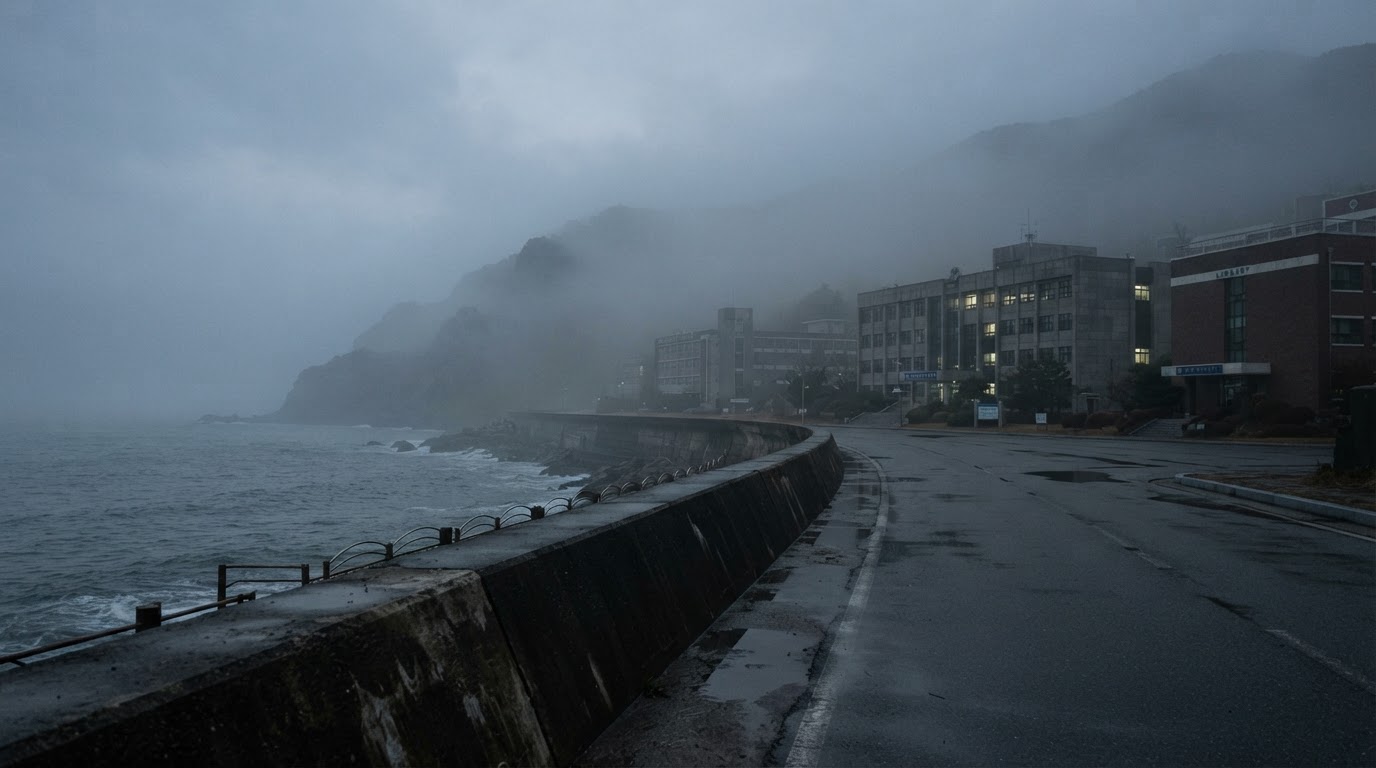
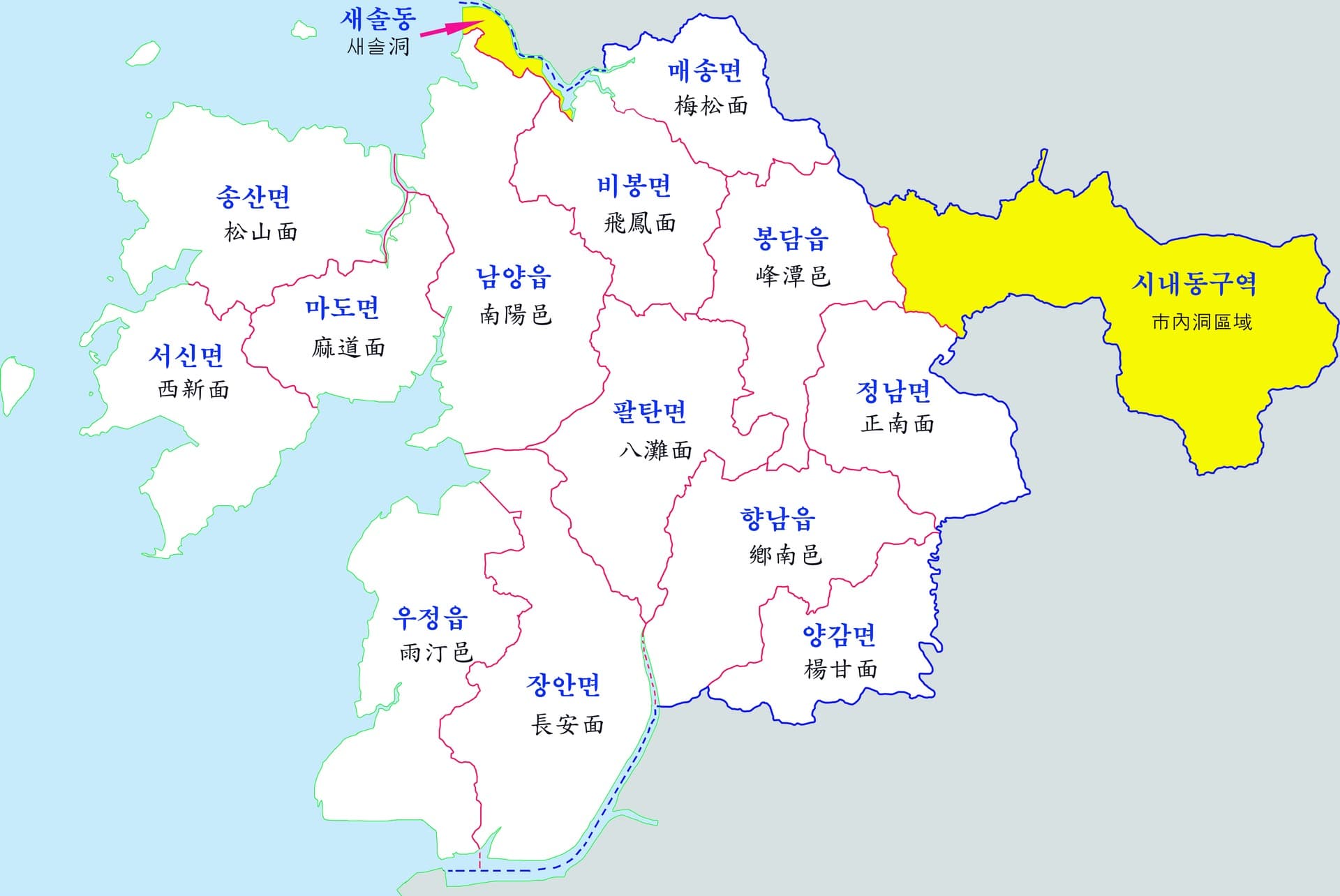
Off the coast of Yeongdo in Busan lies a small island called Jodo, or Achi Island.
Administratively, it is Dongsam-dong, Yeongdo-gu.
Connected to the mainland by a single bridge, almost the whole of it is the campus of Korea Maritime University.
A university ringed by the sea. A place where the only way in or out is, in practice, that one bridge.
Unless you are a student or staff member, you would have almost no reason to come or go — a quiet, closed-off place.
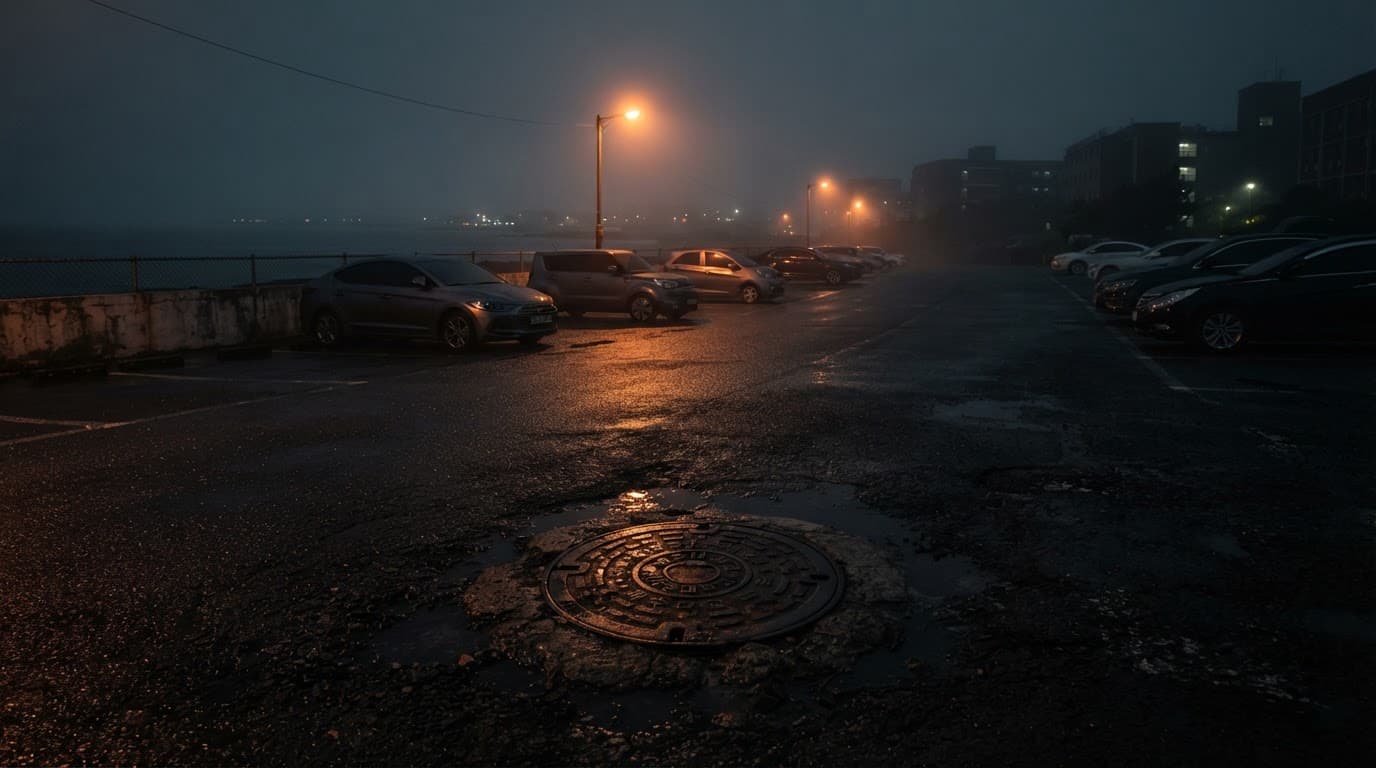
In the summer of 2006, a foul smell began to rise from a manhole in a parking lot on the island.
K. Woo here — I maintain the archive these pieces come out of. Unidentified-remains cases are the ones I file most reluctantly, because a file needs a name at the top and this one has never had one. I opened it because of the manhole cover. Two crowbars, according to the men who reproduced the work on camera. Whoever put him down there was not panicking. He had planned for the weight.
August 22, 2006
"That manhole keeps giving off a rotten smell."
When the complaints kept coming, the school ordered the manhole cleaned.
On August 22, workers went to lift the manhole cover.
And the cover itself was no ordinary thing.
When a broadcast later recreated the scene, that manhole cover proved so heavy that a man with no experience could not open it even with a crowbar, and even someone used to the work needed two crowbars to pry it up.
Someone had opened this heavy cover, placed something inside, and closed it again.
When the cover came off, inside was a blue bag for a jade heating mat.
The ordinary kind of bag, sold everywhere, for a therapeutic mat.
And inside it, there was a man.
What covered his face
The body was so badly decomposed it was hard to make out.
A man, estimated to be in his thirties or forties. Short, around 165 centimeters. From the size of the underwear he had on, he appeared stocky and heavyset.
When he was found, he was wearing only boxer shorts, curled up inside the bag.
And over his face, a plastic bag bearing the name of a Busan-area mart.
Investigators fixed on two details.
One — that whoever dumped the body had taken the trouble to cover the face.
That usually means one thing.
That this man's identity was not meant to become known.
Two — that the plastic bag was from a mart commonly used in that part of Busan.
Someone who knew how to open a heavy manhole, who shopped at that neighborhood's mart, who knew the layout of a closed island campus.
Several threads pointed the same way.
The perpetrator was likely someone who knew the area well — perhaps someone close to the victim.
A man with no name
The investigation soon hit a wall.
They could not establish the victim's identity.
The fingerprints were lost to decay. Searching the missing-persons database turned up no match.
At first they considered a student, but no student at the Maritime University had been reported missing at the time.
There was, however, large-scale construction underway on campus in those days.
The team left open the possibility of an outside worker from the site.
But no name emerged down any of these paths.
A man who was someone's son and someone's friend
had vanished from the world without a trace, and no one came looking for him.
Or else, he had been made impossible to find.
Bringing back a face
The case seemed destined to go cold.
Then in 2013, the investigating team managed to recover DNA from the body's front teeth — a clue hard-won from a decomposed body.
But even checked against the missing-persons database, with no family to match it against, the DNA gave up no name in the end.
They had the evidence in hand, but no one to compare it to — a maddening irony.
In 2016, police tried one last method.
With a warrant, they exhumed the remains that had been laid to rest, and asked Seoul St. Mary's Hospital to attempt a 3D reconstruction.
That August, starting from the skull structure, the full face was reconstructed piece by piece,
and the Busan police released it publicly, turning the case into an open investigation.
And that September, when Unanswered Questions covered the case, tips poured in from across the country.
Could this be our family member. Could this be that person from back then.
But not one of the tips could carry him home.
Before we close this file
This case still holds three questions with no answer.
Who was he.
Who did this to him, and why.
And,
on that island campus ringed by sea, how did someone carry in a bag with a body inside, put it down a manhole, and walk back out.
A closed island joined by a single bridge. Someone must have crossed that bridge.
Once, carrying the bag in. Once, walking out empty-handed.
Hauling that heavy jade-mat bag, prying up a manhole cover that would not open easily, lowering a body inside and sealing it again —
work that would have taken no short time, someone carried out in the middle of a campus.
Nearly twenty years have passed.
A computer brought his face back, but the person who could give that face a name has not yet come forward.
The Busan police cold-case unit has still not let go of this case.
He still sleeps, in some cold storage, under the name "unidentified."
There is one line in my notes I have never been able to move past. In 2013 they pulled DNA from his front teeth — usable material, recovered against long odds from a body that had been in water and heat for weeks. And it has sat there ever since with nothing to compare it against, because no family ever filed the report that would have put a matching sample in the system. Somewhere there is a household that decided, twenty years ago, that a man who did not come home was not worth looking for. That is the part of this file I keep returning to, and it is not the manhole.
If anyone remembers this face, however long ago it may have been,
please, help send him home.
---
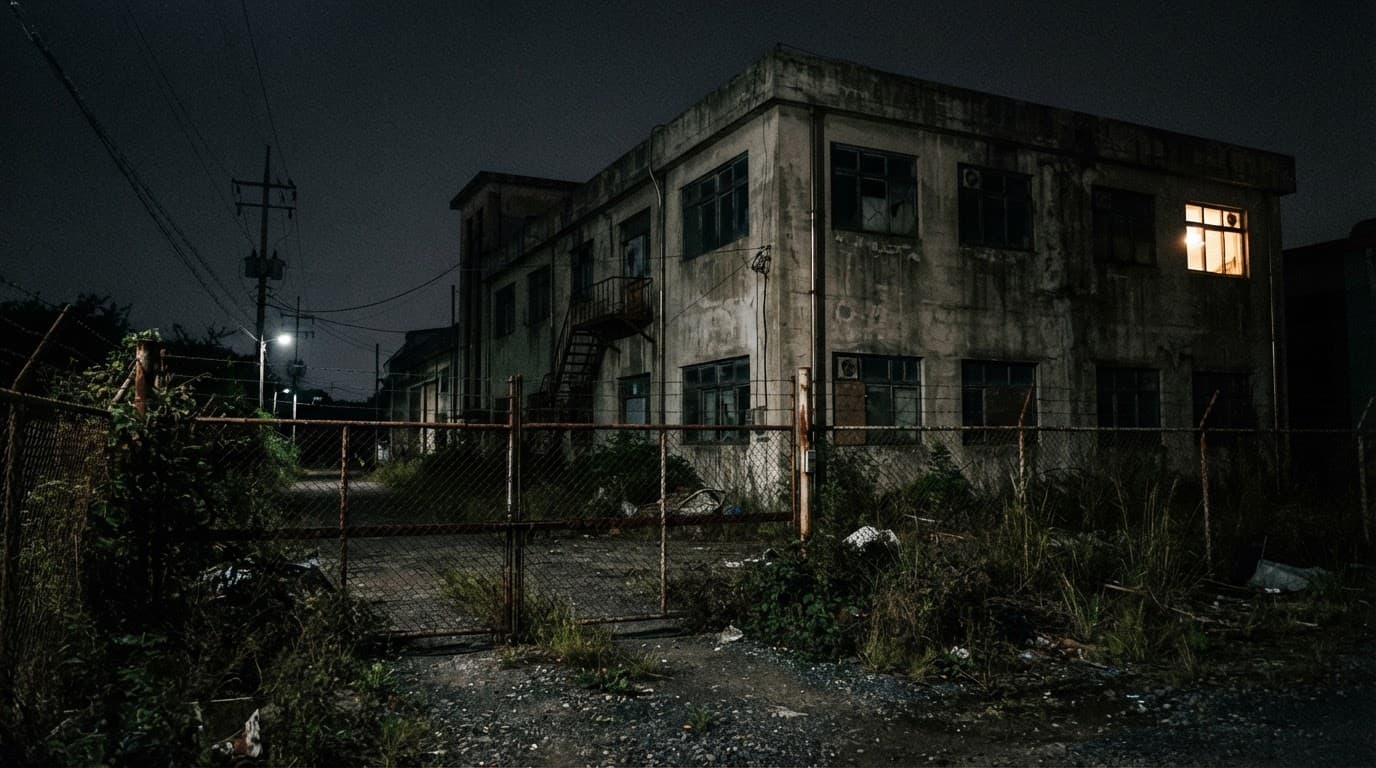
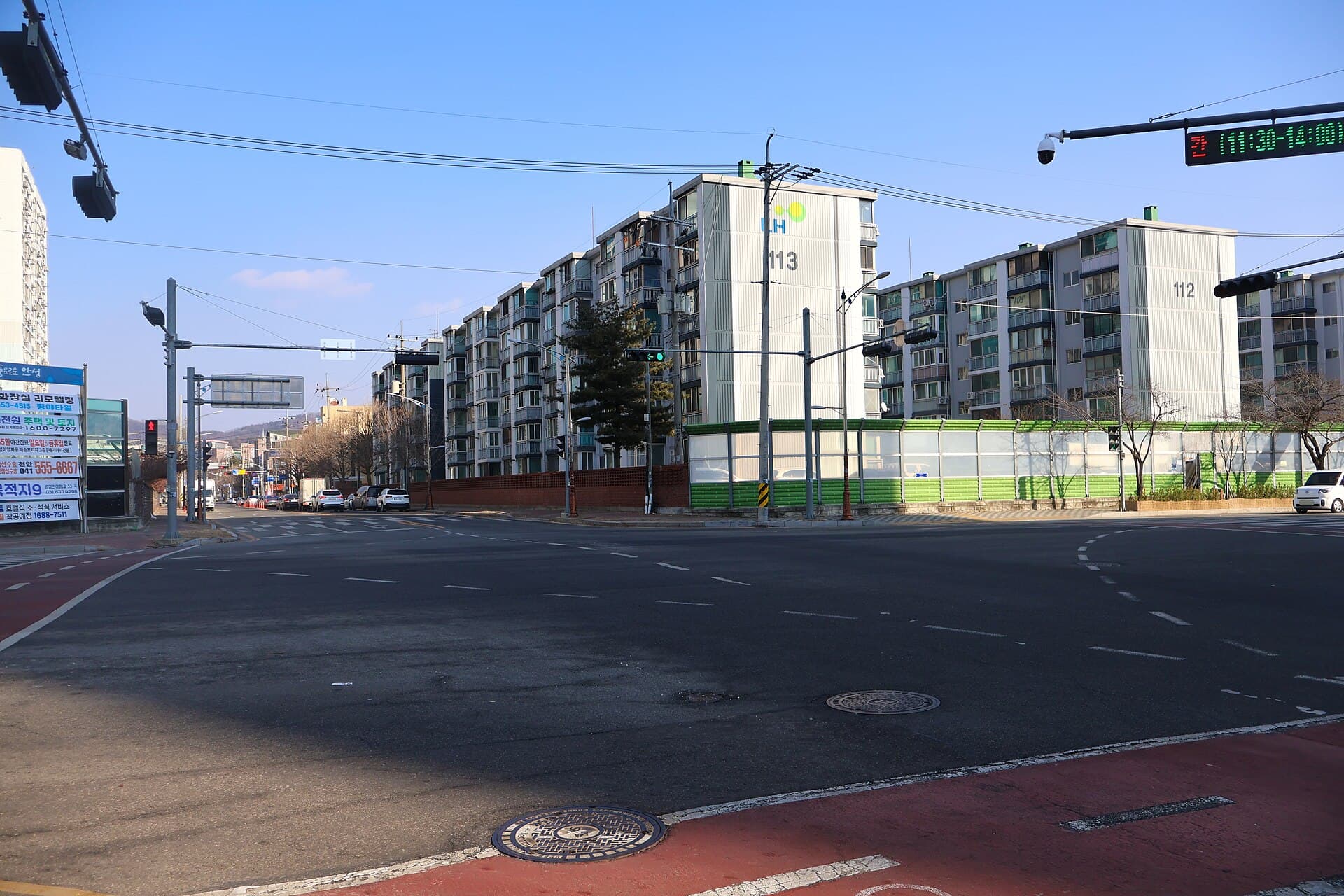
This article uses both genuine archival and on-site photographs and AI-generated images and video produced to convey the mood of the story.
Comments
No comments yet — leave the first one.