
Picture the last of the daylight going out of the sky over open water. You are alone in a small single-engine plane, a few thousand feet up, the coast behind you and nothing ahead but the dark strait and a scatter of early stars. Your radio is your only tether to another human voice. And then something with four bright lights slides in above you — flying too fast to be anything you know, passing over you again and again, until you press the transmit button and say the only words that fit: it's not an aircraft. Seventeen seconds of scraping metal follow. Then the line goes dead, and you are never heard from again. This is the story of Frederick Valentich, the 20-year-old pilot who narrated his own disappearance and left behind one of aviation's strangest unsolved cases.
Disappearances are the thinnest files I keep. Usually there is a last confirmed sighting, a gap, and then whatever people decided to believe about the gap. This one arrives with a transcript, which is why it sits apart from the rest of that shelf. I have read the six minutes between 7:06 and 7:12 line by line, timing them against a clock, watching a twenty-year-old's phrasing tighten from a routine query about traffic below five thousand feet into a sentence he repeats because he cannot find a better one. The record is unusually complete. It explains nothing.

Photo: Wikimedia Commons, CC BY 3.0
A Routine Evening Flight
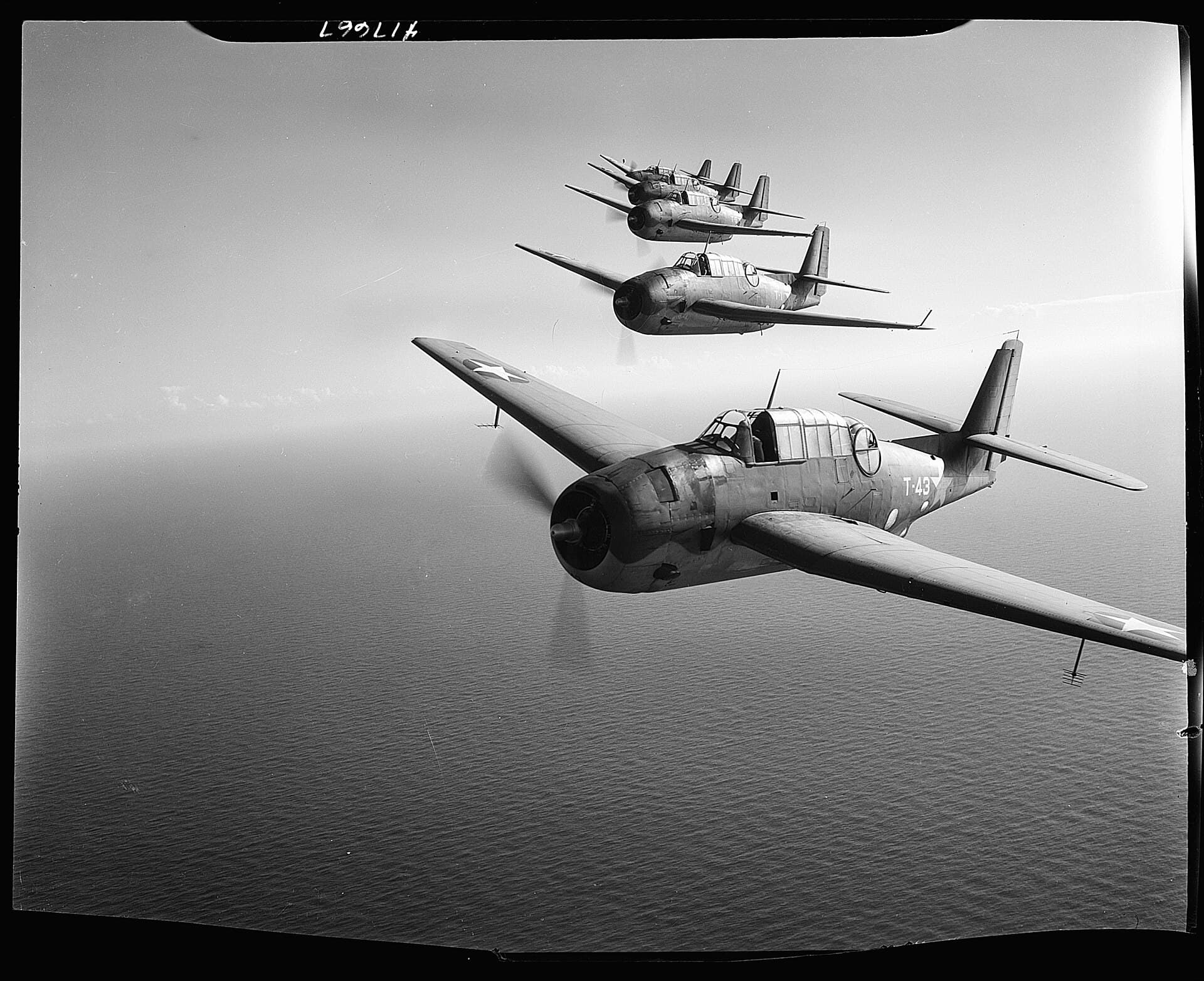
There was nothing unusual about the plan. On the evening of Saturday, October 21, 1978, Frederick Valentich took off from Moorabbin Airport near Melbourne at 6:19 PM in a rented Cessna 182L, a small high-wing single-engine aircraft with the registration VH-DSJ. His destination was King Island, in the middle of Bass Strait — the stretch of sea that separates the Australian mainland from Tasmania — about 125 nautical miles away. He planned to pick up some crayfish, so the story goes, and fly home. It was the kind of short evening hop a private pilot makes without a second thought.
Valentich was 20 years old and, by his own ambitions, a young man who badly wanted a career in the air. But he was not a seasoned aviator. He had logged around 150 flying hours, had failed commercial pilot examinations more than once, and had a rating that did not clear him to fly at night by instruments alone. On this evening he was flying under visual rules, which meant he needed to be able to see the horizon to keep the plane level. Out over a dark sea after dusk, with the last light draining away, that horizon was exactly the thing about to disappear.

Photo: Wikimedia Commons, CC BY-SA 4.0
Six Minutes on the Radio
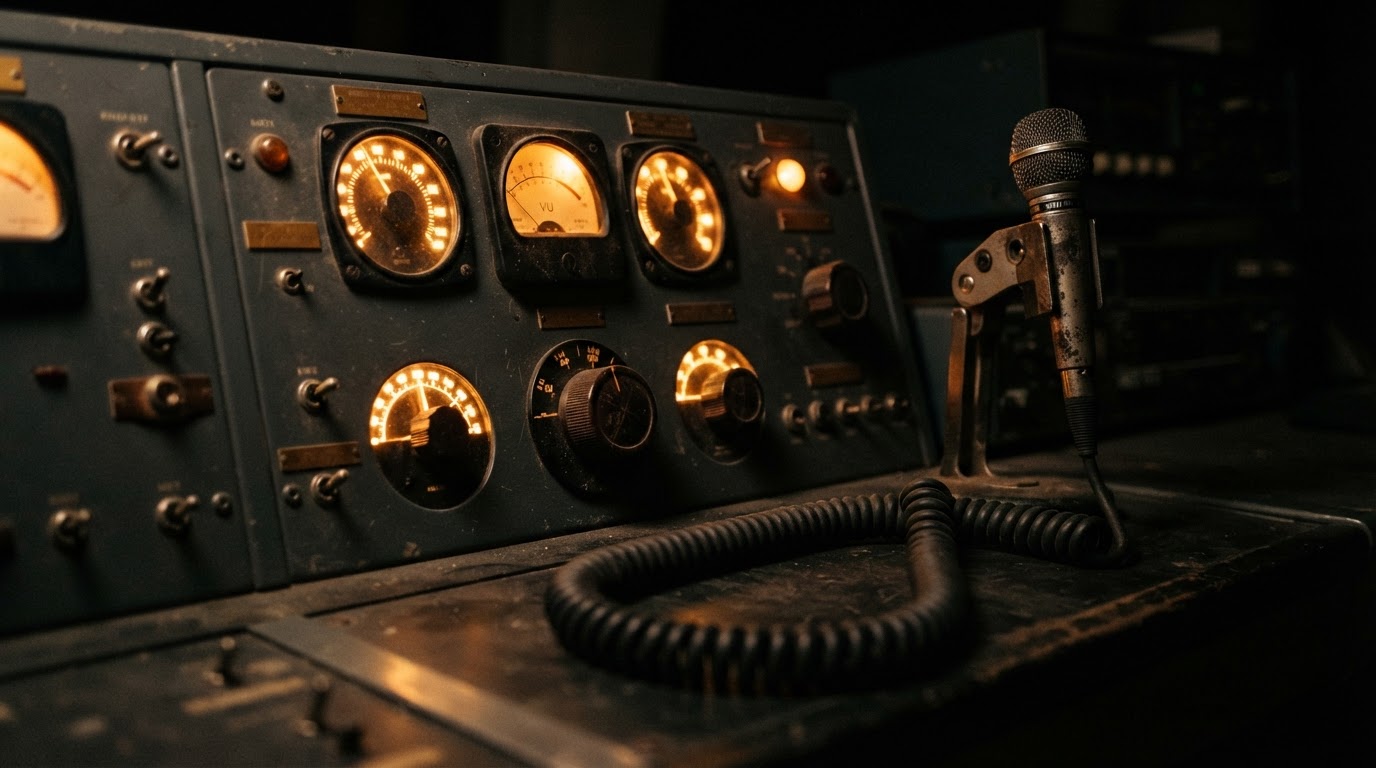
At 7:06 PM, about forty-five minutes into the flight, Valentich radioed Melbourne Flight Service. On the other end was air traffic controller Steve Robey. What followed was a roughly six-minute exchange that would be transcribed, replayed, and argued over for decades, because it is very close to a real-time account of a man watching something he cannot explain.
Valentich began by asking whether there was any known traffic below 5,000 feet. Robey told him there was none. That answer clearly unsettled him, because Valentich reported that a large aircraft seemed to be below him — something with four bright lights, like landing lights. It was approaching from the east, he said, and then it began to pass over him, two or three times, at speeds he could not identify. His voice on the tape grows steadily more strained as the minutes go by. There was no other traffic that Melbourne could see, and no explanation for what he was describing.
"It's Not an Aircraft"
As the exchange went on, Valentich's descriptions became harder and harder to reconcile with any ordinary plane. The object, he said, was not an aircraft. As it flew past, it was a long shape. At times it seemed to hang stationary; he was circling it, he said, and the thing was circling above him too. It had a green light, he reported, and a surface that looked shiny and metallic.
Then his own aircraft began to give him trouble. He told Melbourne his engine was rough idling, that it was coughing. And in one of the last coherent parts of the transmission he said the strange craft was hovering on top of him again — and once more, that it was not an aircraft. Those were among his final identifiable words. What came next was not words at all.
Seventeen Seconds, Then Silence
After Valentich's last statement, the radio did not simply cut out. Instead, the microphone stayed open, and for about seventeen seconds Melbourne recorded a noise that has never been satisfactorily explained. Official reports describe it as a metallic, scraping sound. It is the kind of detail that lodges in the mind: not a clean loss of signal, not static, but seventeen seconds of something grinding through the open channel before the connection ended at around 7:12 PM.
Robey tried to raise DSJ again. There was no reply. A pilot who moments earlier had been talking, describing, reacting, was suddenly and completely gone. No mayday in the conventional sense, no final position report, no wreckage falling into view of anyone. Just an open microphone, a scraping sound, and then nothing at all over Bass Strait.

The Search That Found Nothing
The response was immediate and large. From October 21 to 25, an intensive search covered a vast area of sea and coast — well over a thousand square miles. A Royal Australian Air Force P-3 Orion, civilian aircraft, and vessels combed the strait and its shores. Conditions were reasonable. A downed light aircraft, a fuel slick, floating debris, a life-sized trace of a crash — searchers found none of it. The Cessna, and the young man flying it, had left no mark on the water that anyone could locate.
Then, in 1983, five years after the disappearance, an engine cowl flap washed ashore on Flinders Island, off the northeastern tip of Tasmania, in the general drift path of Bass Strait's currents. The Bureau of Air Safety Investigation examined it and determined that it came from a Cessna 182 within a range of serial numbers — a range that included VH-DSJ. It is the closest thing to physical evidence the case has ever produced. It is also frustratingly short of proof: a part consistent with his plane, but never conclusively matched to it alone.
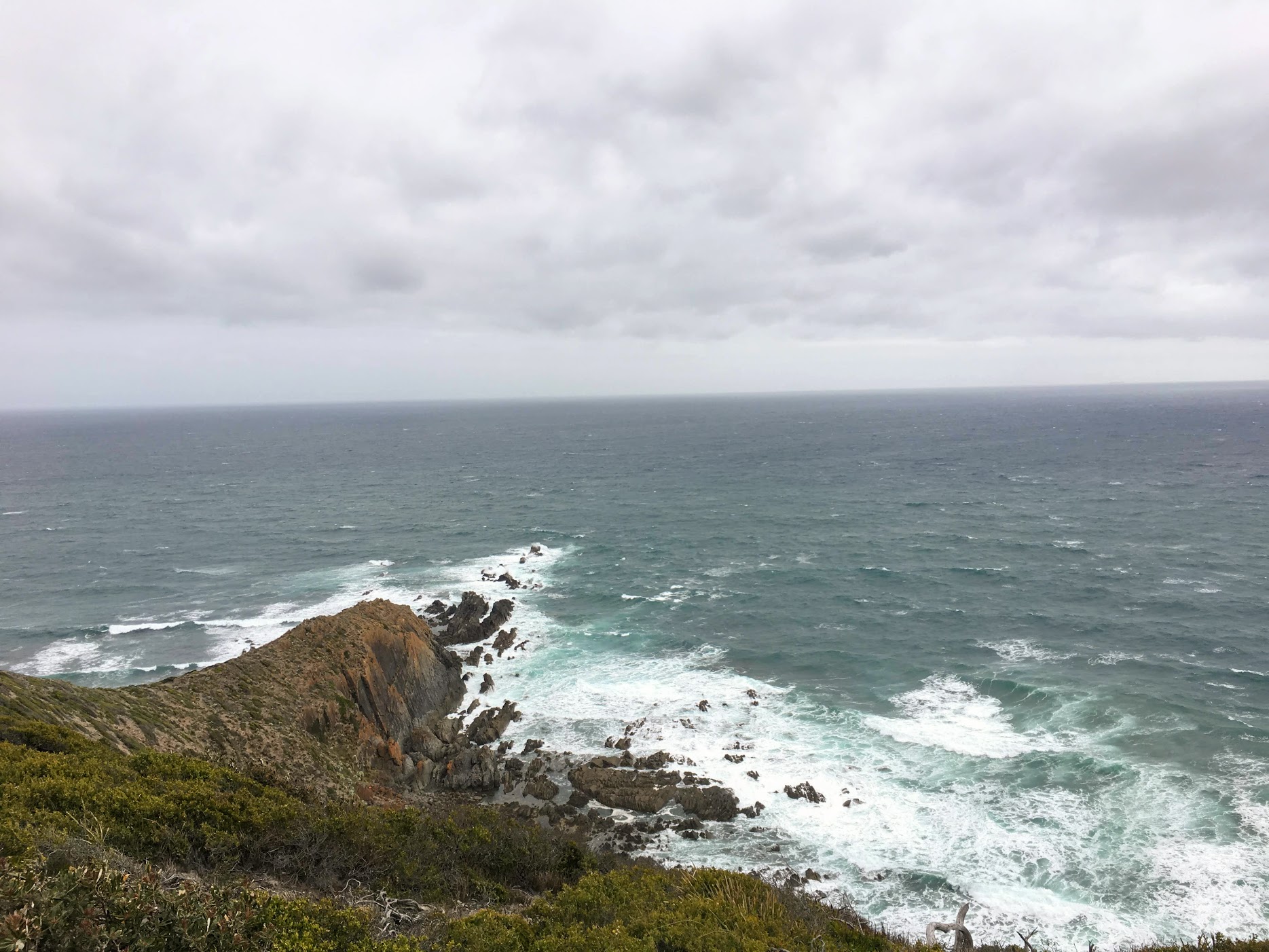
Photo: Wikimedia Commons, CC BY-SA 4.0
The Theories
Where a case ends without an answer, explanations rush in to fill the gap, and Valentich's disappearance has attracted more than most. It is worth being clear that each of the following is a theory — a way of reading the same handful of facts — and none has been proven.
The most sober explanation is spatial disorientation. Flying at night over dark water, with the true horizon lost, an inexperienced visual pilot can be fooled by lights in the sky. Skeptics have pointed out that on that evening the sky held an unusually bright cluster — Venus at its brightest, along with Mars, Mercury, and the star Antares — arranged in a way that could read as bright lights hanging above a moving aircraft. On this reading, Valentich, tricked by the tilt of a false horizon, banked into a slow, tightening descent known as a "graveyard spiral," in which the plane turns while the pilot believes it is the lights that are moving. The G-forces of that spiral could starve the engine of fuel, explaining the coughing he described, and the spiral would end in the sea. The green metallic "craft," in this version, is the reflection and afterimage of his own aircraft's lights and the planets, seen by a frightened young man who was, by many accounts, fascinated by and fearful of UFOs.
Other theories run in very different directions. Some argue for a staged disappearance: the Cessna carried enough fuel to fly hundreds of kilometers beyond the search, the plane was reportedly never plotted on radar, and Melbourne police were said to have received a report of a light aircraft making a mysterious landing near Cape Otway around the same time — details that, taken together, could hint at a pilot who did not want to be found. Others hold to the reading Valentich himself seemed to offer over the radio: that something genuinely unidentified — a UFO in the literal sense of the term — was above his plane, and took him. Ufologists point to scattered reports of an erratically moving green light in the sky that night, though no named, verified witness has ever anchored those claims.
What Remains
In 1982, the Bureau of Air Safety Investigation closed its file. Its conclusion was as honest as it was unsatisfying: the reason for the disappearance of the aircraft could not be determined, and the outcome was presumed fatal. That is, officially, where the matter still stands. A plane and its pilot left the coast, crossed into the dark over Bass Strait, and did not arrive. The most likely explanation is a tragic accident in conditions that quietly overwhelm inexperienced pilots. But "most likely" is not "known," and the case keeps its grip precisely because of what it left behind.
The item in this file I handle most carefully is the cowl flap that came ashore on Flinders Island in 1983. Five years in the water, a serial range that includes VH-DSJ and other aircraft besides, examined and catalogued and never narrowed further. I have looked at the BASI wording on it repeatedly, and it stays exactly as careful as it was written to be — consistent with, never matched to. Somewhere in a records store there is a piece of metal that is either the last of a young man or nothing at all, and the difference has been sitting there unresolved for forty years.
What it left behind is a voice on a tape. Unlike almost any other disappearance, this one comes with a running commentary from the person it happened to — a young man calmly, then anxiously, describing a thing above his plane that he swore was not an aircraft, right up until seventeen seconds of scraping metal ended the transmission. We do not know what he saw. We do not know whether he fell into the sea a mile from where his cowl flap eventually drifted, or flew off somewhere else, or met something none of the theories can name. Bass Strait swallowed Frederick Valentich on an October evening in 1978, and more than four decades later, it has still not given him back.
---
This article uses a mix of real documentary and location photographs and AI-generated images made to convey the mood of the story.



Comments
No comments yet — leave the first one.