For most of a year at the end of the 1960s, a shadow moved through the parked cars and lovers' lanes of Northern California. He shot young couples on quiet roads at night, killed a taxi driver on a San Francisco street corner, and then vanished each time into the fog without a face, a fingerprint that led anywhere, or a name. That alone would have made him one of the most frightening figures in American crime. But this killer wanted something more than to escape. He wanted an audience. He began writing to the newspapers, and in those letters he did the thing that has kept his legend alive for half a century — he hid his words inside code. Four cryptograms in all, columns of strange symbols that read like a dead language. One was broken within a week. One resisted the world's cryptographers for fifty-one years. And the shortest of them, the one he promised held his own name, has never been read to this day. This is the story of the Zodiac ciphers — and of the man who was never caught.
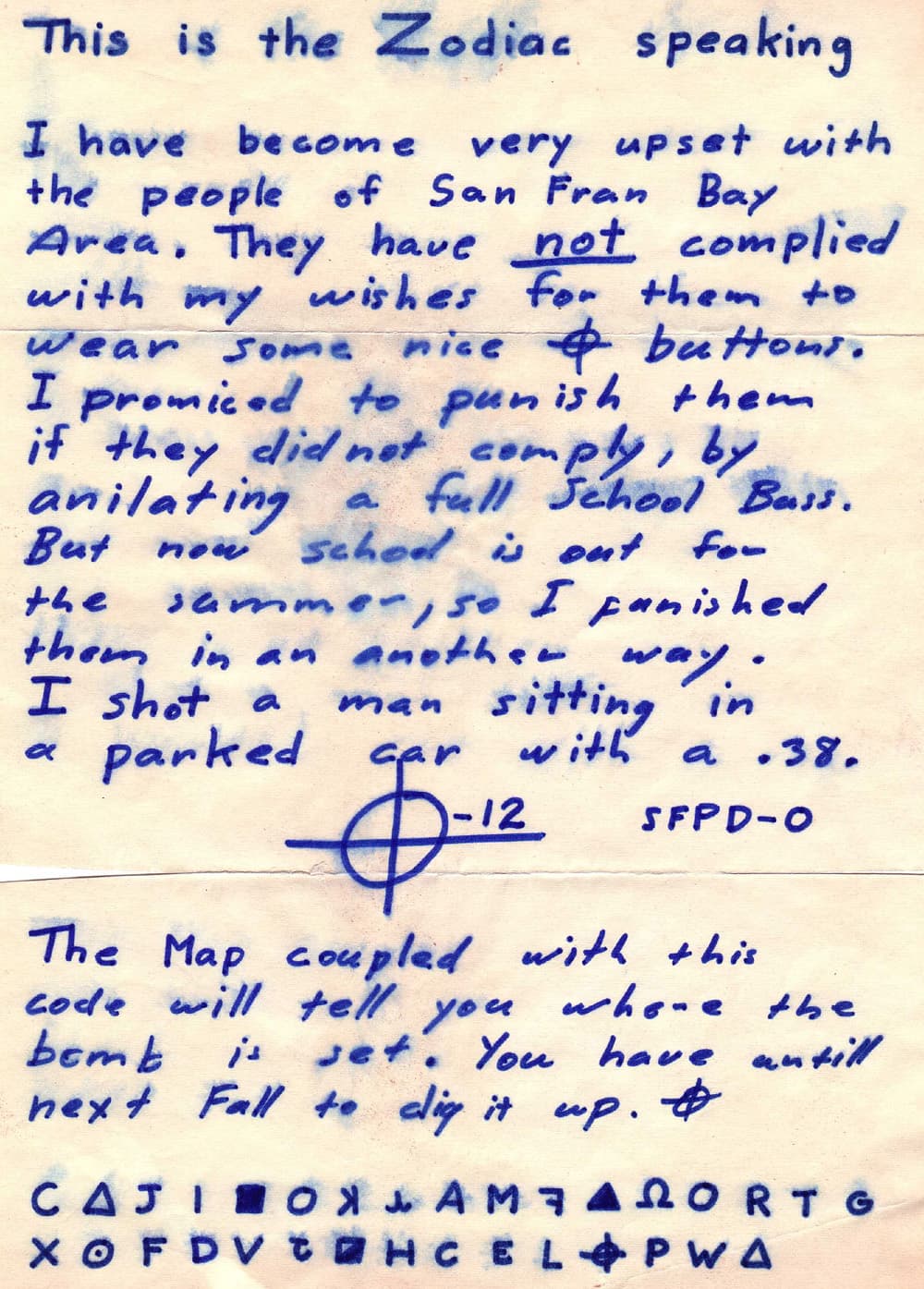
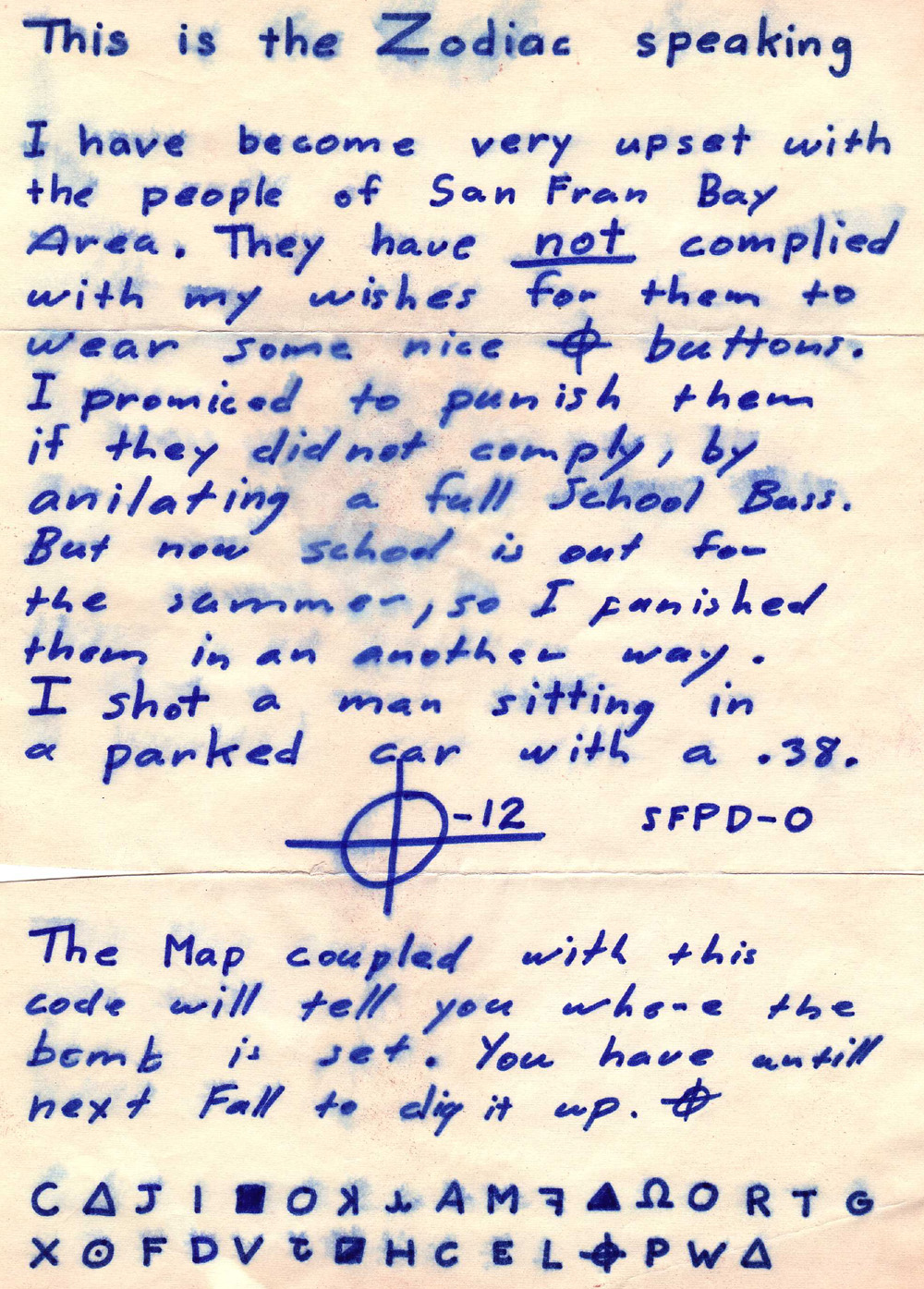
I organize this archive by what a case leaves behind, and the Zodiac file is unusual in that almost all of it is paper the killer produced himself. Envelopes, handwriting, four blocks of symbols. When I sorted the material chronologically I noticed something that has bothered me ever since: the demand attached to the first cipher. Print this, or people die over the weekend. Every other document I hold from an unsolved case was made by investigators, or families, or the press. These were made by him, and they were made to be published, and the newspapers published them.
A Letter to the Newsroom
By the summer of 1969, the police in the Bay Area were quietly aware that a string of shootings might be the work of one man. What they did not have was a way to make the public understand it — until the killer decided to introduce himself.
At the end of July 1969, three newspapers each received a letter in the same hand. The writer claimed responsibility for recent murders and, to prove he was no hoaxer, described details of the crime scenes that had never been made public. Then came the strange part. Enclosed with each letter was one-third of a cryptogram: a block of symbols — circles, triangles, letters turned backward, astrological marks — that meant nothing on their own. The writer's instruction was simple and chilling. Print the code, or he would go on a killing spree over the coming weekend. Only when the three pieces were laid together did they form a single message of 408 characters. And soon after, in a later letter, he signed himself with a name and a symbol that would become infamous: a crossed circle, like the sight of a gun, and the word "Zodiac."
The Code That Fell in a Week
The 408-character cipher — cryptographers now call it Z408 — looked impenetrable. But it had a weakness the killer did not fully understand.
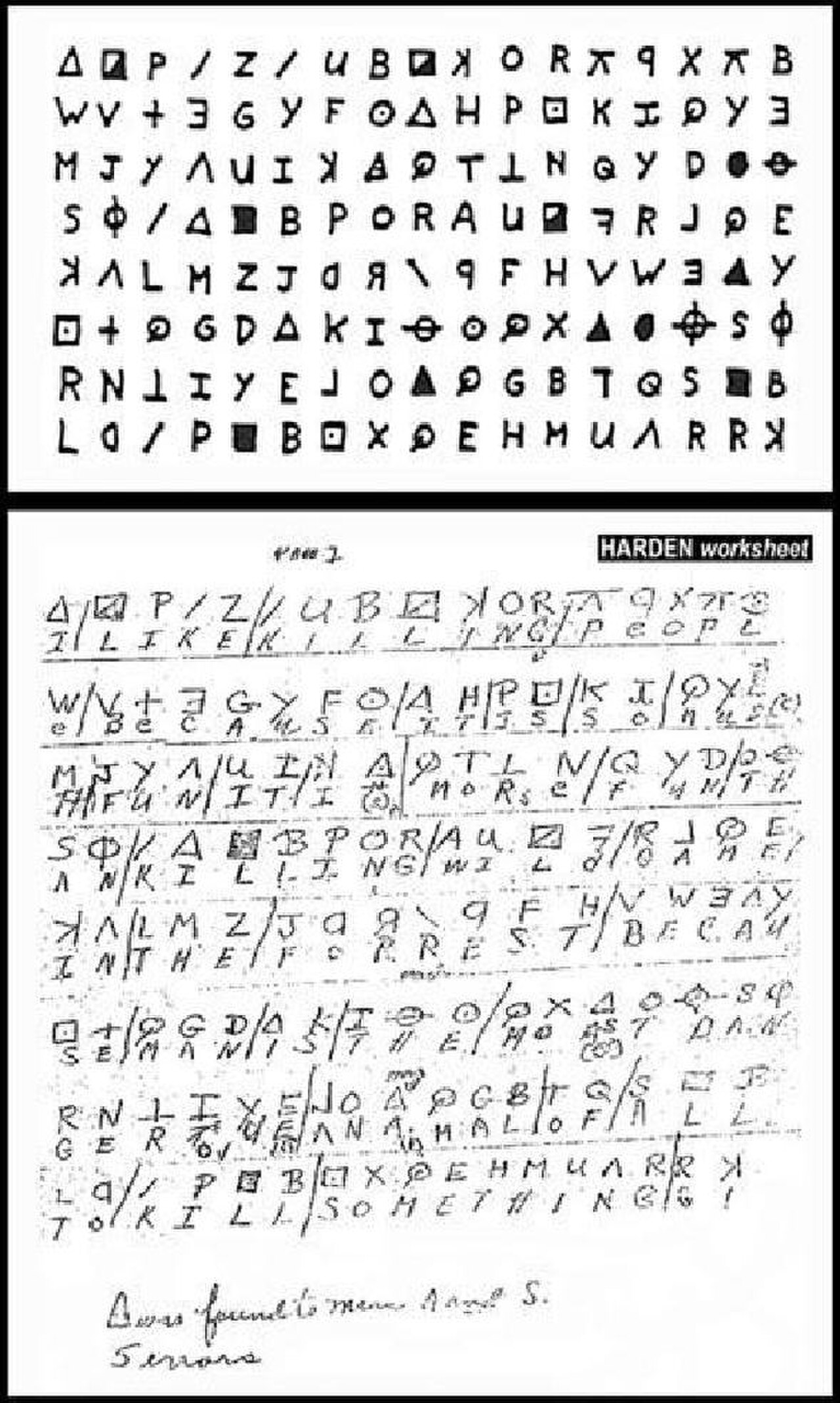
It was a homophonic substitution cipher. In an ordinary substitution code, each letter of the alphabet is swapped for a single symbol, which makes the puzzle easy to crack by counting how often each symbol appears — the most common one is almost always the letter E. The Zodiac tried to defeat that trick by giving common letters several different symbols each, so that no single mark would stand out. It was a clever idea, and if he had built it perfectly it might have held. He did not. Within roughly a week of the code appearing in print, a schoolteacher named Donald Harden and his wife Bettye sat down with it at their kitchen table. Bettye guessed, correctly, that a man this proud would begin with the word "I," and that the word "kill" would appear early. Those two footholds were enough. Piece by piece, the amateur couple pulled the whole message apart while the professional codebreakers were still circling it.
What they read was not a set of directions or a location. It was a boast. The message began, "I like killing people because it is so much fun," and rambled on about the thrill of the hunt, about a belief that the people he killed would become his slaves in an afterlife. It was the confession of someone who felt no remorse at all. And it ended with a taunt aimed straight at the reader: he would not give his name, because naming himself would let the police slow down his "collecting of slaves." The last eighteen characters made no sense as words — most researchers believe they were simply padding, added so the message could be split cleanly into three equal thirds.
The Code That Would Not Break
If the first cipher had been a door with a weak lock, the next was a wall.
In November 1969, the San Francisco Chronicle received a new letter, and with it a second cryptogram of 340 characters — Z340. On the surface it looked much like the first: the same handmade alphabet of circles and triangles and reversed letters, laid out in a neat grid. Everyone assumed it would fall the same way the 408 had. It did not. Month after month, year after year, it defeated everyone who tried it. Professional cryptanalysts, hobbyists, codebreakers from intelligence agencies, and eventually anyone with a home computer and an internet connection all threw themselves at those 340 symbols, and all of them failed. The reason, it turned out, was that the killer had learned from his first mistake. This time he did not simply substitute symbols for letters — he also scrambled the order in which they were meant to be read, weaving the message along a diagonal path through the grid rather than straight across. That second layer of confusion was enough to hide the message for half a century.
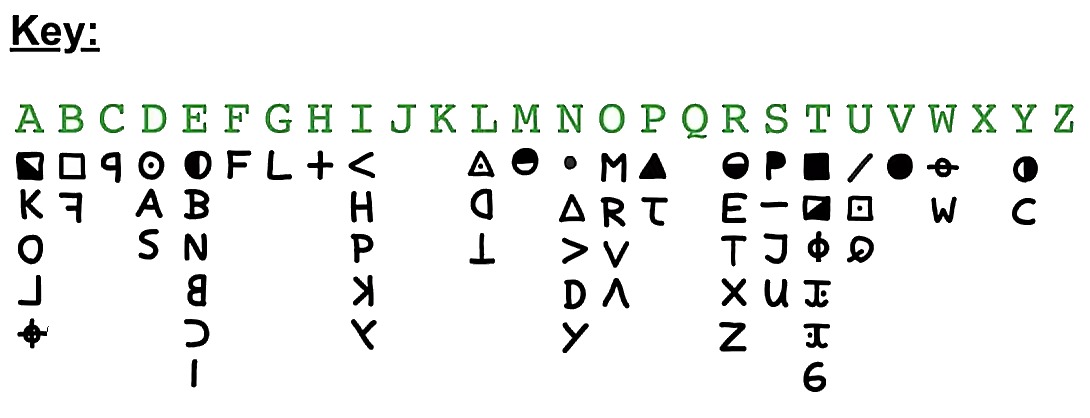
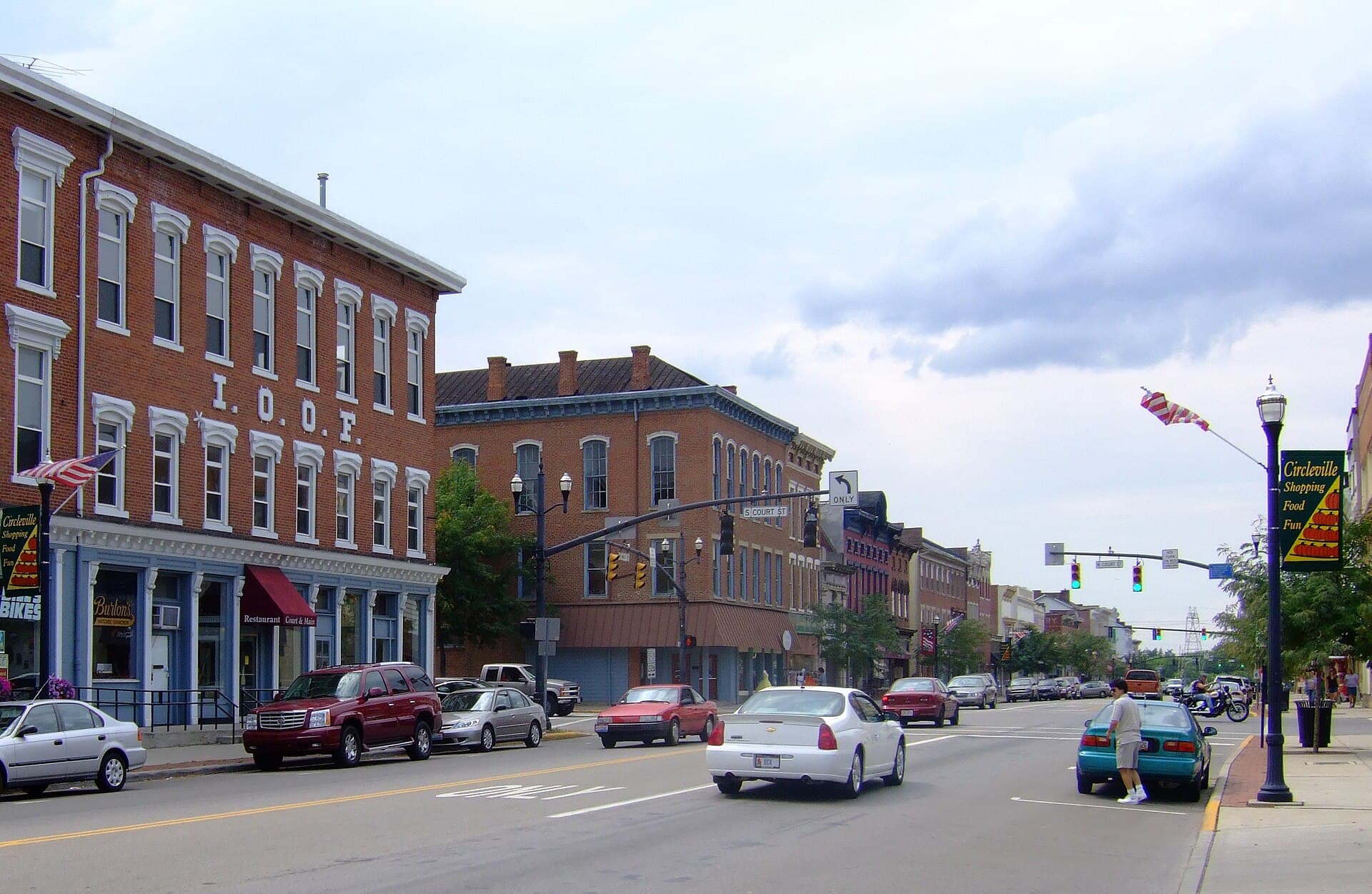
Photo: Wikimedia Commons, CC BY-SA 4.0
A slow push across a desk of old papers and coded symbols under a single lamp — a mood recreation, not real footage.
The breakthrough finally came in December 2020, more than fifty-one years after the letter was mailed. It did not come from the FBI or from a spy agency. It came from three ordinary people who had never met in person: an American software developer, David Oranchak, who had spent years obsessed with the puzzle; a mathematician in Australia, Sam Blake; and a programmer in Belgium, Jarl Van Eycke. Working together across three continents, they wrote software that tested tens of thousands of possible reading paths through the grid until, on one run, the gibberish suddenly turned into English. They submitted their solution to the FBI, which verified it.
And after all that — after fifty-one years and the effort of thousands of people — the message did not name the killer either. It began, "I hope you are having lots of fun in trying to catch me." He denied that a man who had appeared on a local TV call-in show claiming to be the Zodiac was really him. And then he repeated the same grim theology from the first cipher: that he was not afraid of the gas chamber, because death would only send him to a paradise where the people he had killed would be his slaves. It was 340 characters of cruelty and nothing more. The one thing everyone wanted — who are you — was still missing.
The Two That Are Still Silent
Two ciphers remain. Neither has ever been solved, and one of them is the whole reason the puzzle still matters.
The first is a small one, just thirteen characters, sent in an earlier letter. The killer wrote it beneath a line that read, in effect, "this is my name," and left the thirteen symbols to stand for it. If he was telling the truth, then somewhere in those thirteen marks is the answer to the entire mystery — the identity of the man himself, written in his own hand and mailed to a newspaper more than fifty years ago. But thirteen characters is a desperately short message. There is not enough of it to attack the way the longer ciphers were attacked; the same statistical tricks that broke the 408 simply have nothing to grip. Over the decades, people have proposed name after name that supposedly fits the pattern, but none can be proven, and the code has never given up a single agreed-upon letter. It is entirely possible that Z13 is not a real code at all — that it was a bluff, a last taunt from a man who enjoyed watching people chase a name he never truly gave them.
The second unsolved cipher, of thirty-two characters, arrived with a map of the San Francisco Bay Area marked with the Zodiac's crossed-circle symbol. The killer claimed the code would reveal the location of a bomb he had planted. Investigators have long suspected the symbols encode a set of map coordinates or a compass bearing, a place to be found rather than a sentence to be read — but no one has ever confirmed what, if anything, it points to. Like the name cipher, it sits there still: a promise of a location that leads nowhere anyone can prove.
The Face Behind the Symbols
It is worth remembering, underneath all the code and cleverness, what this case actually is. Between December 1968 and October 1969, at least five people were confirmed murdered by this man: two teenagers shot beside a car on a dark road just before Christmas; a young woman killed and a young man badly wounded in a parking lot the following summer; and a taxi driver shot at a quiet San Francisco intersection in the autumn. In his letters the killer claimed many more victims than that, but only those five have ever been firmly tied to him. The ciphers are famous, but they are the confession of someone who did enormous harm to real families, and the puzzle should never let us forget the people at the center of it.
Over the years, investigators and amateur sleuths have circled a handful of possible suspects, and some of those names have been argued over for decades. But no one has ever been charged, no confession has ever been confirmed, and the DNA evidence recovered from the letters has never been matched to anyone. Every so often a new claim surfaces that the case has finally been "solved" — a book, a documentary, a self-appointed detective announcing the answer. So far, none has held up. The FBI and the San Francisco police still list the case as open.
Thirteen characters. I have kept a copy of Z13 on the wall of my working space for years, not because I expect to solve it — there is not enough text there for anyone to solve, and I understand the mathematics well enough to know it — but because of what it does to everyone who looks at it. I have watched the proposed names accumulate in my own notes, each one fitted to the symbols by someone certain they had it. None can be tested. That may be the whole design. He wrote thirteen marks that will absorb any name you bring to them and confirm none, and half a century of people have been feeding names into it ever since.
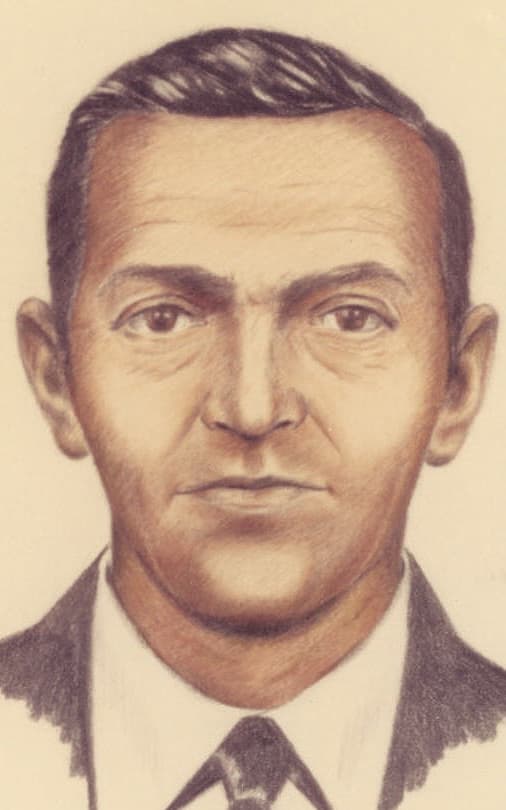
So this is where things stand. A man killed at least five people in Northern California, taunted a terrified public with codes, and then simply disappeared into the fog he came from. One of his ciphers was broken in a week by two schoolteachers at a kitchen table. One held out for fifty-one years before three strangers on three continents finally cracked it — only to find another jeer, and no name. And two of them, including the one he swore held his own name, have never been read at all. He wanted to be remembered, and in the cruelest way, he got his wish: more than half a century on, we still know his handwriting, his symbol, and his boasts. We just don't know his face.
---
This article uses both actual documentary and on-location photographs and AI-generated images and video produced to convey the mood of the story.
Comments
No comments yet — leave the first one.