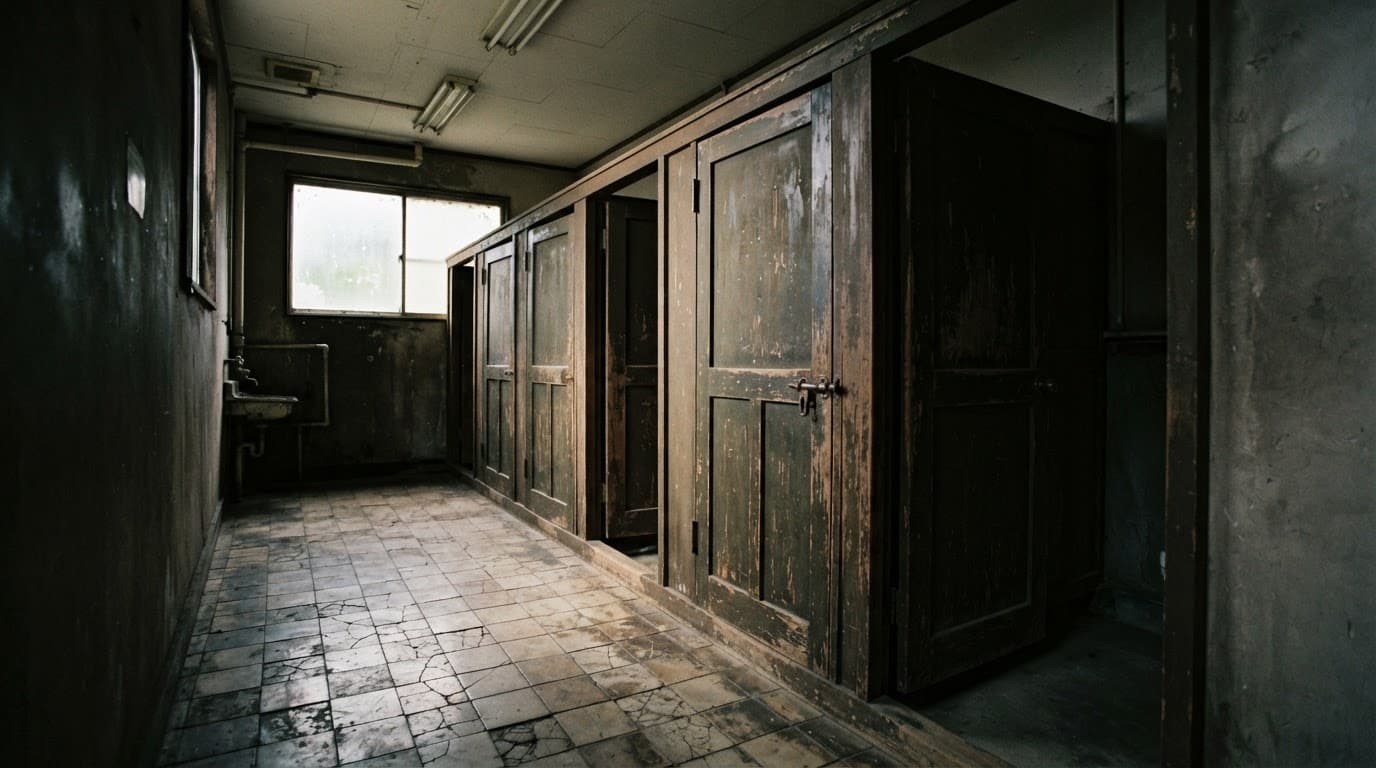
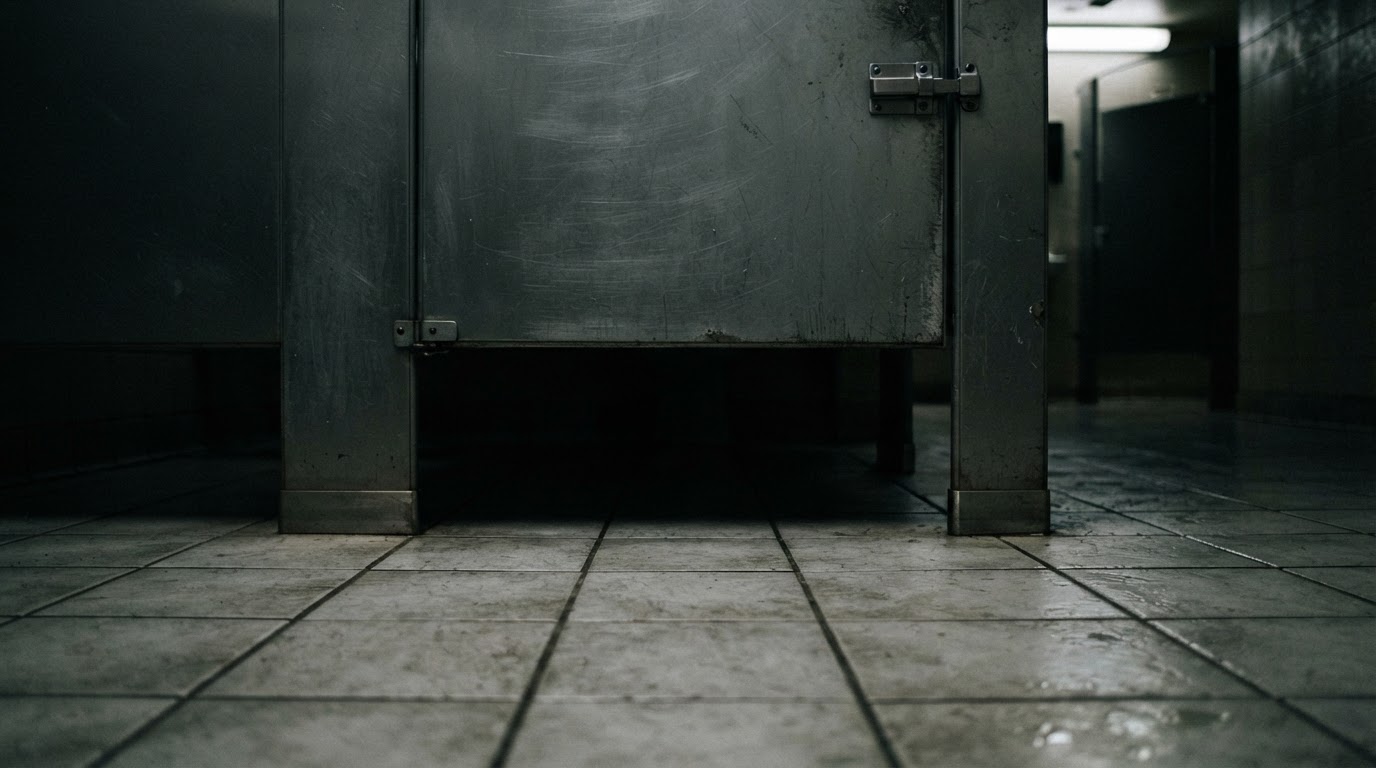
Third floor. Third stall from the door. Three knocks.
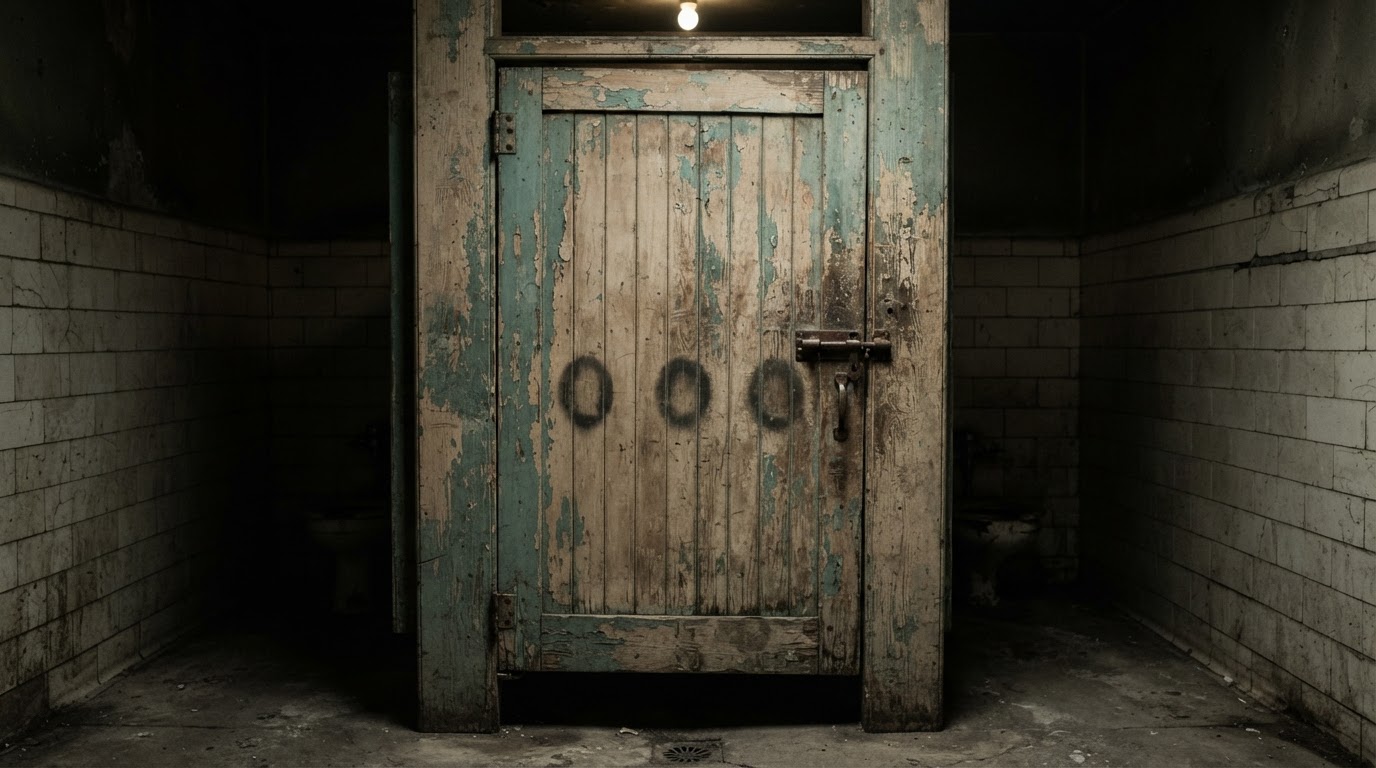
Every schoolchild in Japan knows the shape of it, the way you know the words of a song you never sat down to learn. You go up to the third floor, to the girls' bathroom at the end of the corridor, the one nobody likes to use alone. You walk to the third stall from the entrance — the door is shut, the way it always seems to be shut — and you knock. Once. Twice. A third time. And then, into the seam of the door, you say the words. Hanako-san, asobimashou. Hanako-san, let's play. Or, in the other telling, you simply ask: Hanako-san, irasshaimasu ka. Hanako-san, are you there?
And you wait, in the tiled quiet, for the smallest possible voice to answer from the far side of the door.
Yes.
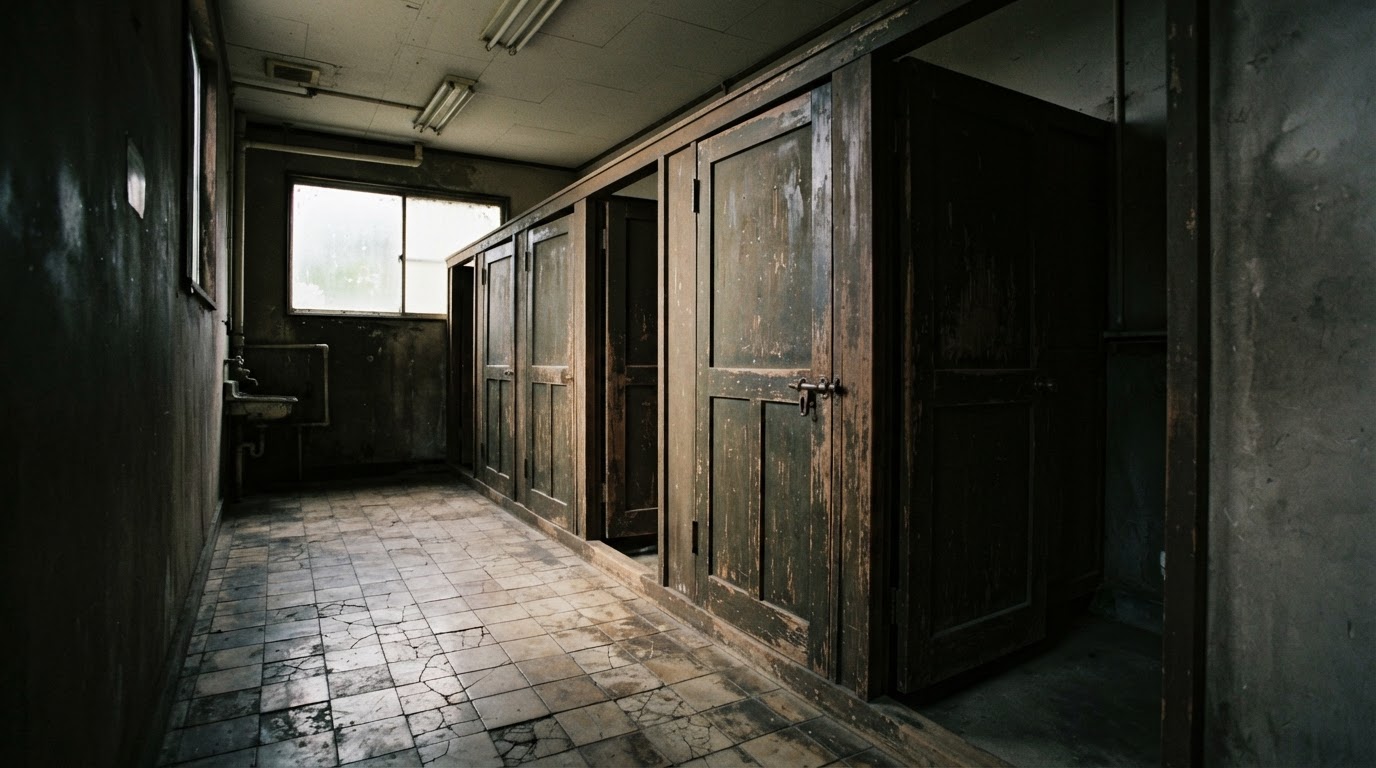
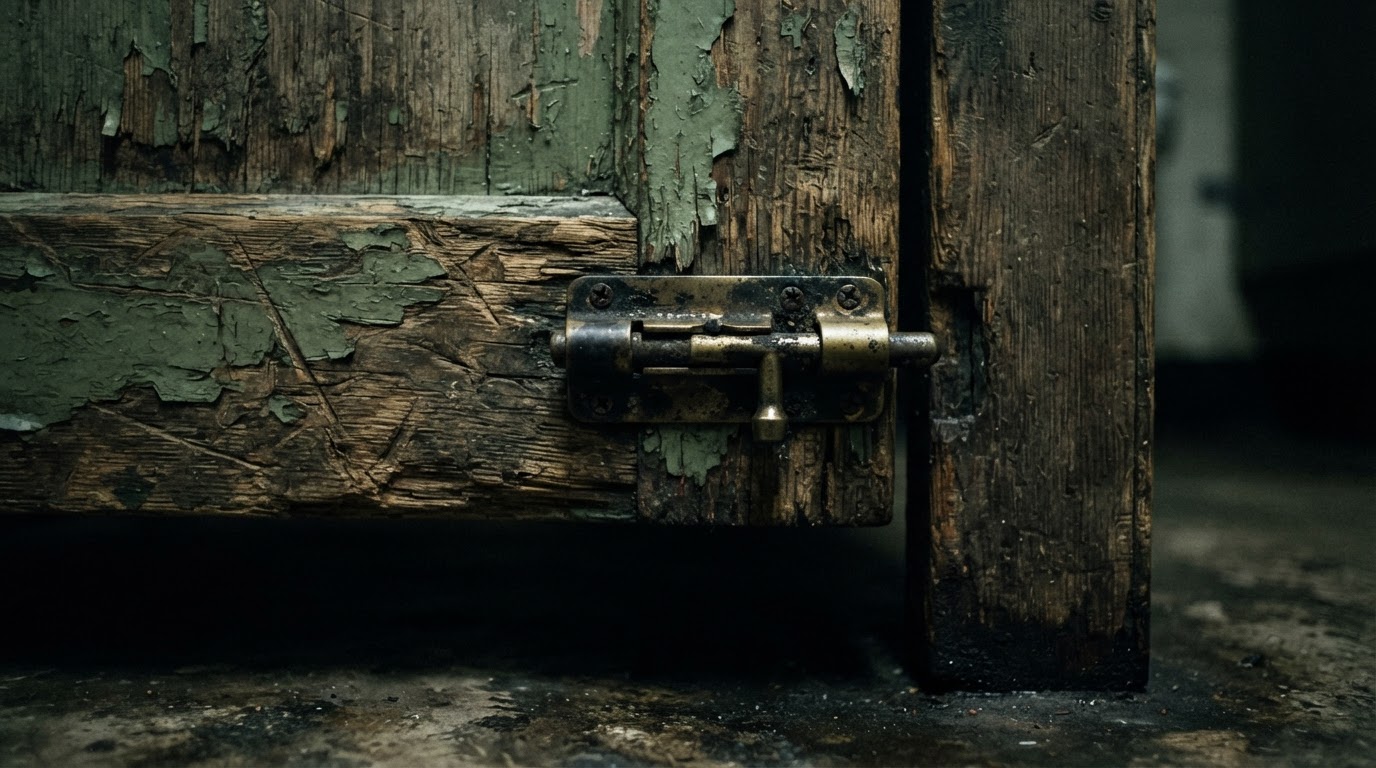
Sorting variants of this one is unusually difficult, because the tellings do not disagree the way folklore normally disagrees. They disagree about the floor, the number of knocks, the exact wording — and then every last one of them puts her in the third stall. I have compiled dozens of versions and never found a serious outlier on that point. It is the kind of consistency that makes an archivist uneasy, because it is not how invented details behave.
The Loneliest Room in the School
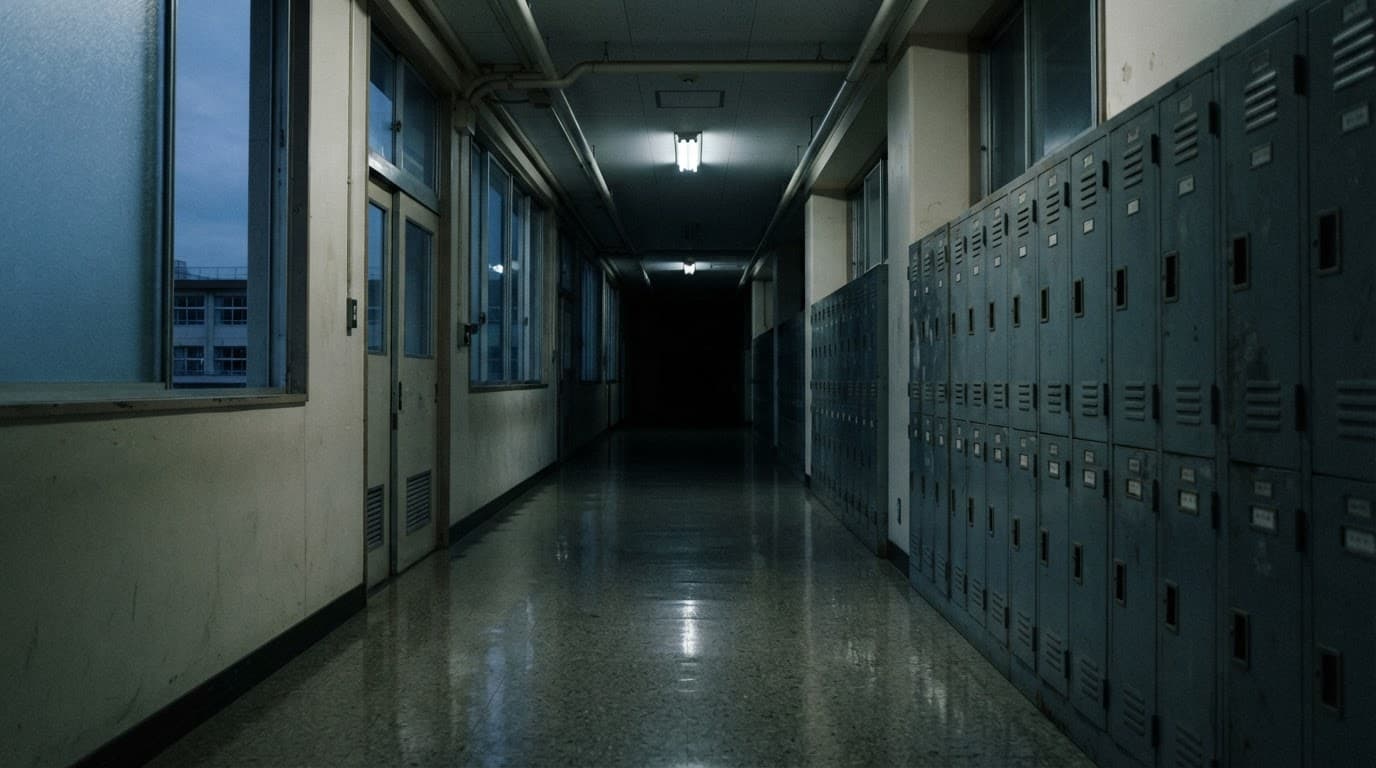
Every school building has one room that empties out when the bell rings and stays empty in a way the others do not. The classroom fills again. The corridor fills. But the bathroom at the end of the hall keeps its silence, and children learn early that it is a place with a different weather to it — colder somehow, the light greyer, the sounds it makes not quite explained.
Hanako-san lives there. Not in the stories told at midnight in a tent, not out in the woods or down an abandoned road, but in the one place every child in the country is required to go, alone, several times a day, all through the years when the world is still large and half-lit and full of doors that might open on their own. She is the ghost of the ordinary. She does not need a haunted house. She has the third stall, and she has all the time in the world.
What makes her singular among the horrors this site collects is how little she does. She does not fix on a child and pursue them like Hachishakusama. She does not run you down on splitting hands like Teke-Teke. She does not step from the mirror to answer a question you'll regret asking. For the most part, Hanako-san only answers. You knock; she says she is there; and that — in most tellings, most of the time — is all. The dread is not in what she will do to you. It is in the fact that she is there at all, waiting, patient, in a small tiled room, for a child to remember the words and come knock on her door.
The Summoning: How Children Call Her
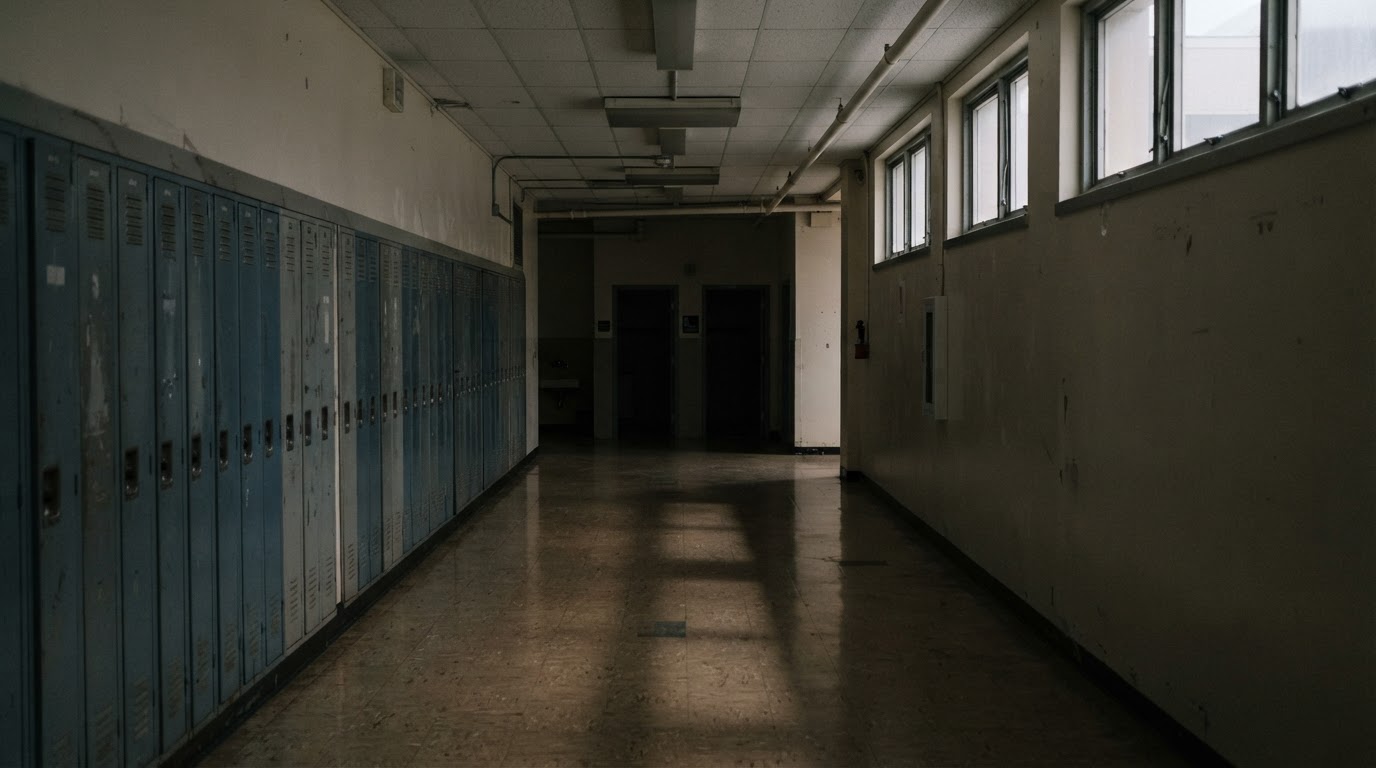
The ritual is the heart of the thing, and like all real playground lore it comes in a hundred versions, each defended fiercely by whoever learned it first. But the bones are always the same, and the bones are these: a specific place, a specific number, a specific question, and the nerve to wait for an answer.
The floor. Most often it is the third floor — third floor, third stall, the number three folded through the whole rite the way it is folded through summoning games the world over. But schools are only so tall, and the legend bends to fit the building. In a two-storey school she waits on the second floor; in an old one, on the ground floor, in the oldest block, the part of the building that predates everyone. What stays constant is that it is the far bathroom, the one that feels wrong — the legend always knows which one that is.
The stall. The third from the door, almost always. You count them off as you walk in — one, two, and there is the third, and its door is closed. You do not check whether anyone is inside. That is not how it works. You knock on the closed door as though you already know it is not empty.
The knock and the words. Three knocks, and then the calling. The two great forms are the invitation — "Hanako-san, asobimashou", Hanako-san, let's play — and the question — "Hanako-san, are you there?" Some tellings have you call her name three times, one to a knock. Some have you say it seven times. The variation is not sloppiness; it is life. A legend this widely held mutates in every schoolyard it touches, and the mutations are proof of how deeply it has taken root.
The answer. And then the part that empties the stomach. From behind the third door, in most versions, a small voice answers. Hai. Yes. Faint, childlike, close — closer than the empty stall should allow. In the gentler tellings that is where it ends: she has answered, the dare is complete, and you flee down the corridor with your heart going like a bird against a window, having proven she is real and proven, too, that you were brave enough to ask. In the darker tellings, the ones traded in lower voices, you are not supposed to open the door — and the child who does is met by a small figure in a red skirt, a bob of dark hair, a pale hand reaching from the gap. The legend keeps the worst of it deliberately vague, and the vagueness is the point: it is far more frightening to be told only that you must not open the door than to be shown what waits behind it.
What She Looks Like — In the Glimpse
Because you are not, in the strictest version, supposed to see her at all, Hanako-san's portrait is assembled from the corners of the story, from the child who broke the rule and looked, and from the pictures that later media settled onto her.
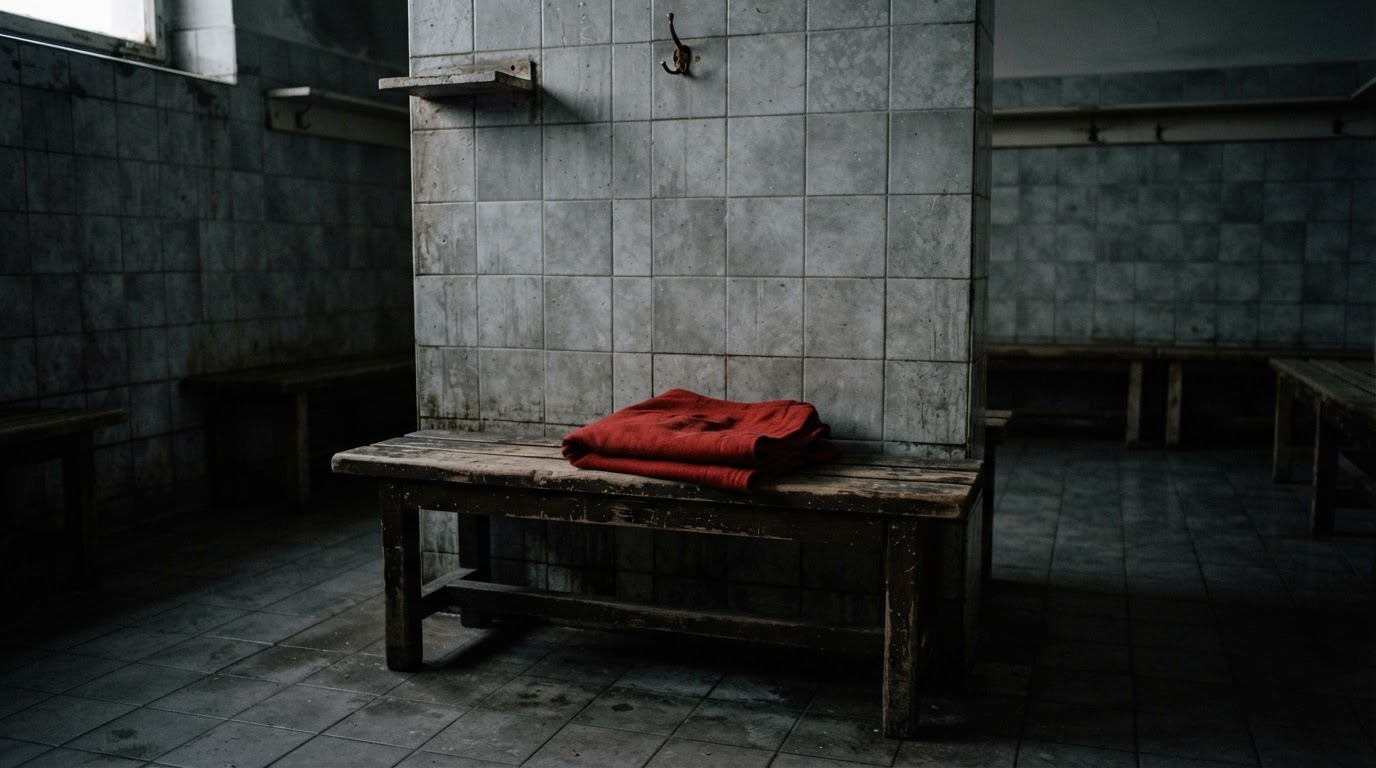
She is small — a girl of seven or so, the age of the youngest children in the school, which is part of why she frightens the way she does: she is not a towering thing but one of them, one of the little ones, sized to belong. Her hair is cut in a dark bob, the plain schoolgirl cut of an older Japan. And the detail that survives every retelling, the one thing the versions agree on, is the red skirt — or a red dress, or a red pinafore, the single spot of colour in a grey tiled room. In the tellings where the door opens, it is the red you see first, low down in the gap, before you understand what you are looking at.
Beyond that, she blurs. Some say her face is ordinary; some say you must never see it; some say there is a hand, pale and small, that comes from below or from the bowl of the toilet itself to take the hand of the child who opened the door. But the settled image, the one a Japanese child carries, is gentle and terribly sad: a small girl in a red skirt, alone in the last stall, who has waited a very long time for someone to knock.
Who She Was — As Gently As the Story Allows
Every ghost is a question about a death, and Hanako-san's origin is where the legend turns from a dare into something that aches. There is no single agreed account of who she was before she was the voice behind the door — and the versions that circulate are handled here the way the kindest tellers handle them: obliquely, mournfully, without dwelling on the harm.
The oldest and most widely repeated version places her in the war. She is said to have been a child at play during an air raid in the years when the sky over Japan's cities was not safe, hiding in the school bathroom because it was the nearest place to hide, and never coming out. In this telling she is one of the countless children the war took without record or ceremony, and the ritual becomes something close to a remembrance — a knock on the door of a child who was left there, an asking whether she is still inside.
Another strand makes her a child who was unhappy at school, who found in the far bathroom the one place no one troubled her, and who slipped away there — the ghost of loneliness itself, come back to the only room that had ever left her in peace. And a darker strand, told in lower voices and best left in low voices, traces her sorrow back to a home that was not safe, a child who was hurt where she should have been kept, whose only refuge was the last stall on the third floor.
The legend does not choose between these. It holds them all at once, and what they share is the thing that matters: whoever Hanako-san was, she was a small child who was alone, in the one room in the building where a child could be alone, at the end of a life that was too short. That is why, for all the shrieking dares built on top of her, the ghost underneath stays so quiet, and so sad. She is not angry. She is not hunting. She is waiting — the way a child waits — for someone to come and ask if she is there.
The First Records: A Rumour in the North
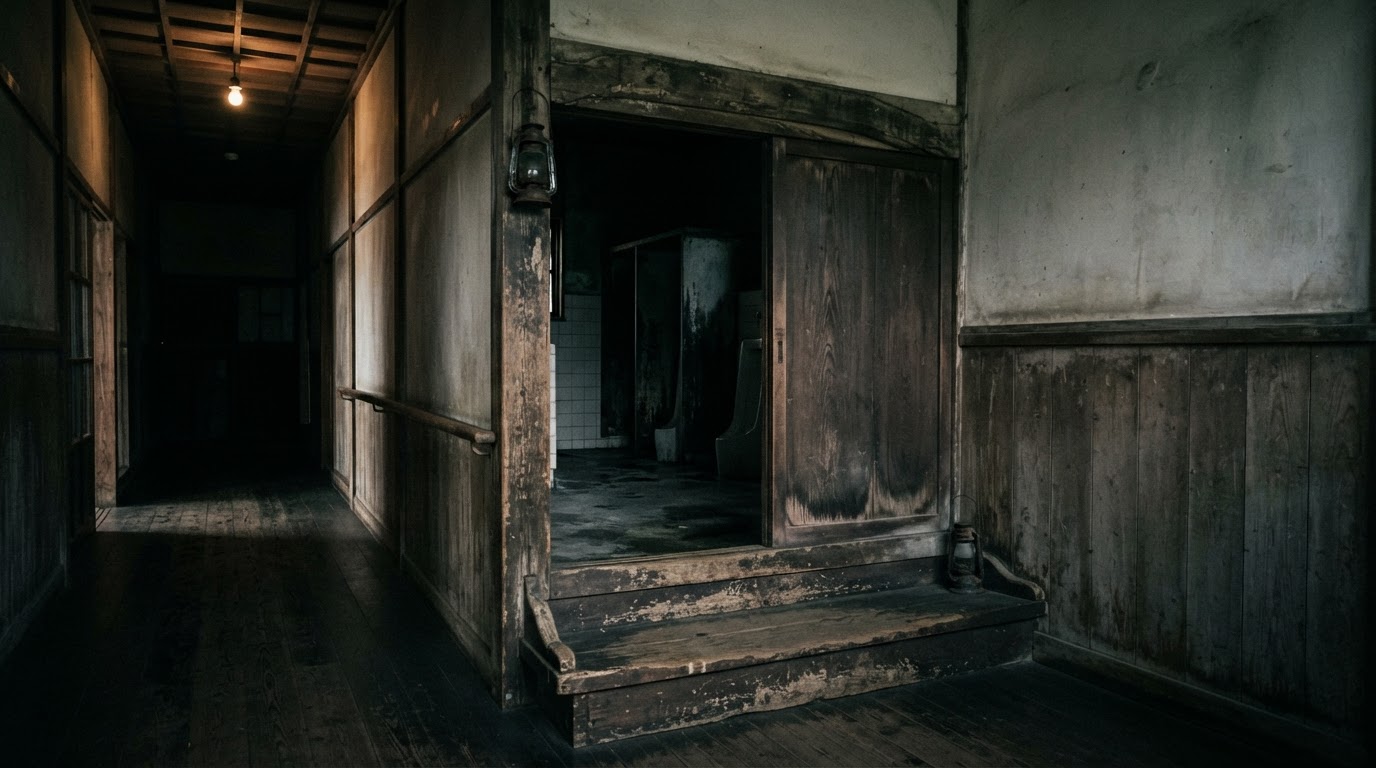
For a legend that feels timeless, Hanako-san can be dated with surprising precision — or at least her earliest traceable ancestors can. Researchers of Japanese school lore have followed the rumour back to the late 1940s and early 1950s, and to the north of the country, where a "third-stall" bathroom ghost was being collected among children in Iwate Prefecture in the years just after the war.
She did not begin, in those first records, as "Hanako-san." The name came later, settling onto a rumour that had been circulating under other names and no name at all — a bathroom presence, a third-stall spirit, the thing you called or the thing that answered. What the early records show is that the structure was there from the start: the specific stall, the ritual of asking, the small voice that replies. The legend had found its permanent home — the school toilet — decades before it found its famous name, and it spread the way schoolyard lore always spreads, carried by children from grade to grade and town to town, mutating as it went, until nearly every school in the country had its own third stall and its own quiet occupant.
The 1980s Boom: Hanako in the Wake of Kuchisake-onna
A rumour can simmer for decades in the low background of childhood without ever becoming a name the whole country knows. What turned Hanako-san from a regional bathroom spirit into a household ghost was the 1980s — and she rose, tellingly, in the wake of another.
At the end of the 1970s and into the 1980s, Japan was gripped by the panic of the Kuchisake-onna, the slit-mouthed woman, a rumour that swept through schoolyards so violently that in places children were escorted home in groups. That wave proved something to the culture: that a school-borne legend, passed child to child, could become a genuine national event. And in its wake the whole subterranean world of children's ghost-lore surfaced — magazines, books, and eventually television began collecting the rumours that had always lived only in whispers, and among them, again and again, was the little girl in the third stall.
Through the 1980s she was gathered up into the great wave of gakkō no kaidan — school ghost stories — that were being compiled and published for a generation of children hungry for exactly this. She was no longer one town's rumour but the country's, standardised in the retelling into the form we now know: the floor, the stall, the knock, the words, the small voice that answers. The name "Hanako" — plain, common, the "Jane" of Japanese girls' names — was itself part of the power. She was not exotic. She could have been anyone's classmate. She could have been you.
National Fame: The Films That Put Her on the Screen
If the 1980s made her a name, the 1990s made her a face. In 1995 Hanako-san stepped out of the schoolyard and onto cinema screens across Japan, in a film built entirely around her legend, and the wave of school-horror movies and television that followed cemented her as the single most recognisable ghost of the Japanese classroom.
The timing was perfect. The great boom of gakkō no kaidan as a media genre — anthology films and a hugely popular television series adapting the school ghost stories for a young audience — gave Hanako-san a screen to live on, and unlike so many legends that lose their menace when shown, she survived the exposure. Part of why is that her story is so simple and so visual: a ritual any child can perform, a door, a voice. You do not need special effects to make a closed stall door frightening; you only need a child to have knocked on one and waited. The films gave her an image — the bob, the red skirt, the small pale face — and sent it into every home, and from then on she was no longer something you heard about from an older sibling but something the whole country had seen.
From that point Hanako-san became permanent. She has appeared in more films, in manga and anime, in video games where the summoning ritual becomes a mechanic, and she has crossed, as the best of these legends do, into the world outside Japan.
The Gentle Ghost: Why She Only Answers
Set Hanako-san beside the other spirits of the Japanese schoolyard and something quietly unusual stands out. Most school ghosts are threats — things that chase, that harm, that must be escaped. Hanako-san, in the great majority of her tellings, simply answers. You knock; she says she is there. The transaction is complete. Nothing follows.
This is the strange gentleness at the centre of the legend, and it is why she has been loved as much as feared. She is a ghost you can visit — a controlled, repeatable brush with the other world, dangerous enough to make the knocking a real dare and safe enough that children do it and live to boast of it. In the schoolyard economy of nerve, she is the perfect currency: proof of courage available on demand, behind a door everyone can find. The darker versions, with their opening door and reaching hand, are real and are told, but they sit at the edges. At the centre is the small voice that only ever says yes — a ghost content, it seems, merely to be asked after, merely to be known to be there.
There is something almost unbearably poignant in that when you set it beside who she is said to have been. A child who was alone, who died alone in the one room she could be alone in — and who now, forever, wants only for someone to knock, and ask, and hear her answer that yes, she is still here.
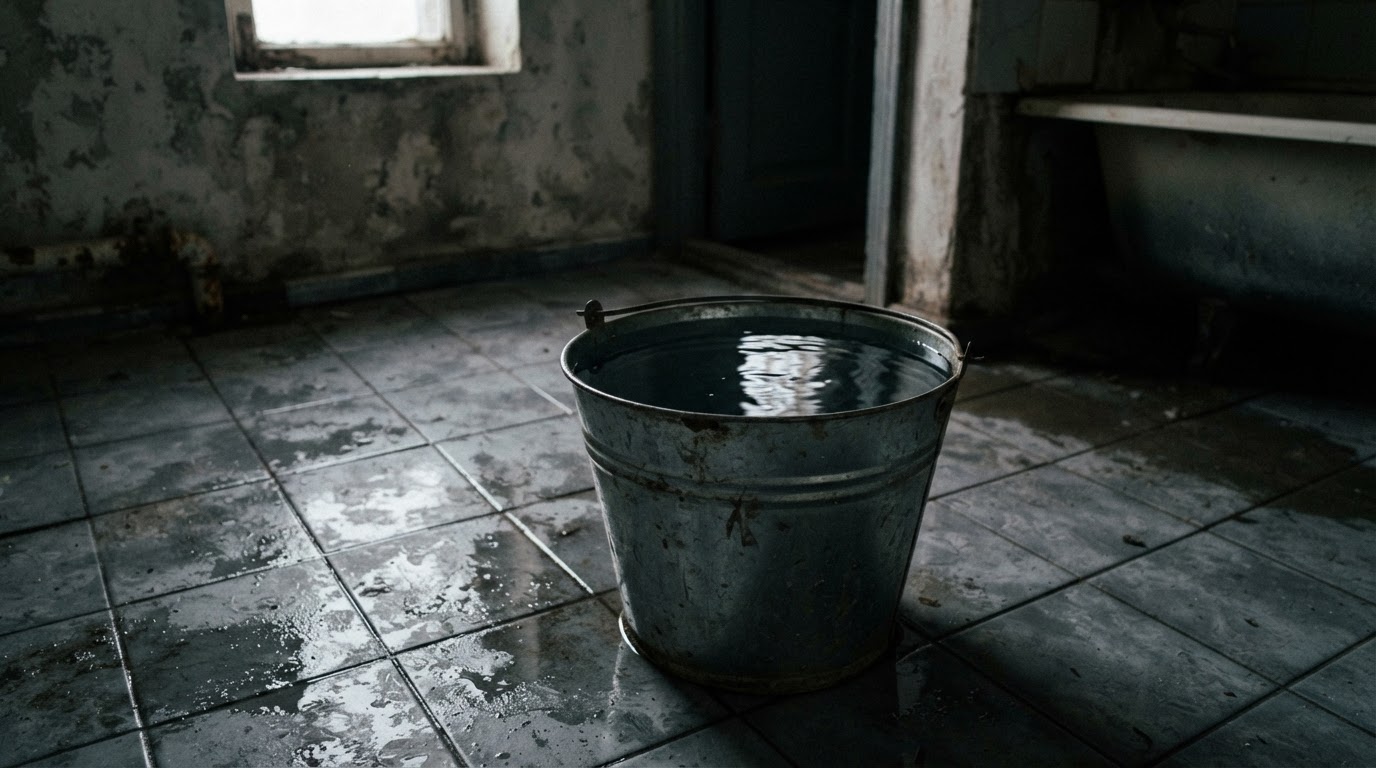
Why the Toilet: The Last Unwatched Space
Of all the places a child's ghost could live, why the school bathroom? The answer is one part architecture, one part sound, and one part something very old.
Consider first that the toilet is the last unsupervised space in a child's day. Everywhere else there is an adult — the teacher at the front, the monitor in the corridor, the crowd of classmates. The bathroom is the one door you go through alone, the one room where, for a minute or two, no one is watching and no one can see. For a child, that solitude is a rare and slightly frightening thing, and the mind fills unwatched spaces with occupants. A ghost that lives in the toilet is a ghost that lives in the only privacy a schoolchild has.
Consider next the sound. Old plumbing knocks and sighs and drips; pipes tick as they cool; a cistern refills with a groan behind the wall. A tiled room amplifies everything and softens nothing, so that a bathroom alone is never quite silent — it is full of small, unexplained noises that a nervous child is primed to read as a voice, a footstep, a knock answered from the other side of a door.
And consider, finally, the deep folklore of the place. Long before flush toilets, the Japanese kawaya — the old privy, often set apart, dark, over water or a pit — was an object of genuine dread, and it accumulated its own body of fears: the hand that reaches up from below, the presence in the dark you must not provoke. That old darkness sits directly beside the tradition of Aka-Manto, the red-cloaked spirit of the bathroom stall who asks the fatal question — red paper or blue — and Hanako's red skirt and the reaching hand are cousins to that same bathroom dread. The school toilet did not invent the fear of the dark small room. It inherited it, whole, from the kawaya that came before.
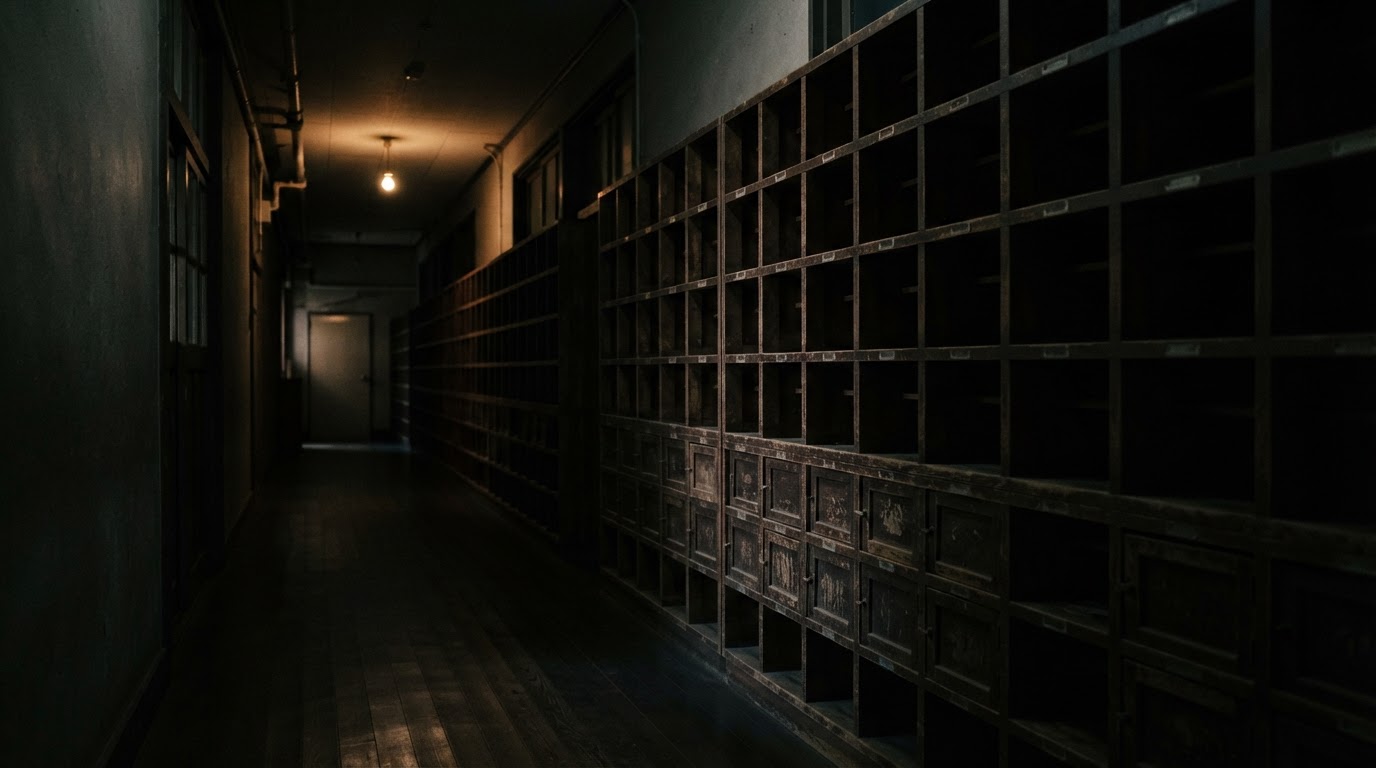
The Long Lineage: Toilet Spirits Before Hanako
Hanako-san is the modern, schoolroom face of a very old Japanese intuition: that the toilet is a haunted place, watched over by spirits of its own. She stands at the end of a long line.
The kappa, the river-imp of Japanese folklore, was long associated with water and with the old privies built over rivers and pits, and among the darkest of its legends is the hand that reaches up from the water to drag the unwary down — the ancestor, in spirit, of every reaching hand in every bathroom story since. The akaname, the "filth-licker," was a small yokai said to appear in neglected, dirty bathhouses and privies at night, licking the grime from the tiles — a creature born entirely of the unease of the dark, unclean, unwatched washroom. Japanese folklore is thick with these presences because the pre-modern toilet was genuinely the eeriest room in the house: dark, apart, over water, the place you went alone in the night.
Hanako-san inherits all of it. She is the kawaya dread translated into the language of the modern school — the reaching hand of the kappa, the dark-room unease of the akaname, gathered up and given a red skirt and a name a child could call. That she feels so native to the school toilet is not an accident. The fear was already living there, centuries deep, waiting for a name.
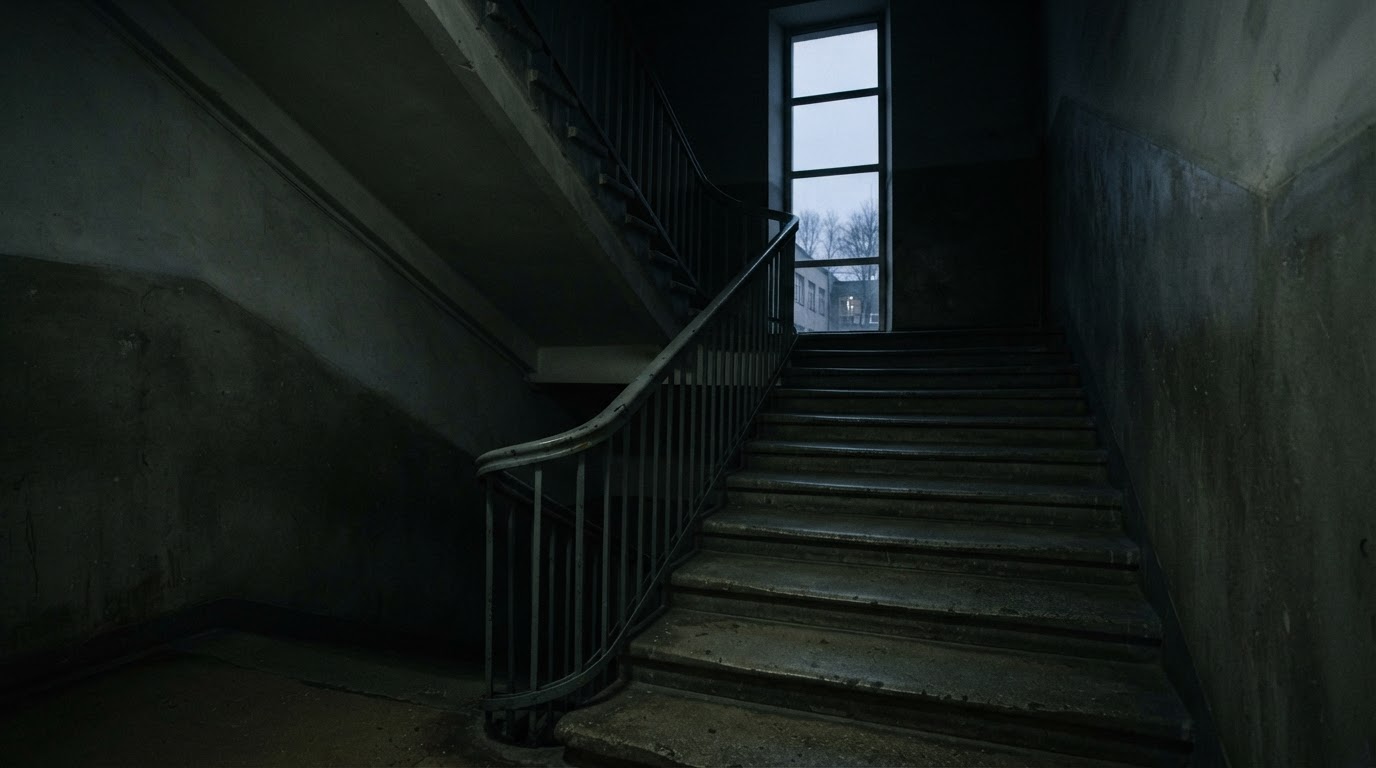
Cousins Across the World: Bloody Mary and the Korean Bathroom
Hanako-san is unmistakably Japanese, but the shape of her is not. Across the world, in cultures that never spoke to one another, children summon spirits by the same grammar — a specific place, a ritual repetition, a name called into a threshold — and the family resemblance is striking.
Korea has its own school-bathroom ghosts, whispered in the same corridors and answering to the same nervous logic. The hwajangsil gwisin — the bathroom ghost — haunts the far stall of Korean schools much as Hanako does in Japan, and rumours of the kongkong gwisin, a hopping child-spirit, travelled the same grade-to-grade routes. The particulars differ; the architecture of the fear — the far stall, the child alone, the presence that answers — is shared, the natural product of children everywhere meeting the same lonely tiled room.
And in the West stands Hanako's most famous cousin: Bloody Mary, summoned before a bathroom mirror by chanting her name three times in the dark, waiting for a face that is not yours to appear in the glass. The parallels are almost exact — the bathroom, the mirror or the door, the ritual repetition, the name called three times, the summoned presence that answers a child's dare. The number three, the threshold that is a mirror or a door, the spoken name: these recur across the world because they are not really about the ghost. They are about the universal childhood need to stand at the edge of the frightening, perform a small brave rite, and prove you can call something up and survive it.
The Psychology of the Summoning Game
Why do children do this — knock on doors they believe are haunted, chant names they believe will answer? The summoning game is one of the most universal features of childhood, and Hanako-san is one of its purest examples.
A child's world is full of fears too large and too vague to face directly: the dark, death, the unwatched room, the sense that the world is bigger and stranger than the adults let on. The summoning game takes that formless dread and gives it a shape, a location, and above all a procedure. Fear you can perform is fear you can master. To knock three times on the third stall and call Hanako-san is to take the huge dim terror of the haunted school and compress it into a rite with a clear beginning and end — a rehearsal of fear under conditions the child controls. You choose to knock. You choose to wait. And when you flee down the corridor, heart hammering, you have done the thing that terrified you and come out the other side alive.
This is why the games are so often played in groups, on a dare, with much daring and backing-out and shrieking. They are the schoolyard's economy of courage — a way to test and prove nerve, to sort the brave from the timid, to earn a story you can tell. Hanako-san, safe and repeatable and available behind a door everyone knows, is the ideal apparatus for it: real enough to make the knocking cost something, gentle enough that you live to knock again.
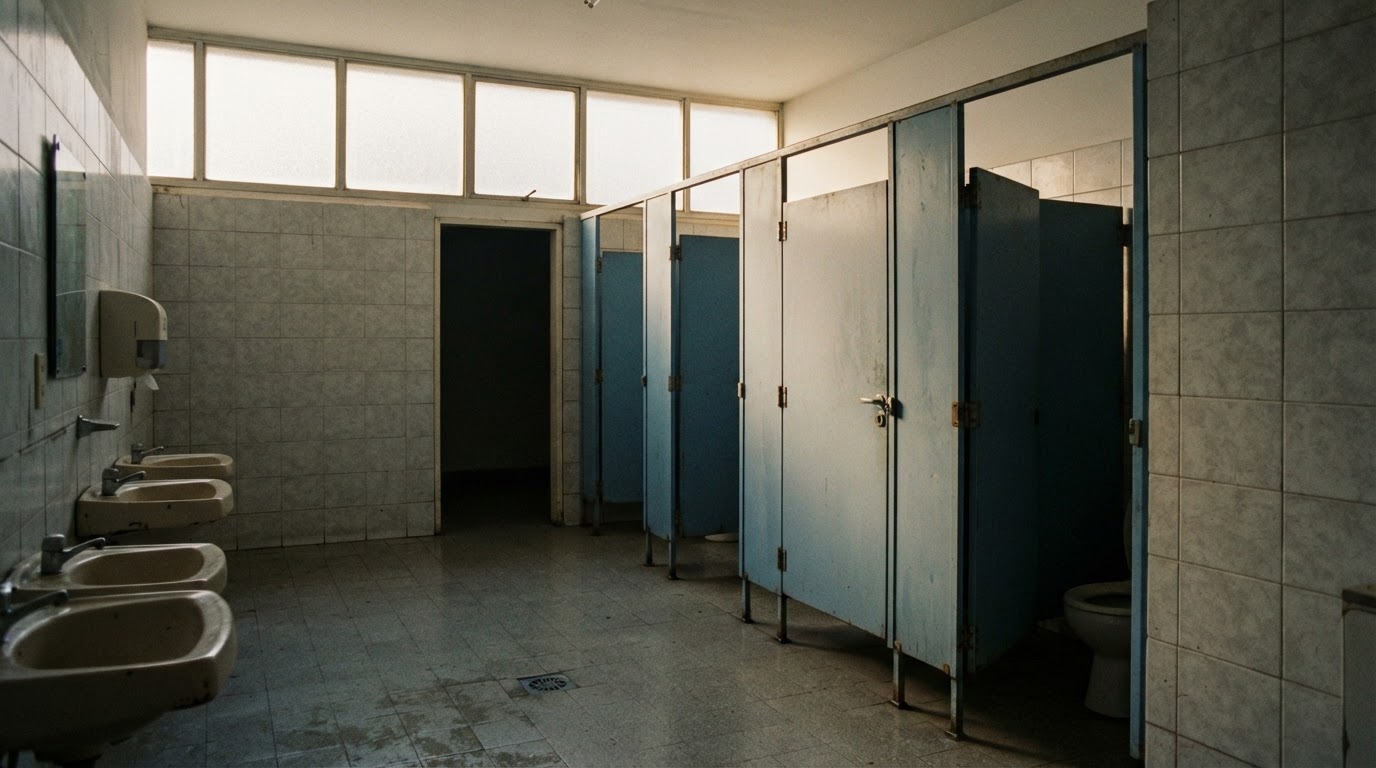
Hanako in the Modern World
For a ghost born of wartime grief and postwar rumour, Hanako-san has aged into something almost beloved. She is one of the most recognisable characters in the whole Japanese canon of the strange, and in the decades since the films of the 1990s she has only spread further.
She recurs across film and television, in horror games where her summoning ritual becomes a level to survive, in manga and anime that reimagine her again and again. Most strikingly, she has been transformed — in the hugely popular series Toilet-Bound Hanako-kun (Jibaku Shōnen Hanako-kun) — into a boy, a charming supernatural guardian of a school, a version that has carried her name to a global fandom that may never have heard the original rumour. That a ghost of a lonely dead child could become the hero of a beloved comedy is a strange fate, but a fitting one: it is the gentleness at her core, not the horror, that made her endure, and the modern versions simply follow that gentleness to its warm conclusion.
Somewhere under all of it, though, the original still waits. Not the anime guardian, not the film's jump-scare, but the small girl in the red skirt in the third stall, exactly as the children of Iwate first whispered her seventy years ago — the ghost who does not chase, does not harm, and only ever answers.
There is one thread in the Iwate material I have never been able to follow to its end. The earliest collected rumours have no name attached — she is only the thing in the third stall, the presence that replies — and "Hanako" arrives later, from somewhere the records do not identify. That order bothers me more than it probably should. A ghost is normally a dead person who acquires a story. Here a story sat in the schools for years first, waiting, and then someone gave it a girl's name and a red skirt and an air raid to have died in. I have gone back through those postwar collections repeatedly, and I still cannot tell which came first: the child, or the door.
The Child Who Answers Forever
There is a reason Hanako-san stays with a person long after the childish thrill of the dare has faded, and it is not the reaching hand or the opened door. It is the answer. That small voice from behind the third stall, saying only yes — I am here.
Think about what the legend actually asks a child to do. It asks them to go to the loneliest room in the building, alone, and knock on a closed door, and ask into the silence whether someone is there. And the terror and the tenderness of it are the same thing: that someone answers. That in the last unwatched room in the school, in the third stall on the third floor, a small girl in a red skirt has been waiting — for years, for decades, since before your parents were born — for exactly this. For a knock. For her name. For someone, anyone, to remember the words and come and ask if she is still inside.
She was a child who was alone. That is the one thing all the versions agree on. And whatever else the legend has become — the film scare, the video-game boss, the anime hero — the ghost underneath is still just that: a little girl in the emptiest room there is, who wants nothing that would harm you, who only wants to be asked after. So the children knock. Third floor, third stall, three times. Hanako-san, are you there? And the loneliest voice in the school, patient beyond all patience, answers the only thing she has ever wanted to say.
Yes. I am here. Will you play?
---
The images and video in this article are AI-generated works produced to convey the mood of the story, and are not photographs of any actual person or event.
Comments
No comments yet — leave the first one.